Did you know that cows have babysitters? Just to be clear…I’m not talking about the adventures of teenage girls like in the Babysitters Club …I’m talking bovine to bovine, you know, helping a fellow cow out.
Aren't you glad your friends don't have this many kids? ...Or that you don't have this many kids?
Look out in the pasture on a sunny day and notice how most of the momma cows are busy eating while their calves are still lying down in a scattered group with a cow nearby to watch over them. She’ll be there to alert the others in case of danger (coyotes, other predators, or crazed paparazzi, they’re everywhere on the pastures of Wyoming). I wonder how those bovines decide who’s going to babysit, and how much to charge per hour.
I have been enjoying The Last American Cowboy on Animal Planet. I especially like all of the bleeps used to cover up the “color” during the everyday ranch problems that seem to afflict us all.
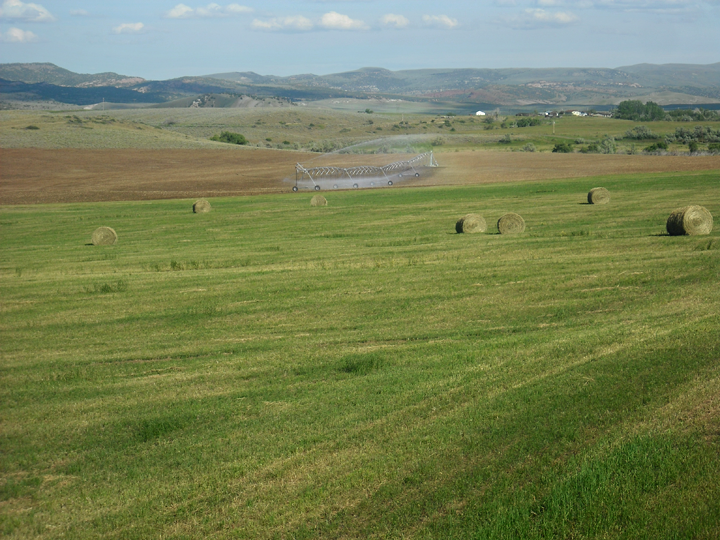
I am certainly not the last rancher around here and thankfully there is not a camera crew following me around. There would have been nothing but bleeps if a TV crew was present when one of my pivots was a mangled mess thanks to a severe wind storm. Even more editing would’ve been necessary if they’d caught footage of me discovering the water supply line feeding the newly seeded field was bubbling up in the field, instead of flowing out to the sprinklers. The culprit? A leaky pipe joint buried DEEP underground. The American public should be grateful I was not being filmed for their viewing pleasure. I, however, could have used some help.
I suppose I am more of a hybrid type of rancher. I don’t have a helicopter and I am not especially fond of horses. Motorcycles and 4-wheelers work for me. My favorite characters on the show are the ones who remind me of myself or my family or a neighbor in certain situations. There is the real possibility that at least once per episode each main character could well be a part of my family or a neighbor. Perhaps reality TV has a limited place…
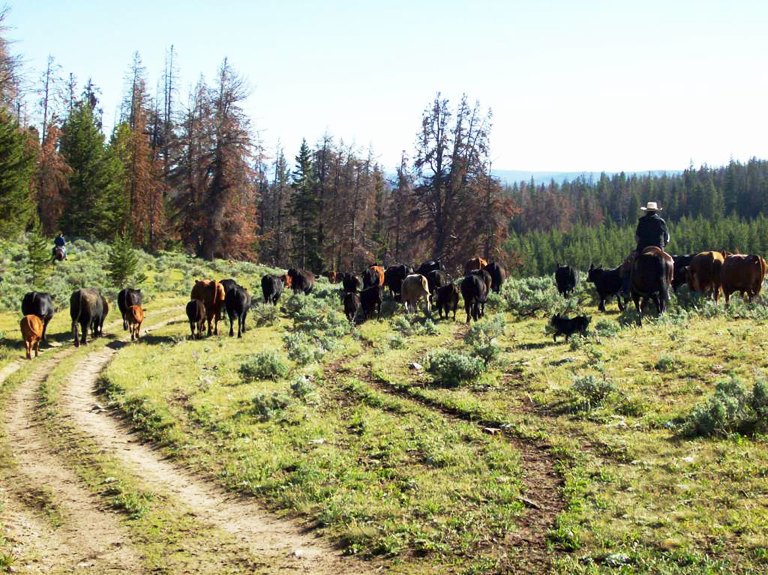
The cows have been up on US Forest grazing allotments for more than a month now. The Upper Green River Cattlemens Association pays riders to stay on the mountain with the cows and move them around to prevent overgrazing, watch for problems, doctor the sick, and keep an eye out for bear and wolf problems. While these riders do a good job moving the cattle around, typically this time of year we help them move some of the livestock into a different allotment on the mountain. Today’s ride was to Trail Creek Park.
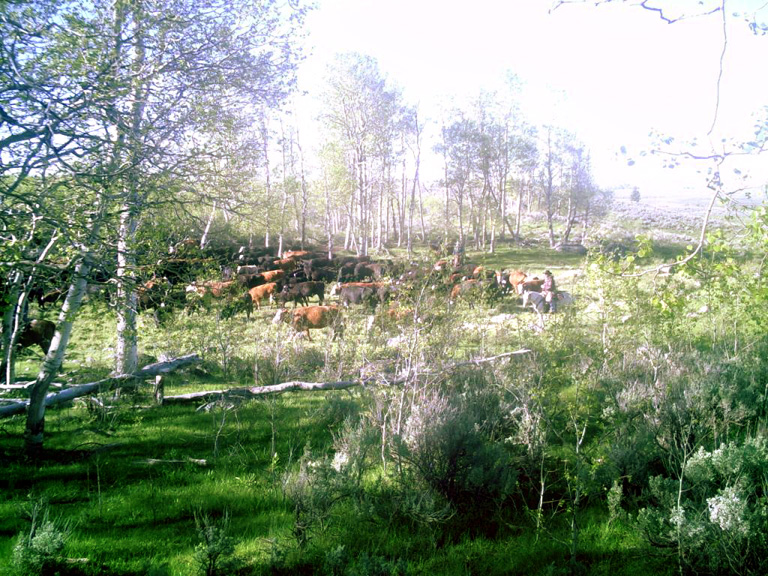
We spread out across the allotment that the cows are in (the allotment is quite large) and move through the trees, willows and valleys locating cattle and pushing them with us to a common trail where everyone shows up. It was a little difficult to find the cows early on because a thick fog was settled in. At one point I was supposed to meet up with fellow rancher Albert Sommers, but the fog was so thick I couldn’t see very far. He called out my name and we discovered that we were only about 100 yards apart. Eventually the fog lifted and despite everything we did make a fairly good gather. The cows went into Trail Creek very smooth. It was a nice cool morning for driving cattle.
Often we will find kills made by wolves or bears when we make this ride, but none were discovered this trip. Last year I found a calf that had been killed by a grizzly bear and then chewed on by the wolves. The only thing available to look at was the hide and bones, there was no meat left. They found that it was killed by a grizzly bear judging from the bite marks on the skin. On our way home we heard over the radio from one of the riders in another area that they had discovered a yearling (one-year-old) that had been killed by a grizzly bear and buried. Also they had spent time that morning chasing wolves away from a cow/calf pair (mamma and baby cow) the wolves were trying to attack. We are not allowed to kill the wolves or grizzly bears to protect our livestock.
The wolves and grizzly bears have become a major problem in this area and not just for ranchers, for campers and other people too. It is no longer safe for you or your kids to roam up and down the little streams to fish by yourselves. The grizzly bear and wolf populations are out of control and many feel that a regulated hunting season would be a good compromise for all sides. After all, deer and elk populations were thriving while being hunted, at least until that wolves started to impact their numbers.
I took this photo (above) of a clear cut on our ride today (where the trees were all cut in a certain spot during the logging days in this area). It shows the damage being caused by the pine beetle plague we are seeing all up and down the Rocky Mountain Range. These clear cuts are the only solid green areas you will see in the forests today. The trees are young enough that they can fight off the pine beetles with their ample supply of tree sap. Unfortunately, many years ago most logging was shut down in this area due to litigation by extremist environmentalists. It seems that logging wasn’t so bad after all when you look at this picture.
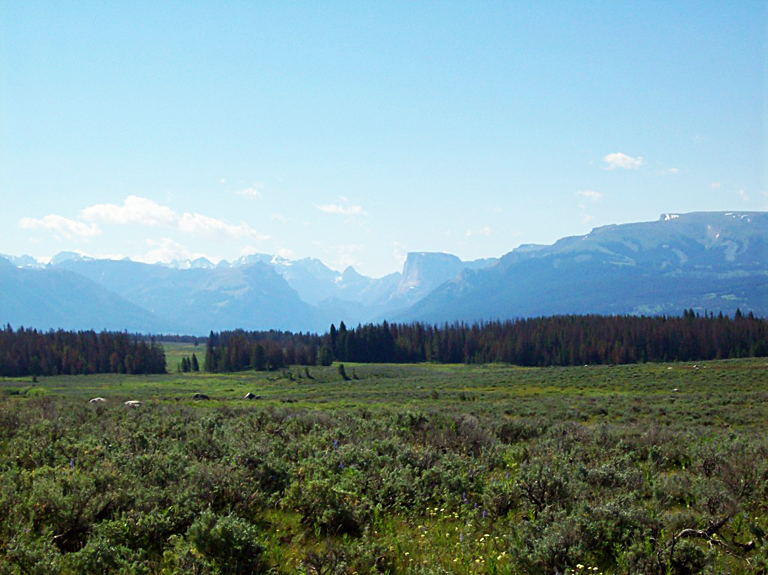
Despite all the issues we ranchers deal with when grazing on public allotments, you sure can’t beat the view from our “office” window.
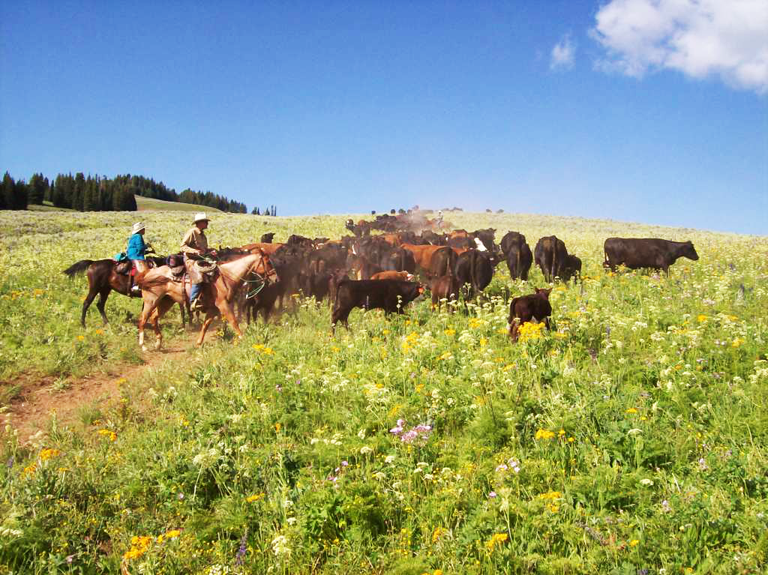
We helped one of our riders push cows to a different grazing area in the Teepee Creek allotment the end of July. It was a beautiful day. The cows were gathered from a large area in small bunches and pushed toward the new grazing area. The beautiful day quickly turned, let’s say, not so beautiful. So let’s start out with a pretty picture…
My fellow ranchers Gina Feltner, Bob Klaren & Taylor Selby push through the wildflower-dotted meadows up to Teepee Creek Ridge.
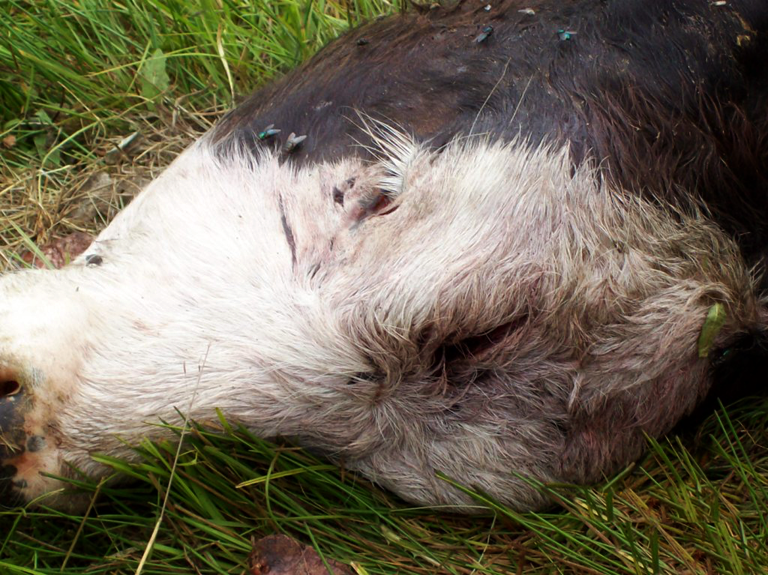
On our way down the mountain we ran into a neighbor who found one of my calves killed by a grizzly bear. (To learn about the value of a calf, read this great article on the Economics of Ranching). Remember all the ranting I did in one of my posts about grizzly bear problems…this is why I holler.
He was verified by the Fish & Game Department as being killed by a grizzly. Notice how this is a nice big calf and NOT some weak, little, sick calf like some people would have you believe predators always eat. Typically a griz will bite the calf (sometimes they kill full grown cows or yearlings as well) across the withers (front shoulder area) and puncture the lungs and other vitals in this manner. Then they will proceed to eat them, sometimes burying part of the calf and coming back later. When they are done the calf will be completely skinned. The wolves will find the bones and crack them for the marrow inside. If the animal was killed by wolves they will often show bite marks around the flanks, the tail may be chewed off, the nose will be bitten and chewed on, and often the rectum is pulled out (the wolves often pull out the rectum while the animal is still alive).
The type of trauma on the hide proves the calf was killed by the bear. This little fella didn’t die on his own for a bear to find him later. He met a brutal death.
The Green River Drift is the largest continuous operating cattle drive on federal land in the United States today. Some of the cattle travel as far as 75 miles from the home ranch to the summer grazing allotment. These ranchers know how to properly manage the land and care for their animals while persevering through a myriad of challenges. This drive and the ranchers involved in it are endangered because we are not allowed to adequately defend our property.
Ok, ranting session over. I’ll leave you with a pretty picture…
Ranchers Charles Price, Bob Klaren & Gina Feltner move cattle up Teepee Creek.
My wife, Lovella Dawn has sometimes found it difficult coping with the wide-open spaces and the lack of people in Wyoming. She is originally from the Philippines near the capitol, Manila. Manila and surrounding greater suburbs has a population of approximately 20 million people — about 40 times the entire state of Wyoming.
After getting married while living in Wisconsin we moved back to the ranch I grew up on, which my great-grandfather originally homesteaded. Although she had visited before, nothing can quite prepare a person to live on a ranch in Wyoming if they’ve never done it before, but her love of animals helped her through those first hard times. Now she gets involved in working cows in the corrals, she pulls calves in the spring, she takes care of her chickens, and the entire cat herd follows her everywhere she goes.
Just the other day my wife came back from town (Pinedale, Wyo.) complaining about the traffic and the number of people at the grocery store. Pinedale only has a population of 1,400…I think she’s converted!
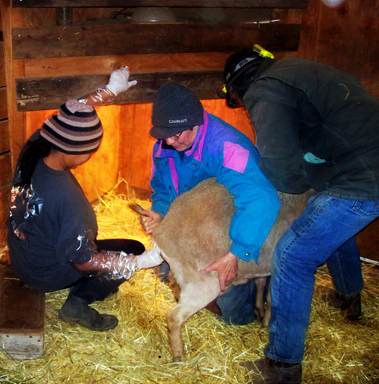
Native Filipino and RealRancher Lovella Dawn Price pulls a kid goat when its mother had trouble during birthing.
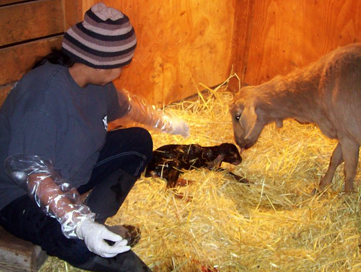
This goat was having trouble giving birth to her kids (baby goats) so she needed some help. My wife’s hands are quite small and would cause less pain for the goat when helping her give birth. Lovella Dawn pulled the first kid out, a little billy (male) goat with dewlaps (A dewlap is a fold of skin that hangs down under the throat. Goats often have two dewlaps.) and then the mother goat had the second kid on her own, a little nanny (female).
Sunday morning my family and I went out and had a fun time picking wild flowers and monitoring our federal spring grazing land. We drove on the Oregon Trail trying to imagine our ancestors walking and riding in a covered wagon across this sagebrush flat with very little supplies. Our ancestors came here on the Oregon Trail looking for land to settle which is what makes our ranch what it is today. As the 5th generation on this ranch my husband and I hope to preserve and carry on that dream to future generations.
Traveling down part of the Oregon Trail. (Inset) A marker for the Oregon Trail.
As federal land ranchers, we have taken a proactive role in managing our rangelands. We work with the federal agencies to set management objectives. We monitor our federal grazing lands to determine if we are meeting those objectives. The monitoring can include documenting the impact our cattle have on the area. Today, many anti-grazing organizations are trying every way to stop all grazing on federal lands. Taking an active role in management helps document our stewardship and educate the anti-grazers that cattle grazing is actually a healthy and sustainable activity on federal rangelands.
RealRancher Kari's husband Cotton examines the forage with their daughter on their public grazing lands. Cattle grazing is a sustainable way to manage public lands.
Our ranch is highly dependent upon federal grazing lands and, in fact, Sublette County is nearly 80 percent federally owned. We pay rent to the federal government to let our cattle graze these lands. Without federal land grazing, the ranches in our county would not exist (which means less food on your table). The private property, currently hay meadows and river bottom land where cattle live during the winter months, would become subdivisions and houses. Therefore ranchers are doing all that they can to stay in business while being stewards of the land to provide open space and wildlife habitat for everyone to enjoy.
Ever wonder how agriculturists know all that they know? I mean between needing to be economists, accountants, agronomists, entomologists, animal scientists, meteorologists…the list goes on…how can they possibly learn all they need to learn? Well most Wyoming ranchers have Bachelor’s, Master’s, and even PhD’s from accredited universities. And most of them grew up in the ranching business, gaining a lifetime of experience.
But I’ll fill you in on a secret. Just between you and me…another sure-fire way agriculturists have discovered to gain the know-how they need to become successful stewards of the land and caretakers of animals is…a secret club…called…4-H. There’s a handshake and everything to be admitted.
Okay, okay, so maybe it’s not a secret and maybe there isn’t a handshake (there is a 4-H pledge though!). But rural citizens and agricultural professionals across this great nation call themselves current and former 4-H members.
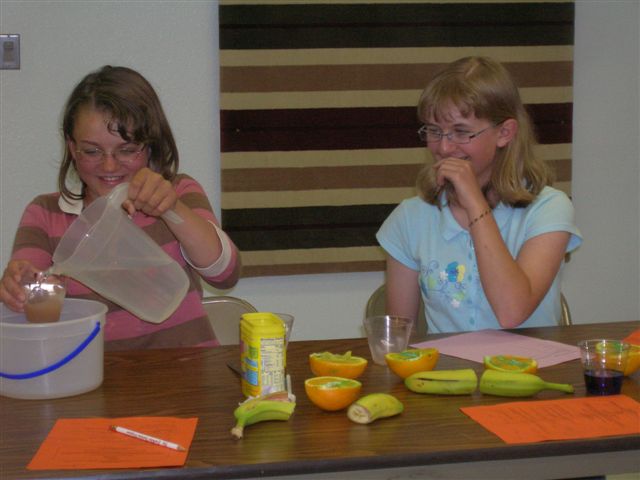
One of the ways Niobrara County 4-H members become experts in all-things ag, is by participating in Youth Quality Assurance Programs to learn the importance of good care and management of livestock to ensure consumers receive a high quality, safe and wholesome product. The program is divided into three levels.
Niobrara 4-H members learn the importance of withdrawal times and how to make proper injections to ensure American consumers get a safe and high-quality product.
Level I is for members 8 to 11 years of age. 4-H leaders and University of Wyoming Cooperative Extension professionals teach members about animal nutrition and feeding programs. They learn to read feed tags, the importance of feeding schedules and we emphasize providing fresh, clean water on a daily basis. We also teach the different methods of animal identification, housing and injury/illness prevention.
Dax, a Niobrara County 4-H member, practices giving subcutaneous injections on bananas.
Level II is for members 12 – 15. We emphasize meat quality and proper handling to prevent bruising, stress and promote a high quality product. Members learn about animals comfort zones, proper injection sites and how to minimize stress when handling livestock.
Lexie, a Niobrara County 4-H member, practice subcutaneous and intermuscular shots to bananas and oranges.
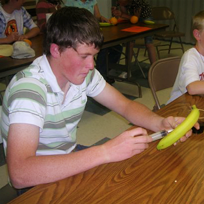
Finally level III is designed for member age 16 -19. This level focuses on record keeping, withdrawal times, different kinds of injections and continues to promote giving injections in a proper manner.
Harley, a Niobrara County 4-H member, practices giving injection sites properly.
Youth Quality Assurance is a statewide 4-H educational program but it is implemented in various ways across the state. In Niobrara County a fourth level has been added for older 4-H members who have completed the first three levels of the state program. This additional educational programming teaches youth the anatomy and physiology of the ruminant and non-ruminant digestive tracts. They also learn about the various nutrients in feed stuffs and how they are utilized by the animal.Thus is the awe and wonder of 4-H. It may not be so secret, but it’s still an awesome education tool. You don’t have to live on a farm or ranch to join 4-H either, contact your local extension office to learn more about getting involved!
From RealPartner Tammie Jensen, Niobrara County 4-H – Lusk, Wyo.
Baggs, Wyo. is one of those tiny communities in Wyoming you have to get to on purpose. It’s not on an interstate route and it’s not on the way to a larger city like Casper or Denver or Billings. You have to want to go there. You need to have a reason.
I was lucky enough to have a reason to venture to Baggs, Wyo. Its population, according to the town web site, is 348. Its history includes being stomping grounds for Butch Cassidy and the Sundance Kid. Its people are one of a kind.
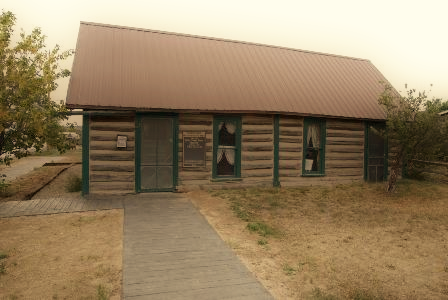
Baggs was one of the many hideouts for Butch Cassidy, the Sundance Kid and the Wild Bunch. Here stands the Butch Cassidy Cabin built in 1896 and cared for by the Little Snake River Museum in nearby Savery. Photo credit: http://www.takemytrip.com
When I traveled to Baggs for the first time last summer, I wasn’t sure what I was going to get. Now, don’t get me wrong, I’m no stranger to small towns. I was born in Chugwater, Wyo. Home of Chugwater Chili and 244 residents. But every small town has its own culture and I wanted the Baggs community members to like me. I mean reallylike me (channeling Sally Field).
The Baggs Community Listening Session in summer 2009
You see, I was visiting Baggs as an intern for the Wyoming Stock Growers Association. WSGA teamed up with Encana Oil & Gas to go into five rural communities for a rural development project called Community Dialogues for Rural Wyoming. Long story short, Baggs, Boulder, Kaycee, Lusk and Shoshoni told us what they wanted in order to strengthen their communities’ futures. What they wanted was to be able to tell their remarkable stories. RealRanchers.com does just that.
One of the families that welcomed me into their community was the O’Toole Family who ranches south of Baggs. As 4th generation ranchers on an operation of six generations, Pat and Sharon O’Toole raise sheep and cattle while constantly working to improve the land that sustains them. They have great help in this endeavor from their daughter Meghan, her husband Brian Lally, their son Eamon and his wife Megan.
Pat O'Toole and his granddaughter, Maeve, on their ranch south of Baggs, Wyo.
Sharon O’Toole tells the family stories on their blog at http://www.westernfolklife.org/weblogs/artists/sharono/. We’ll be sharing her stories with you through RealRanchers.com, so look forward to seeing her amazing photos and stories about the every day miracles of ranch life.
Thanks to the Baggs community for welcoming me. As in any small community, it’s not just those in the town limits that make the place tick, it’s the entire rural character that keeps things chugging. I’m grateful to have a role in telling their stories.
From RealPartner Liz LeSatz, Wyoming Stock Growers Association
Since we pushed our herd of cattle into the Pastures yesterday, today we helped fellow rancher Albert Sommers and his crew push the tail end of the Mesa cows into the Mud Lake West pasture (not to be confused with “The Pastures” where we pushed cows yesterday, I know, I know, we just can’t keep it simple for you).
The ranchers and cattle make the last leg of the journey to summer grazing pasture.
This is a somewhat shorter drive than yesterday, but we still did not get the cows through the gate into Mud Lake West. The cattle were a little disorganized, it was a long trip, and the day became hot quickly. So we had to quit them short of the finishing point and will finish tomorrow.
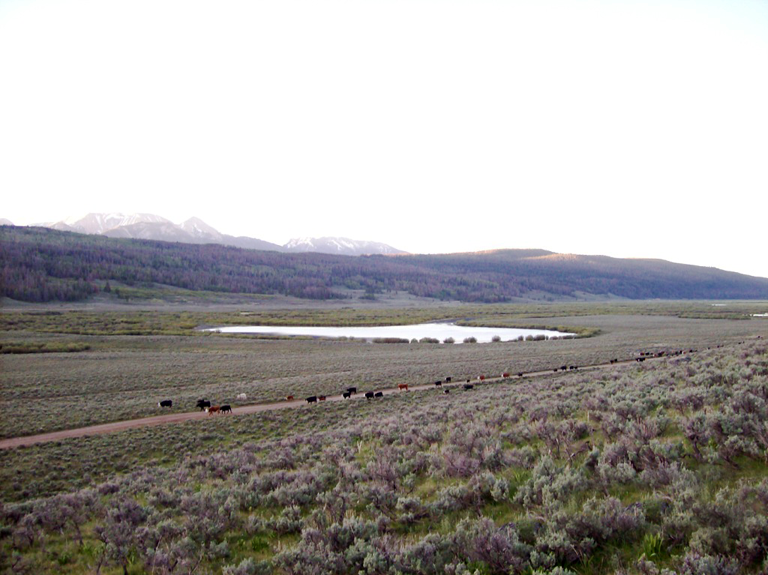
The cattle rest along the Green River with the Wind River Mountains in the background.
This is the last day of the ride for me though. I have to be away on other business tomorrow and will leave the last day of the ride to the other cowboys.
RealRancher Kent Price's cattle move onto U.S. Forest Service land where they will be driven to grazing allotments. Grazing helps maintain a healthy forest ecosystem and is vital to the livelihoods of many ranchers. The El Paso settlement money will be used by environmental extremists to eliminate some rancher's grazing leases.
WASHINGTON – A recent settlement agreement between a major energy company and environmental activist groups could have devastating impacts on the livestock industry. The agreement, between El Paso Corp., Western Watersheds Project (WWP) and Oregon Natural Desert Association (ONDA), seeks in part to create unprecedented federal legislation to allow for the buyout and retirement of federal grazing permits – threatening ranchers’ grazing rights across vast portions of the West.
“It’s unacceptable for El Paso to use any funding for the purpose of eliminating ranchers’ ability to graze on public lands,” said Skye Krebs, rancher from Ione, Oregon and president of Public Lands Council. “Energy development and livestock grazing are necessary and integral parts of rural western economies, and our industries have had a longstanding history of working together in a close partnership.”
Public Lands Council (PLC) and National Cattlemen’s Beef Association (NCBA) leadership met this week with El Paso Corp. to express opposition to the portion of the agreement dealing with grazing permit buyout and retirement. El Paso has agreed to respond by next Thursday, Aug. 5.
“We’re adamantly opposed to any efforts encouraging the buyout or retirement of grazing permits,” said Mark Roeber, NCBA federal lands chairman. “Ranchers play a critical role in providing food and fiber for the nation and managing our precious natural resources. NCBA and PLC remain committed to ensuring livestock grazing continues as part of the multiple-use tradition of our nation’s public lands.”
Under the agreement, El Paso Corp. agreed to provide 22 million dollars to WWP and ONDA to establish two boards responsible for the distribution and funding of alleged “resource conservation” activities, including the buyout of grazing permits. El Paso Corp. agreed to the settlement in response to pressure from WWP over the development of a 680-mile oil pipeline stretching from Wyoming to Oregon.
“Federal-lands ranching is one of the major economic drivers of rural western economies,” said Krebs. “Ranchers are already faced with the constant threat of frivolous litigation brought by radical environmental groups. This agreement provides a funding source for these groups to continue their activist agenda to end grazing on public lands.”





















 RealRanchers.com