Spring Cleaning

It’s a Crappy Job, But Someone’s Gotta Do It!

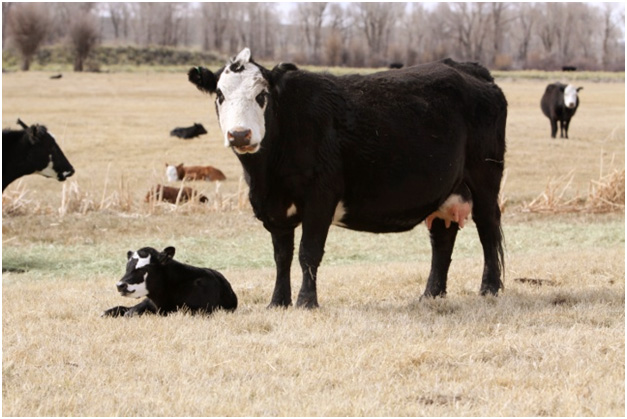
Cleaning the corrals and dragging the meadows are spring cleaning chores for ranchers. Scattering manure for fertilizer can also be part of spring cleaning. As soon as the frost is out of the top of the ground a rancher’s spring cleaning starts. This is usually the first part of April in the Green River Valley.

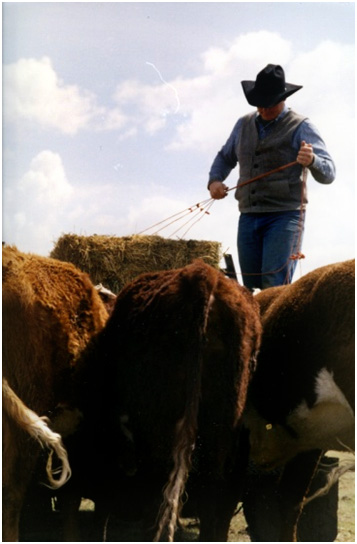
A drag which can be many things that will break up the manure and scatter it over the field, but usually a metal rod rug, harrow, is hooked to a tractor and pulled over all the meadows to break up all the cow pies (cow manure.) The drag scatters the manure so it will work as fertilizer on the coming hay crop. When the cow pies are broken up and scattered across the field this makes the meadow so the mower will not get clogged from the piles of manure when the hay is mowed in the summer. If bale twine has been dropped, it is picked up.

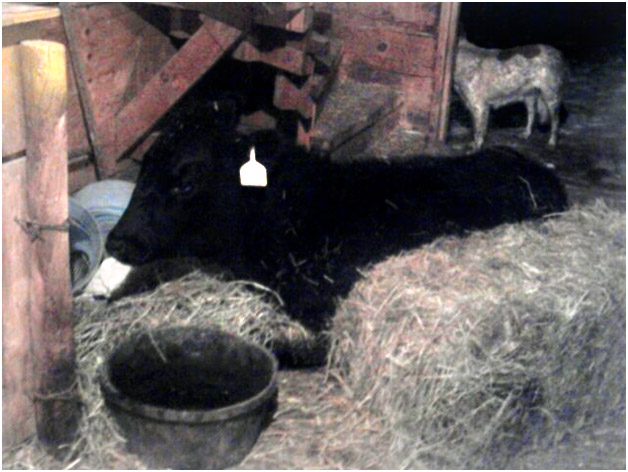
The corrals also need spring cleaning. Once the frost is out of the ground the manure is scraped and pushed into big piles in the corrals. Shovels or forks are used to clean around the fences and hay feeders where the tractor with a bucket cannot reach. The big piles are either loaded into manure spreaders or hauled to a big pile where the manure mulches.

Manure is managed by ranchers as a fertilizer for their fields. This pile is one storage method for the manure.
Image from http://animalag.ning.com

The manure spreader is pulled onto the meadows and the manure is scattered for fertilizer in the spring. If the manure is hauled to the large pile it is scattered in the fall with the manure spreader so the ground is fertilized for the next hay crop. The manure is also used to create dikes for irrigating.

Spring cleaning on the ranch is not the best job, but it is a job that has to be done. If the corrals are cleaned then the animals don’t have to stand in the muck when it is wet outside.

From RealRancher Jonita Sommers – Pinedale, Wyo.

Going Wild

NOTE: This article appeared in the March 5, 2011 issue of the Wyoming Livestock Roundup and was written by Cat Urbigkit. It features Boulder-area rancher and County Commissioner, Joel Bousman. We posed a question about the Wild Lands Order on our Facebook page and want to share the testimony of a RealRancher.

Wild Lands Order opposed in Wyoming
Photo by Stephanie Russell - http://www.cowgirlgraphics.net

Boulder rancher Joel Bousman testified before the U.S. House Natural Resource Committee in late February, speaking in opposition to the Obama administration’s Wild Lands Order (SO 3310) and its impact on jobs and economic growth. Bousman was speaking as a Sublette County Commissioner and President of the Wyoming County Commissioners Association.

“A skeptical and calloused view might be that the Department of the Interior is attempting an end-run on Congress by repackaging what we once knew to be a Wilderness Study Area and simply calling it something different,” Bousman said. “But looking at the guidance used to implement SO 3310, it seems that an end-run is exactly what is being attempted.”

The Wild Lands Order proclaims that protection of “lands with wilderness characteristics” (LWCs) is high priority for the Bureau of Land Management, and the open and productive natural state of such lands should be protected through designation as Wild Lands. The order instructs the BLM to maintain an inventory of LWCs that are outside areas currently designated as wilderness study areas.

Bousman argued that little has changed in terms of the environmental landscape that would change the inventories completed pursuant to Congressional mandate of more than a decade ago.

“Where the environment has changed, it has most likely moved away from a wilderness condition,” Bousman said. “Simply put, Mother Nature does not ‘create’ new wilderness in the span of 20 years. She does so either very abruptly with eruptions, earthquakes and floods, or very gradually, over hundreds of years. Thus, this present-day call to arms to protect wilderness lands is merely an excuse to loop in hundreds of thousands of acres of public land into an overly prescriptive management regime, when in fact, the land in question is no more wilderness than it was in 1964 following the passage of the Wilderness Act or at the conclusion of the Federal Land Policy and Management Act inventory in 1993.”

Wild Lands Order opposed by Wyomingites
Photo by Stephanie Russell - http://www.cowgirlgraphics.net

Bousman’s written testimony noted that according to the draft policy, grazing may be consistent with wilderness characteristics.

“However, grazing management practices (range improvement projects, vegetation manipulation and motorized access) ‘could conflict with protection of wilderness characteristics.’ Reservoirs, stock water tanks, pipelines and fences have all been installed (often at permittee expense) to distribute livestock across the allotments and improve the range resources (water, wildlife, soil, vegetation). These projects and their maintenance are vital to the economic viability of the ranching unit. Treating grazing and grazing management practices differently under this policy would have significant cumulative impacts on the grazing industry,” he said.

“Restrictions on the placement, construction, or maintenance of range improvement projects would have a significant financial impact on both the individual operator and local economy, most notably tied to increased labor cost associated with potential restrictions on motorized use within LWCs,” Bousman stated. “Further, the loss of vital water sources (used heavily by wildlife as well as livestock), tied to maintenance and water development restrictions, would likely cause livestock to concentrate around remaining water sources making it difficult or impossible to achieve the Wyoming Standards for Healthy Rangelands (a permit requirement). In addition, the loss of range improvements would likely result in a reduction in stocking rates. Finally, predator control would be severely limited due to motorized use restrictions, which in turn would increase predation on livestock as well as wildlife.”

Bousman said the Obama administration should rescind its Wild Lands Order.

“It is not supported by the law and is contrary to thoughtful public policy,” Bousman said. “New wilderness designations are and should remain the province of Congress.”

All Aboard the Hay Train

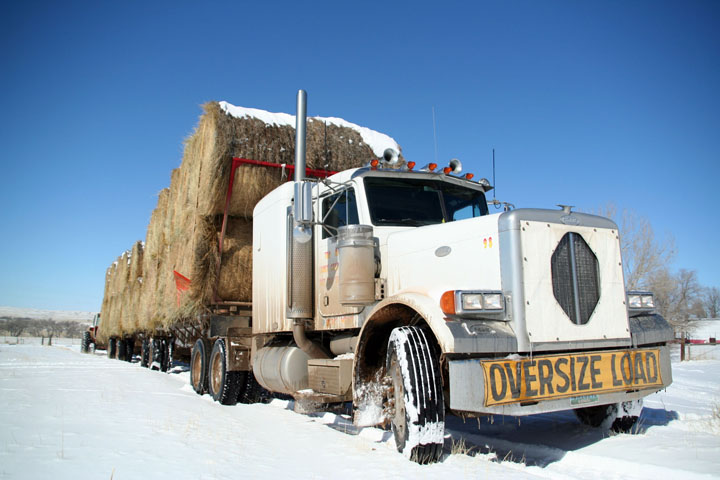
“With the lingering snow and cold temperatures this spring, many ranchers in eastern Wyoming are having to purchase additional feed. My dad and brother have a trucking company, and are often hired to procure, and/or deliver this feed, when it’s hay. This post follows my brother as he delivers one load to a fellow Niobrara County Rancher on a cold, snow-covered Wyoming morning.”

To read the full story visit RealRancher Heather Hamilton’s blog – Double H Photography

Celebrate! We’re Not Hungry & Naked

Today is National Ag Day and we’re celebrating the industry that is responsible for providing the necessities of everyday life … food, fiber, clothing, fuel and countless other necessities. In other words ag makes sure we’re not hungry and naked!

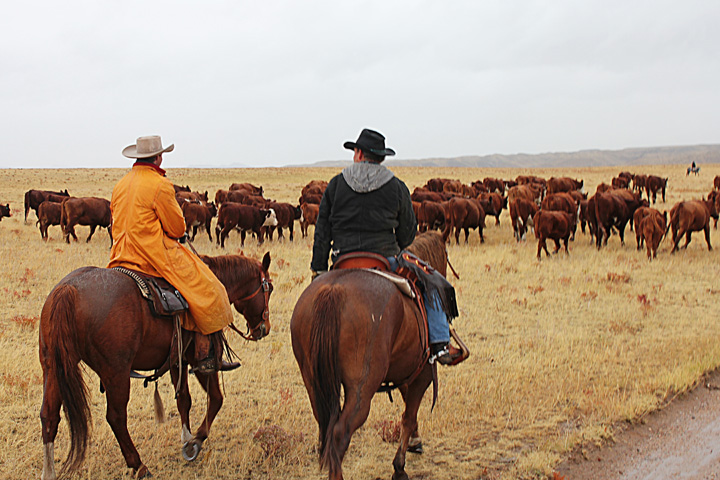
Ranching family in Sheridan, Wyoming moving cattle to properly manage rangeland health. Cattle production makes up 61% of Wyoming's ag economy. Crystal Lawrence Photo.
A ranching family in Northern, Wyo. moves cattle from pasture to pasture to properly manage the health of their rangelands. Cattle production makes up 61% of Wyoming's ag economy. Photo by Crystal Lawrence

The National Ag Day program is committed to increasing public awareness about American agriculture. As the world population soars, there is even greater demand for the food, fiber and renewable resources that the United States produces. National Ag Day focuses on educating Americans about the industry so they will understand how food, fiber and renewable resource products are produced and value the essential role of agriculture in maintaining a strong economy.

Sugarbeets cultivated near Wheatland, Wyo. Wyoming produces more than 600,000 TONS of sugarbeets each year. Liz Lauck Photo
Sugarbeets are cultivated near Wheatland, Wyo. Wyoming produces more than 600,000 TONS of sugarbeets each year. Photo by Liz Lauck

Wyoming does our part to contribute high quality, American grown and raised ag products. Did you know…

  • Wyoming agriculturists contribute a whopping $1 billion to the state’s economy and the U.S. ag industry plops down 20% of the U.S. GDP.
  • Wyoming has about 11,000 farms and ranches and is #1 in the nation for average size of farms and ranches
  • Wyoming farmers and ranchers care for 30.1 million acres, which produce food and fiber, wildlife habitat & keep lands free from development
  • Bringing in 61% of all Wyoming ag sales, ranchers raise and care for 1.3 million cattle. This is enough beef to produce ½ billion quarter pounder hamburgers per year!
  • Wyoming is the nation’s #3 sheep and wool producer. Wyoming sheep produce about 3 million pounds of wool!
  • The main crops that give Wyoming farmers and ranchers a purpose in life are hay, barley, wheat, corn, sugarbeets and dry beans.
    • Wyoming farmers and ranchers produce about 2.2 million tons of the hay each year!
    • If you end your day with a nice, cold beer, chances are it came from Wyoming. Farmers grew 6.9 million bushels of barley in 2008!
    • Wyoming raises enough wheat to produce 283 million loaves of bread each year.
    • Wyoming farmers also find time to raise about 700,000 tons of corn and 664,000 tons of sugarbeets.
    • Wyoming also makes the grade in dry bean production and is the 3rd largest producer of pinto beans in the whole, wide, nation.
Hard-working agricultural producers work 24/7/365 raising high-quality, safe and nutritious products, all while properly caring for their livestock, the environment and contributing to their communities. Photo - www.cowgirlgraphics.net
Behind all these amazing statistics are the hard-working agricultural producers who work 24/7/365 raising high-quality, safe and nutritious products, all while properly caring for their livestock, the environment and contributing to their communities. Photo by Stephanie Russell - http://www.cowgirlgraphics.net

Join this effort to promote American agriculture to everyone during National Ag Week, March 13-19, 2011. For more information visit www.agday.com.

From RealPartner Liz Lauck – Wyoming Stock Growers Association

Flooding

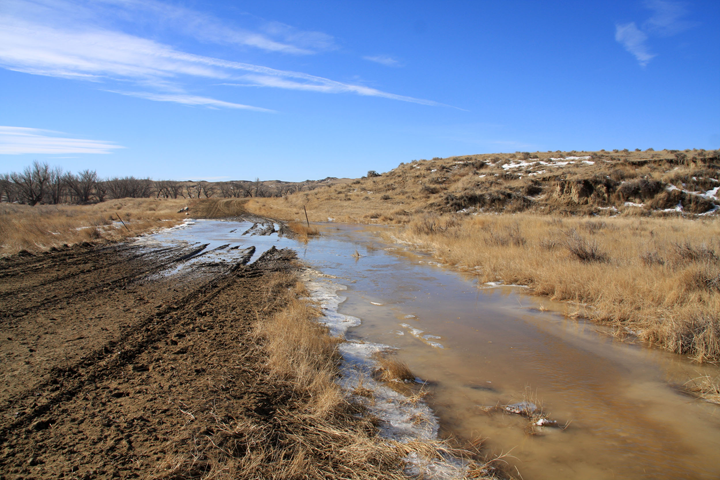
Northern Niobrara County is typically a semi-arid region, and while flash floods are somewhat common during the summer months, winters are usually relatively dry. Not so this year. Flooding and ice build up were a constant problem in January and February, and continue to make travel, feeding and calving difficult in the area.

Winter flooding in Niobrara County on the Greasewood Road. The unusual flooding caused problems for ranchers feeding and caring for livestock.
Unusual winter flooding in Niobrara County caused problems for ranchers feeding and caring for livestock.

The Greasewood Road was covered with flooding waters, when typically this time of year there is no running water in this location. We’ve (TRH Ranch) already lost one calf, that we’re aware of, to the cow slipping on the ice. Water is running freely across pastures, and freezes most nights, causing a real concern over the resulting ice. Cattle are not built for figure skating.

Niobrara County flooding has caused winter woes for ranchers trying to feed and care for livestock.
The Greasewood Road in Northern Niobrara County flooded this winter.

Roads across the county look like this, and are iced over and impassable in some cases. Others are muddy, or washed out. Warning signs have been placed at some road junctions to alert people of the conditions.

Winter flooding caused damage to roads and trouble for ranchers and livestock this winter in Niobrara County, Wyoming
Wyoming's average precipitation is less than 13" per year, so none of us are well equipped to deal with excess water, especially in the winter.

Normally, Lance Creek is a mere trickle this time of year. But look at it run! Looks like water gap repairs will garner attention earlier than usual in this part of the state.

Excess water is causing problems for ranchers and livestock in Niobrara County Wyoming this winter
Lance Creek filled to the brim. A very unusual sight for a Niobrara County winter.

Producers are still out feeding, calving and caring for livestock, it’s just taking longer these days. One perk is they don’t have to worry about checking water, as there is an abundant supply everywhere.

Niobrara County flooding has caused problems for ranchers and other residents not used to the unusual amounts of water.

From RealRancher Heather HamiltonLance Creek, Wyo.

…in addition

RealRancher Kari Bousman who posted yesterday’s entry about the Women’s Ag Summit, is also taking her own stand for the agriculture industry. She posted the following on the RealRanchers.com Facebook page today:

“Attention Wyoming Women: I would like to start a Wyoming Agri-Women Chapter. The organization will be a non-profit, non-partisan, public interest organization. It will build and strengthen alliances to influence positive perceptions of agriculture. If you are interested in helping out please contact me via Facebook at Kari Fink Bousman or email ckbousman@wildblue.net”

Way to go Kari!

RealRancher Kari's husband Cotton examines forage with their daughter on their public grazing lands. Cattle grazing is a sustainable way to manage public lands.

Learn more about American Agri-Women

Picking Your Crop & Planting the Seed

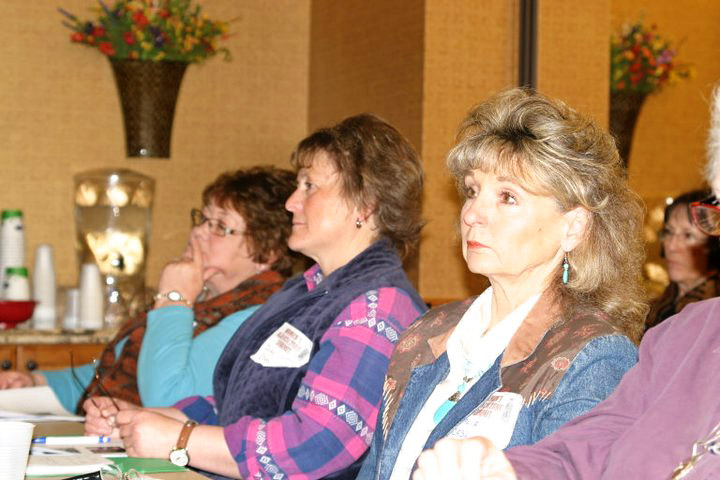
The Women’s Agriculture Summit was hosted by the Johnson County CattleWomen in Buffalo, Wyo. in late January. They had great inspirational speakers who spoke about a common theme of getting your agriculture story out before the anti-agriculture movement does.

Connie Lohse of Kaycee and other women attend the 1st annual Women's Agriculture Summit in Buffalo, Wyo.
RealRancher Connie Lohse of Kaycee and other women attend the 1st annual Women's Agriculture Summit in Buffalo, Wyo. Photo from Wyoming Women's Summit's Facebook page.

The main point I took from the summit was to “pick your crop and plant the seed.” This isn’t corn, alfalfa or any other normal crop; we’re talking about Facebook, Twitter, Blogs and many other outlets of social media. The seeds for your crop will come from your agriculture experiences and knowledge. The crop will only grow by sharing that knowledge with others.

The agriculture community has a tendency to be a quiet, out-of-the-way kind of people. Unfortunately, those traits are not helping us fight against the anti-agriculture movement, which is trying to ruin our agriculture futures daily. It is time to speak out truthfully, purposefully and with dignity!

Jody Lamp from Billings, Mont. discussed social media in advocating for agriculture at the 1st Annual Women's Agriculture Summit in Buffalo, Wyo.
Jody Lamp from Billings, Mont. discussed social media in advocating for agriculture at the Women's Agriculture Summit. Photo from Women's Agriculture Summit's Facebook page.

During the summit I learned from speaker Jody Lamp of Billings, Montana that anti-agriculture organizations are using social media to its fullest.

Here are the numbers of fans listed for three anti-agriculture organizations on Facebook alone:
1. Human Society of the United States (HSUS) has 500,000 Facebook fans
2. People for Ethical Treatment of Animals (PETA) has 950,000 Facebook fans
3. Greenpeace has 76,000 facebook fans

Here is an equation to remember: “Anti-agriculture + Social Media = Negative Influence.” Lets change that equation as an agriculture community to “Truth + Social Media = Positive Influence.” We can only change this equation by getting everyone’s story out, young or old. Let us plant the seeds while utilizing every generation’s strengths and knowledge to accomplish this goal.

Women from across Wyoming and beyond attended the 1st Annual Women's Agriculture Summit in Buffalo, Wyo.
Women from across Wyoming and beyond attended the 1st Annual Women's Agriculture Summit in Buffalo, Wyo. Photo from Women's Agriculture Summit's Facebook page.

Remember agriculture feeds the world so it is up to the agriculture community to keep it strong! Use your story with purpose and collaboration with agriculture communities and your truth will prevail.

From RealRancher Kari Bousman – Boulder, Wyo.

For more information on telling your agriculture story, contact RealRanchers.com by emailing Liz Lauck at liz@wysga.org or calling her at 307.638.3942

Taking the Ol’ Girls to Their Winter Home

Although the cows have been at their winter home for some time now, I want to discuss why my cows change residence during the winter months. My cows have been temporarily relocated since early December 2010.

Ranchers move cattle to different locations throughout the year to utilize all possible grazing opportunities
Photo by Stephanie Russell - http://www.cowgirlgraphics.net

Wintertime conditions around Lusk, Niobrara County, Wyoming can be quite adverse at times. We have the ability to receive a lot of snow, and the wind can really crank up periodically. Throw in some below favorable temperatures, and the conditions become pretty tough on the cows. Even if you have some winter grass left, the cows are going to need a substantial amount of supplemental feed (i.e. hay, concentrated cake) to keep them in proper body condition (i.e. packing some flesh). Supplemental feeds can be quite expensive. Plus, the actual feeding of these feedstuffs have associated costs (i.e. fuel, parts, wear-and-tear). With these conditions and expenses in mind, we in Niobrara County have options.

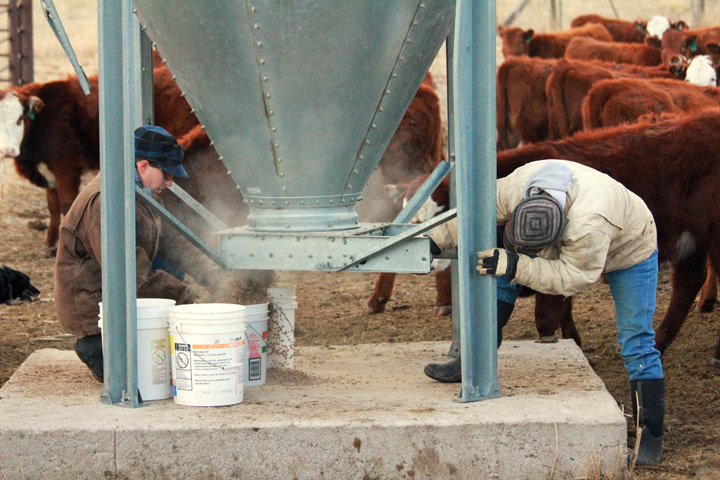
Feedling cake to cattle. Cake is a concentrated feed supplement ranchers use to feed their livestock when grazing is not available.
Feeding supplemental feed to cattle during winter months. Photo by Stephanie Russell - http://www.cowgirlgraphics.net

One option I believe in is relocating the cows to a milder climate. Located 60 miles south of us is a “Banana Belt” known as the Platte Valley. The North Platte River passes through this vicinity, and runs past the town of Torrington, Goshen County, Wyoming. This area is a large farming area with lots of hay, corn, beans, and sugar beet fields which have been harvested and are available for winter grazing. The area also sports milder temperatures, and generally less snow accumulation. These attributes allow cows to graze most of the winter without supplemental feeds. Occasionally, feeding may be necessary if the weather conditions dictate, but for the most part this is minimal. These lands are leased from valley property owners, and they are responsible for the care of the cows. The lessor makes sure the cattle have adequate water and available feed.

When pasture grass runs low for their cattle, ranchers must find supplemental feed or move to different grazing locations
Photo by Stephanie Russell - http://www.cowgirlgraphics.net

Obviously, there are costs associated with taking the cows to a winter oasis. The cows have to be trucked to winter pasture and back home to Lusk, leased pasture is generally charged at a dollar figure/per head/per month, and the possibility of supplemental feeding. However, these costs are less than if you had to buy hay and feed it all winter. I do not put up any hay on my ranch, and have to buy all supplemental feeds. Economically, the best situation for me is to relocate the cows for a few months. Even if you put up your own hay, it could be economically feasible to take your cows to a winter home. Just some food for thought.

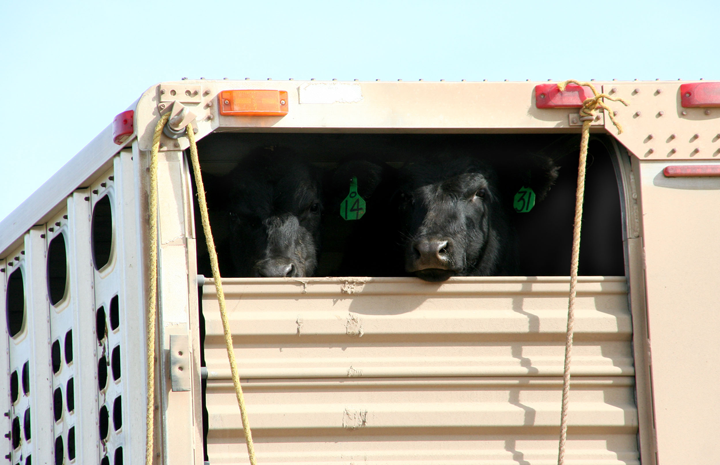
Calves from the TRH Ranch, north of Lance Creek, Wyo. They are being hauled a short distance to the ranch headquarters after being weaned on the opposite side of the place.
Calves being trucked from one ranch to another. Photo by Heather Hamilton - doublehphoto.blogspot.com

My cows start calving the 1st of May, so I try to have them to Lusk by the middle of April in preparation for their springtime ritual. I have been doing this routine for more than 10 years now, and feel this home relocation works well. The cows are always in good body condition and seem glad to be back to their spring, summer and fall home. And I’m happy to have them home! I just really enjoy having my cows, and being involved in production agriculture. Ranching is truly a great occupation!

Cowboys on horseback trail their cattle in Wyoming.
Photo by Stephanie Russell - http://www.cowgirlgraphics.net

From RealRancher Dustin Cushman – Lusk, Wyo.

All Work and No Play Part II

In my last post about our snowmobiling fun, I left out the best part. You see I was saving the best for last!

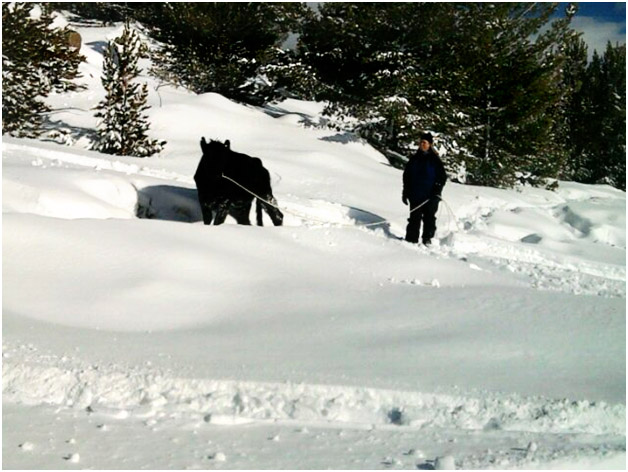
As can happen from time to time, unexpected things happen on a ranch. When Timmery and I were having fun up in the mountains on snowmachines we found a stranded cow, one of Timmery’s, and it was a long way from home. There was absolutely no way the cow could walk 17 miles of snowmachine trail and climb up to nearly 10,000 feet in the process. What were we to do?

RealRanchers Jim and Timmery Hellyer rescue a stray heifer cow from a wintery situation in Fremont County Wyoming.

That black speck in the center of the picture is the cow that didn’t come home from the mountain with her sisters last fall.  We think she had been up there since late October.

Thankfully we live in a community where people help one another.  The local snowmobile club, The Lander SnowDrifters, had an idea and the equipment to bring the cow home.  We made a plan and met at the parking lot and off we went.

Upon arriving at the scene we found the cow for the second time and as seen below, Timmery put a rope on her and then several members of the club and I pushed and pulled while working a path in the snow to get the poor thing to the trail.

RealRanchers Jim and Timmery Hellyer rescue a stray cow from the mountains in Wyoming

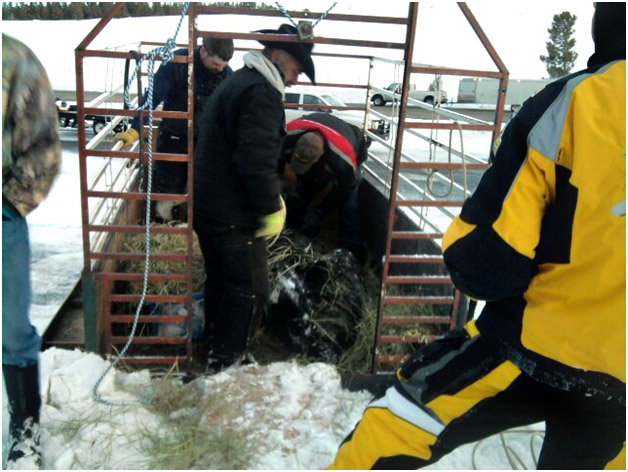
The next step in this expedition was loading her into the back side of the groomer sled.  Surprisingly it didn’t take long to get her situated and strapped down for the ride home.

RealRanchers Jim and Timmery Hellyer rescue a stray heifer cow from the mountains in Wyoming by strapping her to a snow sled

That is her, ol’ RT 13, all bundled up in hay and ready to roll.

At this point in the rescue mission it occurred to me that we probably had a lot more money tied up in snowmachines than this heifer was ever going to return. But, she is one of ours and she made it this far, this long, and we owed it to her to give her a fighting chance.

The Lander SnowDrifters helped RealRanchers Jim and Timmery Hellyer rescue a stray cow from the wintery mountains in Wyoming

Above is the total crew with two big, yellow Ski-Doos hooked together and ready to start pulling up toward the pass.  This is the critical part of the story.  The SnoDrifters had the machines with wide tracks and low gear to pull the long hills and not just dig a hole and get stuck.  So onward we went.

RealRanchers Jim and Timmery Hellyer rescue a stray heifer cow from the mountains in Wyoming using snowmobiles

Some readers might recognize the sign.  This is the same place Timmery and I took our self portrait last time.  We really like our cows and decided to take them snowmaching with us for fun this time – not!

Eventually we made it back to the parking lot, loaded her into the stock racks on a pickup and headed out.

RealRanchers Jim and Timmery Hellyer rescue a stray cow from the mountains in Wyoming using snowmachines

Finally we could tell ourselves the heifer was on her way home.  There was only more task before we could celebrate.  We had to get her into the barn.  Thankfully, the SnoDrifters were a committed and capable bunch and they came all the way home to Timmery’s barn and helped us unload her…by hand.

RealRanchers Jim and Timmery Hellyer, along with the Lander SnowDrifters, welcome the stray heifer cow home after being stranded in the mountains

The heifer had arrived.  Too bad it wasn’t Christmas or something.

So, a big thank you to the Lander SnoDrifters for volunteering your time and equipment. You helped us fulfill our commitment to our livestock to care for them the very best way we are able.

From RealRancher Jim Hellyer – Lander, Wyo.

Bon Appetit!

Cattle standing in a bunch on the feedground waiting for the rancher to feed them is a familiar scene throughout the Green River Valley.  A few ranchers still use a team and sleigh to feed their cattle, but most ranchers use a tractor with a heated cab hooked on a bale feeder that is run by hydraulics.

Sublette County Wyoming ranchers feed hay to cattle with a John Deere tractor in the winter

It takes 1.5 – 2 tons of hay to feed a cow most winters (that’s up to 7,000 pounds for one animal!).  Cattle are fed five to seven months out of the year because the natural forage is limited or covered in snow.  The yearling calves are fed from the time they are weaned in November up to May when they are turned out on spring pasture.

Mother cow and calf rest in the sun of a ranch pasture on a cold winter day in Sublette County Wyoming

The cows are fed when the pasture is snowed under or used up.  It varies from the first of December to the first of February.  Usually if the rancher can make it until Christmas or New Years Day before they have to feed, they call that a successful fall grazing season.

Cattle feeding on hay fed by ranchers during winter in Wyoming

Often while the cows are on fall pasture the rancher gives the cows supplemental feed which is high protein pellets, block or tubs.  To supplement the yearling calves or cows with protein, the rancher can also feed them alfalfa hay which is a high protein feed.  Cattle are also given mineral, to balance their diet.

The rancher feeds the cattle a long, thin row of hay either by hand with a pitchfork, breaking little square bales and kicking them off the sled or by running the bale feeder, which is run by hydraulics.  The first two methods can mean a very cold morning for the rancher.

Feeding cattle in Sublette County Wyoming to humanely care for animals and livestock.
Sublette County Rancher Brian Esterholt feeds bales of alfalfa hay to his cattle during the winter months when natural vegetation is not available for the livestock to feed.

Possibly the preferred method can be done from the heated cab of a tractor with the radio playing.  The challenge with machinery is getting it started and keeping it running in the cold conditions of the Green River Valley.  If a team and sleigh is used, there is calm and quiet except for the sound of the harness clinking and the sled runners gliding on the snow, which is a very enjoyable sound.

The cattle must also have a good source of water because hydration is so important during these extreme cold conditions on the pasture.  Hopefully the rancher has good natural springs which have warm water that stays open year round.  If not, the rancher must drill a well and supply a water tank. The river can be used for a watering hole, but it is very dangerous even if the rancher opens the water hole every day.  The ice buildup and level of the water in the river can vary greatly.

As the rancher leaves the field to go to the house, the cows stand with their heads together eating hay.  All the rancher sees is a long line of the cows’ rearends.

Cattle feeding on hay supplied by ranchers in the Wyoming winter

The feeding job is done for the day unless a rancher feeds the calves twice a day to improve gain and reduce waste of hay.

From RealRancher Jonita Sommers – Pinedale, Wyo.

The Farm Paparazzi

Armed with an automatic setting to expose a happy life full of God's grace

Facts About Beef

Debunking myths about beef

Beef Runner

Agriculture Advocacy, Beef and Running

Wyoming Lifestyle Magzine

a virtual visit to wyoming's rural communities

Wyoming Livestock Roundup

a virtual visit to wyoming's rural communities

Bridle-Bit LLC Blog

Horse & Rider Training. Serving The Northern Front Range Since 1981

Faces of Agriculture

a virtual visit to wyoming's rural communities

The 307 Chronicles

a virtual visit to wyoming's rural communities

Wyoming Roundup

a virtual visit to wyoming's rural communities

a virtual visit to wyoming's rural communities

Double H Photography

a virtual visit to wyoming's rural communities

Ladder Ranch

Scenes, thoughts and poetry from our working ranch

Comedy Of A Cowgirl

The Comedy of Storytelling

RealRanchers.com

a virtual visit to wyoming's rural communities