We went on a cowboy vacation recently, also known as an overnight trip to a bull sale. Ranchers have varying opinions about bulls. In my opinion they are an important investment, a way to improve our cattle herd with better genetics. We have a budget, but try to buy the best bulls we can afford.
RealRanchers Rob & Carla Crofts took a family vacation to the Redland Angus Bull Sale in Buffalo, Wyo. this winter.
This year we needed new heifer bulls. This term confuses a lot of people. Heifers are young female cattle, and to ease their first birth experience we provide a bull that will produce a smaller calf. The heifer will recover faster and the calf will be more alert and responsive, usually jumping right up to nurse. While first calf heifers are monitored closely they will require less assistance during the birth process.
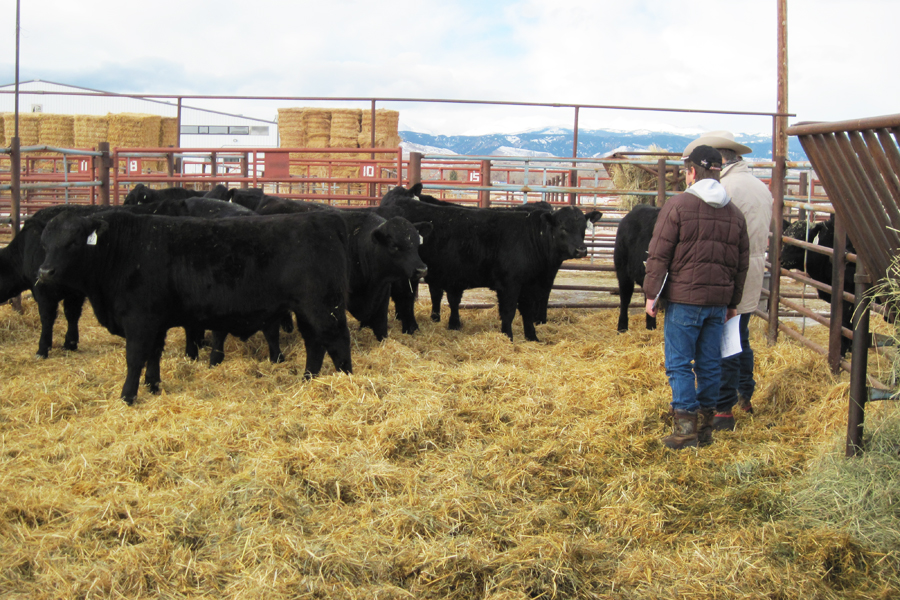
We have purchased bulls from Redland Black Angus in the past and they have worked well for us. We had spent several weeks studying the sale catalog and watching the video of the bulls. We had decided on the blood line we preferred and marked about 20 bulls that were all sired by the same herd bull with mothers who were closely related in order to produce a consistent set of calves.
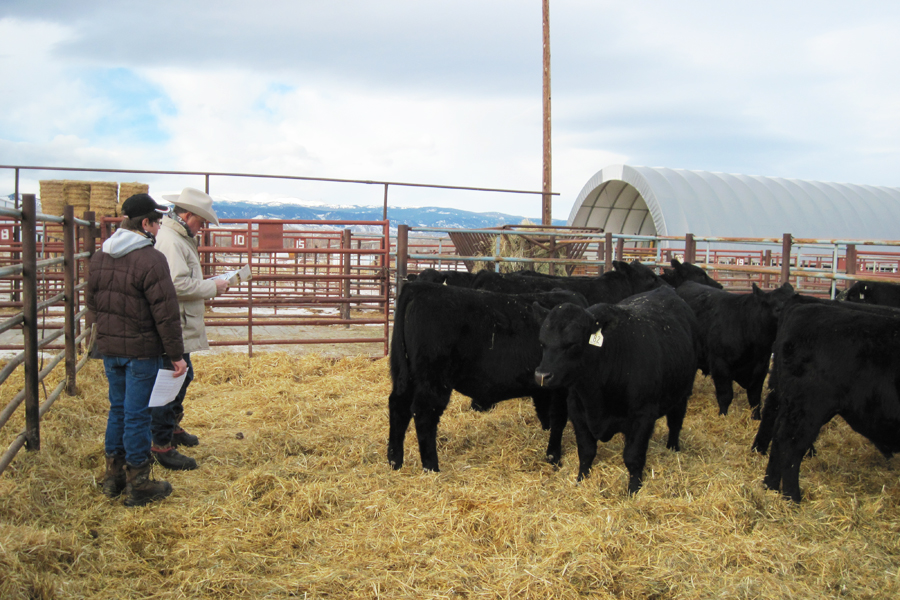
RealRanchers Rob & Carla Crofts, along with their son, look over bulls for sale by Redland Angus at Buffalo Livestock Auction in Wyoming. Ranchers often buy new bulls to improve genetics in their herds.
We arrived at Buffalo Livestock fairly early, while it was still quiet. We went through each pen of bulls and agreed we liked the bulls we had marked in the catalog. We admired the bulls that would sell at a price we could not afford. We looked at the “new blood” that will be more predominant in Redland’s program in the next few years. And we enjoyed the fabulous smoked brisket lunch that the Johnson County CattleWomen always provide – what amazing cooks!
Auctioneer Joe Goggins is a fast talker. He sold 100 bulls in one hour and 5 minutes. People came to buy bulls, and they bid exuberantly on what they liked. We now own three new heifer bulls. Not the three we had hoped for, but close and in our budget. Now we are looking forward to next spring when we will see the first offspring – it takes time to see the results of the investment.
From RealRancher Carla Crofts, Armada Ranches, LLC – Lander, Wyo.
Males, particularly males of the bovine species, can be very irritating and time consuming. Bulls seem to be uncontrollable starting in late March and ending in November. You never know where or when they have gone gallivanting off. You think they are in your pasture, especially made for bulls, but when you look there is only one bull or maybe no bulls! Oh, where have the bulls gone?
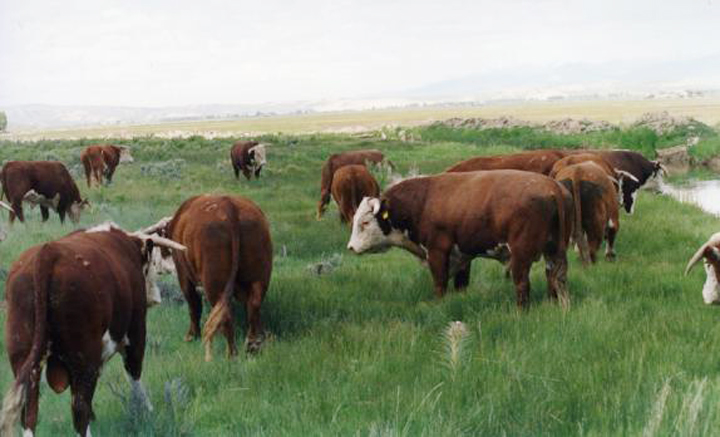
Sommers Ranch Hereford Bulls
Looking into neighbor Charles’ bull pasture you see twice as many bulls than should be there. Someone or somebodies go horseback while someone else takes the four-wheeler with fencing supplies to fix the fence. Yes, when you get down there, which is three or four miles from the house, the bulls have demolished the fence by breaking off several posts, breaking wire and managing to pop nearly every staple from every post.
Two hours later, the fence is fixed just as the horseback riders bring most of the bulls back to their bull pasture. All of the bulls are never found because one or two bulls have to go exploring. More than likely they have crossed the river and gone into Charles’ school section, but they could have gone up along the river and hid in the willow patches. You can be sure a bull is never where it is suppose to be located.
Hereford bulls fight with each other while Dan Metz moves them to where they're supposed to be.
In the spring, the bulls try scattering like flies. Charles’ bulls end up in our purebreds or Luman’s little bulls end up in our cows that are calving. Our bulls get in with Charles’ bulls. Sometimes our bulls get out in our meadow in the Lower Field and tromp the ditches to pieces. If they get really active, they go through another fence and get out in the Soaphole with Charles’ and our heifers. At times, we have kept our bulls in the Swamp Field. From here they like to visit Miller’s yearling heifers in the Soaphole. You can ride hours or even days on the ridges looking for bulls. I have found tepee rings, karans, fire pots, arrowheads, sage grouse strutting grounds, petrified trees, but no bulls. Oh, where are the bulls?
One time our bulls decided to visit Miller’s cows. Albert sent the hired man to assess the situation and damage. The hired man came back with big eyes and as he told what he found his eyes got bigger and bigger. His story went as follows and he was sticking to it: “The bulls are in Millers — all of them. They tore down three fences. The first one is down for several posts, but the second fence is gone. There is nothing left of the fence going into the Cabin Field. It is gone!! The fence into Miller’s just has a few broken wires.”
Now, in the fall, you don’t have problems keeping the bulls in the field, you have problems finding them to put in the field. Every fall it seems you have not gathered one, two or three of your bulls. You go riding and looking for them. You talk to hunters who can tell you where they have seen about anything. You fly in a plane to try and locate the lost critters.
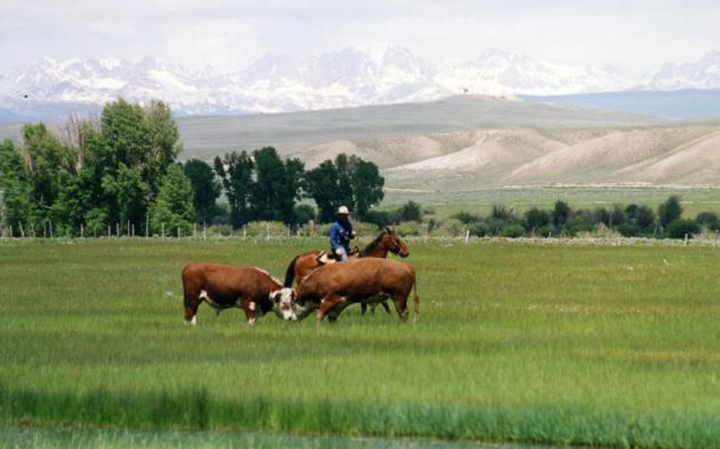
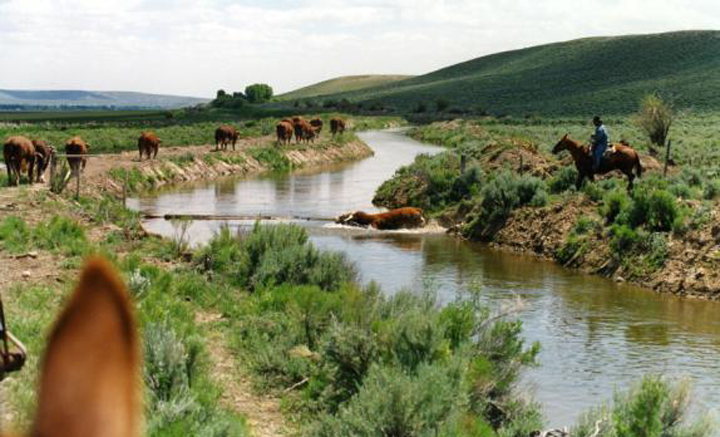
These Hereford bulls are being trailed home after breaking into the neighbor’s field.
One year, Wardell’s had a bull winter in Trail Creek Park. Snow machiners carried him hay all winter. One fall, we tracked a bull up to Tosi Peak, down Clear Creek and out Kinky Creek which was only a couple of miles from where we had started and had probably ridden fifteen or twenty miles that day. One year, two bulls were along the Green River Lakes road, and they would not come out. Shorty Steele had a horse trailer, so he took it while Dad and I took our horses in the stock truck. Dad would rope a bull, drag it to the trailer, throw the rope to Shorty so he could run it inside the trailer. Dad would dally again and drag the bull into the trailer. Both bulls were loaded in this manner, so they could be put in the pasture where they belonged.
The year Dad was hurt, we had a bull near the Bend which kept evading me. I would drive the 50 miles to look for him. I would find fresh tracks, but no bull. I would talk to hunters who had seen him just hours earlier, but no bull. I got Garlie Swain to go with me because I thought I just could see him. Garlie and I rode all day and it was the same story – no bull. There were just fresh tracks, and yes, the hunters had seen him that day, but no bull. Garlie and I went to The Place to get something to eat. Garlie was afraid Mom would be mad at us, so we were contemplating what to do when some hunters came in The Place and said there were some cows up the road toward Boulder Basin. Garlie and I went up there and rounded up the cows, but no bull. At least we didn’t come home empty handed.
RealRancher Albert Sommers (Jonita Sommers' Brother) trails the bulls back home near Pinedale, WY.
Several years back, we had two bulls missing in the fall. Albert had ridden all over Eagle Creek and Lime Creek for the bulls, but no bulls. The hunters had seen the bulls recently, but no bulls. Before the bulls were found, it had snowed at least a foot in the river bottom, so Barry Raper was driving her dog team up there. She found the bulls and brought them out to the road. Albert did get the pickup and horse trailer through the snow and to the Kendall Bridge. He opened the trailer door and scattered some hay. The bulls came walking off the hill and walked right into the trailer. I think they had enough snow and no food. They were starting to get thin and ready to go to the field.
As you can see, bulls will be bulls. They are never where they are suppose to be when you look. Is it a male thing or is it just the males of the bovine species? When you have bulls, you have more bullll…..than you want!
There are different ways to fertilize the ground you grow your crops on. Our crop is hay. We grow it in the summer so we have something to feed the cattle in the winter. When the cows come home from their summer pasture in the fall they are left to roam and graze in the already harvested meadows, but when the snow comes it gets to be pretty tough picking. So we feed them the hay we cut during the previous summer.
In order to make the most of the feeding we feed the cattle their hay on new ground every day. As you know, what goes in must come out and what comes out is good fertilizer. By feeding the cattle their hay back onto the ground where we harvested it, we provide reseeding and nutrients for the next year. The cattle are happier too when their feed is placed in a new spot every day because just like you and I, cattle like to eat from a clean plate.
Sixteen Niobrara County agriculture women have dedicated six weeks to increase their knowledge and skill base to better understand and manage risk in their families ranching business. These women will receive 18 hours of education in the areas of production, legal, financial, marketing and human risk, all dedicated to helping improve their families agriculture based business.
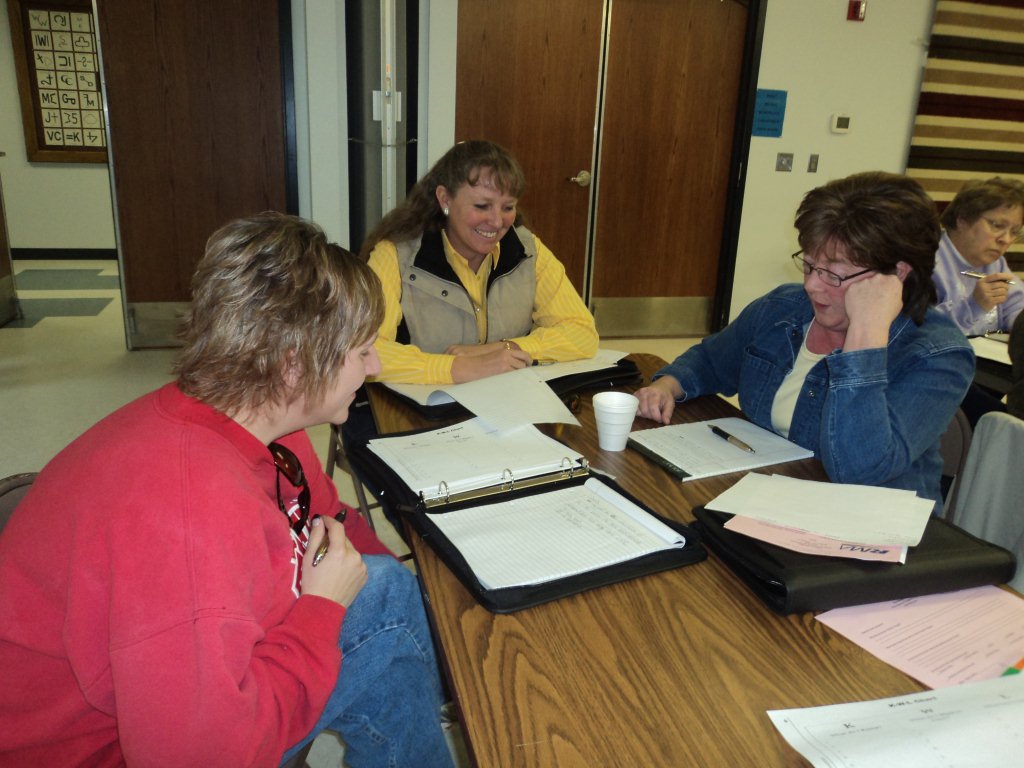
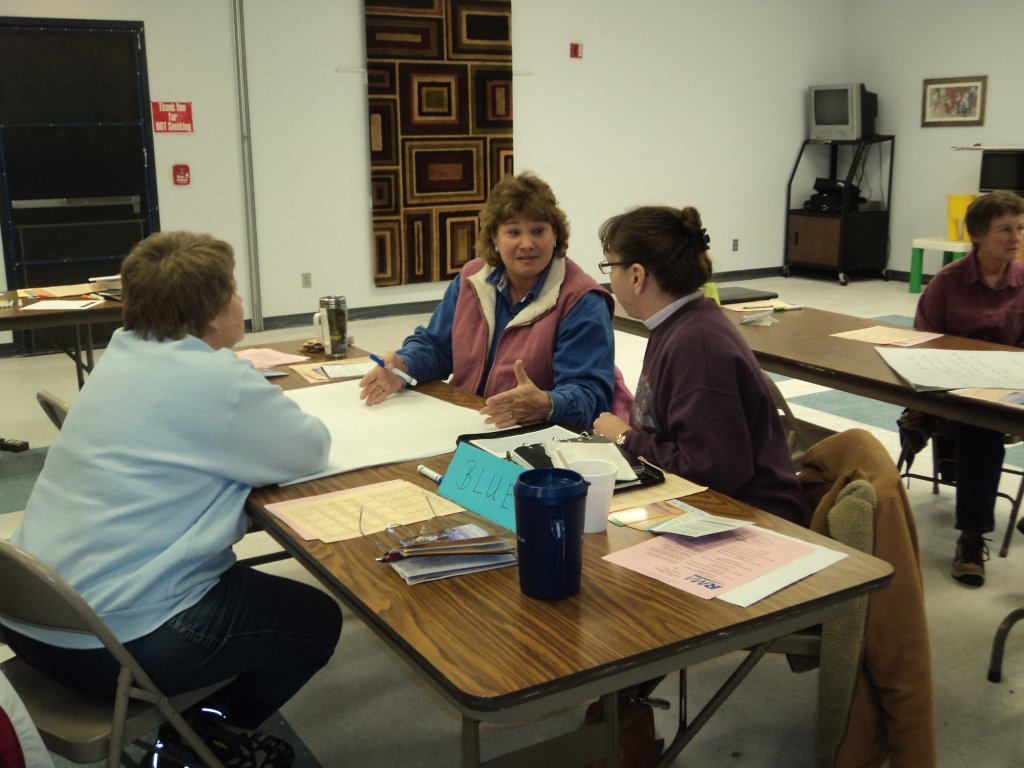
Participants in Annie's Project in Lusk, Wyo. learn to better understand and manage risk in their families ranching business.
Annie’s Project is a nationwide educational program designed for agriculture women with a passion for business and being involved in their family operations. This program is being offered in Wyoming for the first time in Lusk and started January 24. To date, this group has competed 12 hours of education and topics have included: goal setting, transfer of non-titled property, strategic marketing, what lenders look for in their customers, long-term care insurance, feeding enterprise budgets, financial statements, nutritional needs of cattle during various productions cycles, cost per pound of protein/energy and how to value different personality types and create unity with all personality types.
Niobrara County Extension Agent Tammie Jensen (standing far right) has been an integral part in the Wyoming Annie's Project.
Remaining programs will include niche marketing and budget analysis, property and equipment titles, business transfer and succession, agribility in Wyoming and generational differences.
Annie’s Project is a program based on a woman who grew up in a small Illinois farm community with the goal of marrying a farmer, and did. Annie spent her life learning how to be an involved partner with her husband. Annie’s Project is designed to empower women to manage information systems used in critical decision making processes and to build local networks throughout the community and state.
The 16 participants in the Lusk, Wyo. Annie's Project will take valuable knowledge back to their family farms and ranches.
The Extension Office is looking at offer this class again in the spring or fall for potential participants that were unable to attend during this current time frame. If there are individuals interested in participating at a later date, please contact Tammie Jensen at the Niobrara County Extension Office at 307-334-3534.
Funding for Annie’s Project has been provided by the USDA Risk Management Agency and is organized by UW’s Niobrara County Extension Educator, Tammie Jensen and UW Extension Specialist Cole Ehmke.
From RealPartner Tammie Jensen – Niobrara County Extension
Our water system is all based on about 30 miles of underground, PVC pipeline, that transports water from multiple water wells to more than 20 water tanks, most of which are recycled tractor tires, like the one below. We also use a couple windmills to pump water, and have a solar well on our place that we pump water with also. The system is kind of like a town’s water system, where water is piped to various residents (water tanks) from a large well (several wells in our case).
We put in all the pipeline and tanks ourselves, do the maintenance on them, and specifically designed our water system so that every pasture has water that comes from at least two sources. That way if one well/water tank/ pipeline/etc.. breaks, our livestock will still have water from a different source.
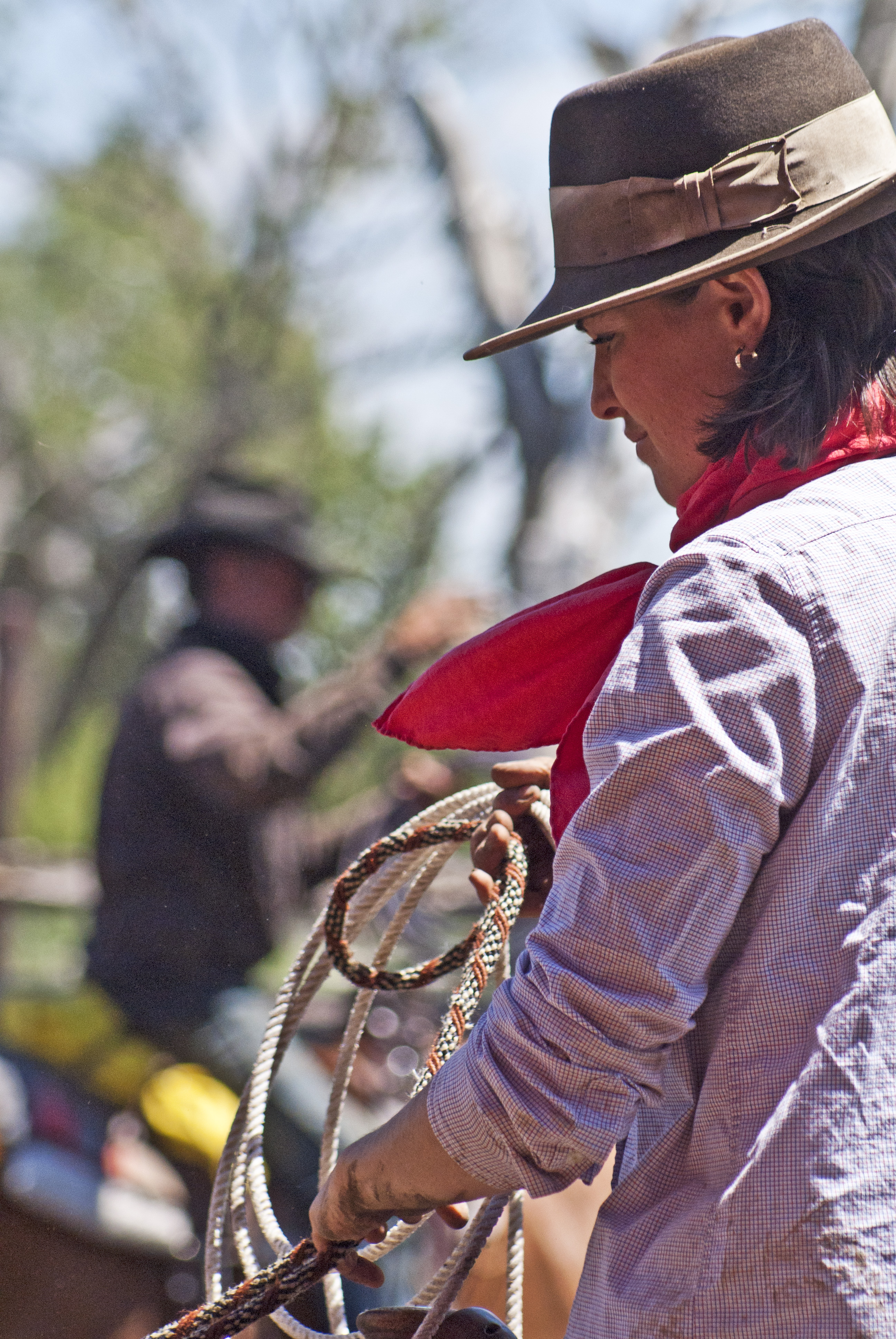
Jennifer Faulkner, a University of Wyoming graduate student, received the Larsh Bristol photojournalism stipend in May 2011. This funding supports her current project, which aims to represent the ranching community. Her goal is to capture images of every day ranch life, with an emphasis on the diversity and challenges of this lifestyle.
Jennifer wrote in her proposal for the project, “Wyoming has a rich history of cowboy culture, and still uses this imagery as a source for attracting visitors. It is ironic, however, that the public perception of the cowboy is full of romance and sexuality, while ranching itself is often regarded as a profession left to the uneducated and untraveled conservative. Having been raised on a Wyoming cattle ranch, I am keenly aware of such discrepancies and misunderstandings regarding the ranching community. I regretfully observe this land-based lifestyle slipping down the same path of extinction as other past agrarian societies…The purpose of this project is to create a photographic collection representing the dynamic and multidimensional life of the rancher, from the perspective of a cow man’s daughter.”
Jennifer is seeking additional Wyoming ranchers interested in allowing her to gather photographs of their operations. Please contact Jen at 307-761-2556 or faulknerj99@hotmail.com, if you are interested in having her take pictures at your operation. She is happy to provide references of other ranchers who have graciously allowed her to visit and document their lives throughout the summer and fall.
Select photos from this project will be featured at a gallery display May 18th from 6-9 p.m. at Heart’s Alley, 404 S 2nd Street in Laramie, Wyo. The showing is open to the public.
The saga of Bessey Stacy Badger, my great-grandmother’s mother, who homesteaded with her husband, Leland, is a story of equality. They homesteaded in eastern Wyoming in the late eighteen hundred’s. Wyoming was known as the “equality state,” a fortunate state for Bessey and Leland to choose to homestead.
Leland Badger's parents circa 1871
This is not a story about Leland. Stories passed down abound of him being a ‘wonderlust’, as Robert Service would dub. I must portray lightly this character, Leland, to give you the entire fortune that equality in Wyoming brought for Bessey.
Read the full story on RealRancher Ondi Shepperson’s blog.
Coyotes are predators to other wildlife such as deer. They are also predators to our new born calves.
Last spring the coyotes were after our registered calves and just about killed one. Luckily my Grandma went up there and caught the coyotes, killing one, while the other ran off. If they kill our calves that can cost us $2,000 and up. That’s a pricey meal for those coyotes.
Livestock losses due to predators take a big bite out of a ranchers income. Photo from Kent Price.
They also kill baby deer and we’ve been trying to raise our deer population numbers. The coyotes are not helping. They are a bad predator to have.
So this fall and winter I decided to eliminate some coyotes by snaring them. Snares tie to a fence at the bottom at a hole where the coyotes crawl through. When the coyotes try to crawl through the hole they get caught. Then I kill the coyote, skin it and sell its pelt.
I’m protecting our herd of cattle and the deer. I’m also making money selling their pelts.
Snaring is like a chore, you have to check the snares every other day. It’s an enjoyable learning experience.
Colin spent time in Wyoming this year working on ranches. He helped the Hellyer family for a short time before heading off to new adventures. This is his account of his experience gathering cattle.
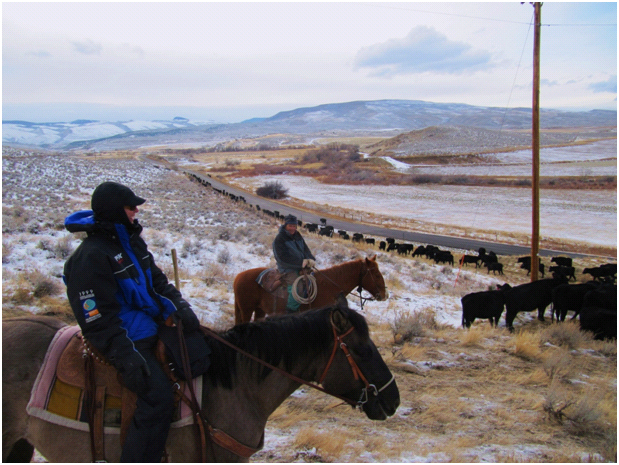
At 6 a.m., the National Anthem played over the radio at the breakfast table. Like the beginning of a sporting event, “home of the brave” signified the challenge ahead. The words proved to be accurate, as my host and friends would brave the cold for three days to drive cattle roughly 35 miles.
The drive started at the Burnt Ranch on South Pass, located at the intersection of what was the Oregon, California, and Mormon Trails. The wide open plateau extends beyond the horizon on a good day, and well beyond visibility in blowing snow.
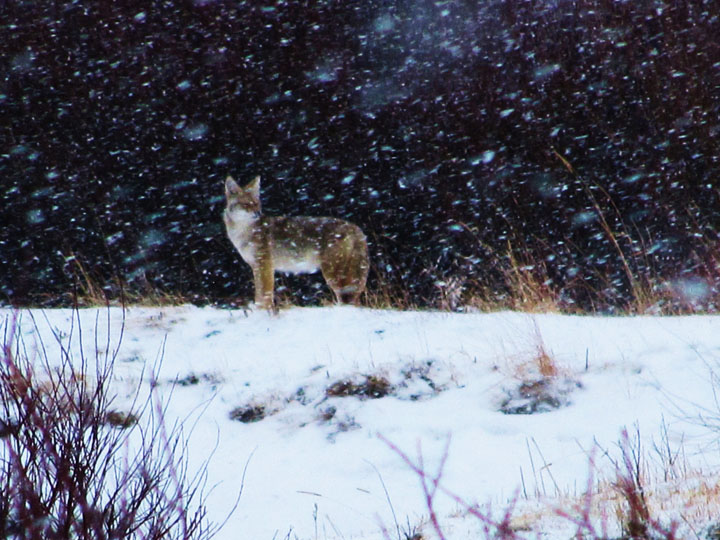
A coyote looks on as the cattle were gathered on Day 1
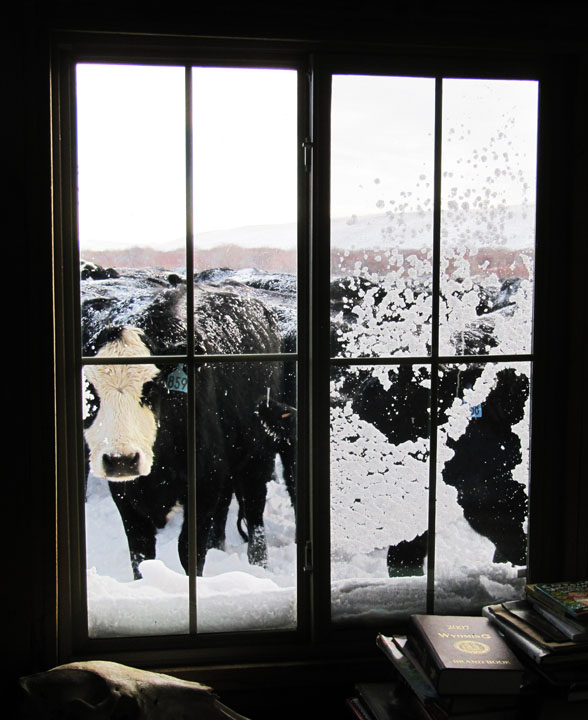
The herd was well-positioned to be gathered and fed at the west end of the Ranch around the cabin for the night. The cattle are accustomed to spending their summers on a mixture of federal and private land. This management strategy with public and private land is critical to the operation.
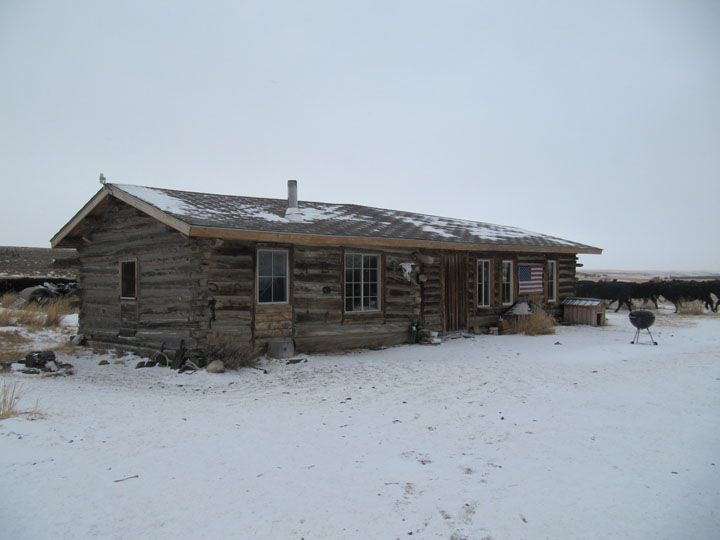
The Burnt Ranch cabin on South Pass
The Burnt Ranch is the base of summer operations for the Ranch. As summer turns to fall, the cattle are moved to irrigated pastures along the Sweetwater River. When winter approaches, the cattle are fed hay and gathered to begin the drive down to Lander and a friendly climate.
It looks like this cow was ready to get off the mountainAn anxious herd watches Rob Hellyer and his son, Jim, put tire chains on the truck
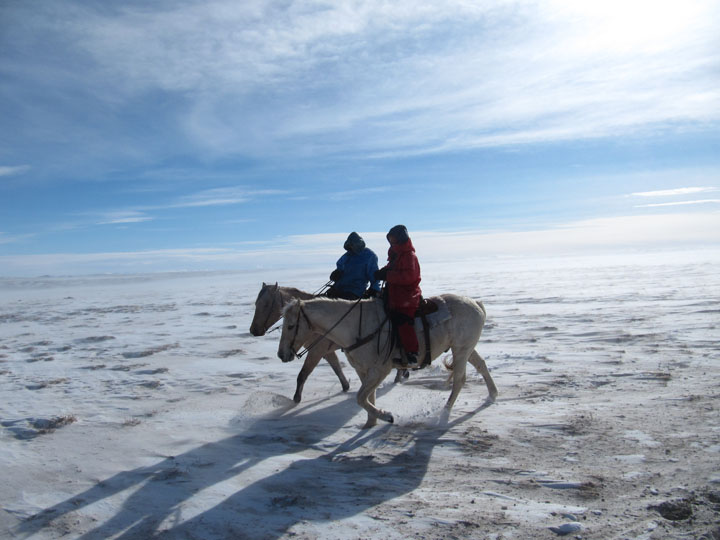
Several inches of snow fell that night and the strong winds made for rough road conditions. As a result, the ranchers’ reinforcements (all neighbors) had to improvise. The five-man crew coming up the mountain from Lander on the second day was forced to park their trucks and horse trailers in Atlantic City and ride the remaining distance up the mountain to meet the herd. This delayed their arrival, and, the four-man crew from the cabin set out alone to begin the drive. Despite the lead tractor getting stuck in a drift and a faulty tire chain that immobilized a truck and trailer, the four-man crew from the cabin was able to get the cattle lined-out and moving across the snow-blown mountain.
Rob Hellyer (on foot) and his wife, Martha (on horseback), moving cattle through the snowA view from the backMartha Hellyer and her son, George
With eight riders, progress was steady for the rest of day two. The cattle reached the overnight holding pen, 15 miles from the cabin, and were fed just before dark. After a long day, the crew was ready for a meal and a warm fire to escape the single digit temperatures and strong winds.
Jim Hellyer feeds hay in single digit temperatures
On the last day, the cattle were driven off the mountain along highway 28. The riders’ job was to keep the herd moving steadily, keep cattle out of the road, and be careful of oncoming trucks and traffic. Contrary to the dismal weather forecast, winds were mild on the third day and the crew was able to move the herd roughly 20 miles to winter pasture.
The herd passing Red Canyon.Rob Hellyer and his daughter, Jessica, bring in the last of the herd.
con·trap·tion [kuh n-trap-shuhn] a mechanical contrivance; gadget; device.
Have you ever built something that turned out not quite as intended? Well, from time to time I have built some things which cost a lot of time, do actually work, but really need improvement.
For example, consider my recent stab at a “portable fence corner.” Depending on feedback from this I may or may not enter FarmJournal’s best idea for a $100 contest.
To begin, a portable fence corner is necessary because…..well because I can’t make up my mind and may want to move it. Or, if there is a will there is a way. Or, maybe I didn’t want to dig a hole and decided that a more than one ton block of concrete should do the trick.
Let us break down the project.
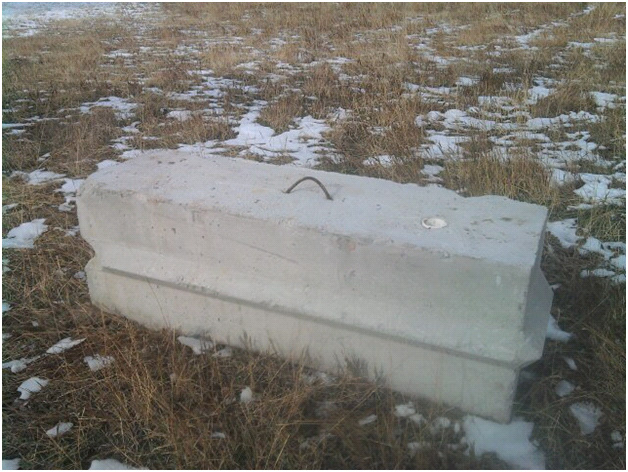
This is phase one of what some in my family refer to as “another one of your contraptions.” In this picture I have assembled most of the various parts. Notice the cleanliness and attention to detail in the workplace.
This is phase two of my shovel ready project. Notice that the foundation of the future corner was set without the aid of a shovel. This greatly increases the speed and efficiency of the project.
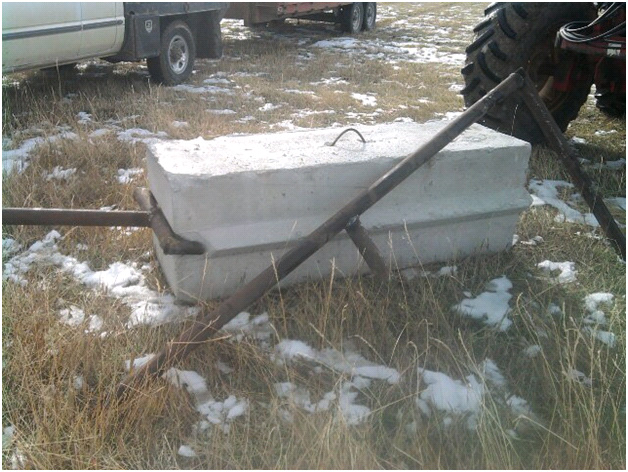
The three inch circlular hole on the right of the block is designed to accept used oil field pipe.
Phase three brings physical placement. This requires a vehicle to transport the corner and associated parts and a loader to place the block and raise the steel components.
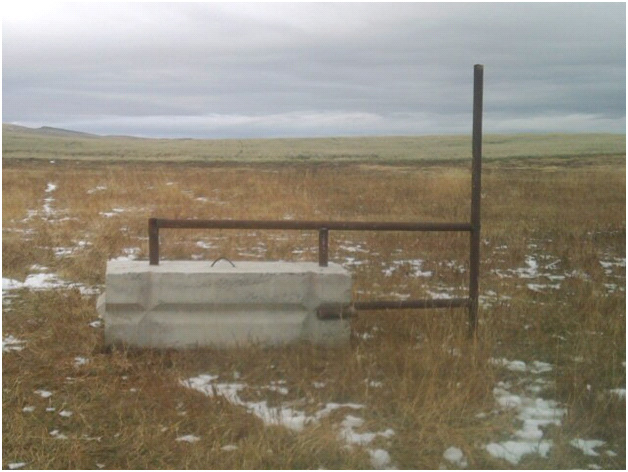
And now we arrive at the final phase, also known as implementation. Of course a fence must be attached to truly complete the project, but the corner is placed and should not budge. This particular corner block sits at a 45 degree angle to the future fence.
It will work. It may not have been as quick as setting several posts, but it was rewarding to build. Ranching is a rewarding life, not because of the project of the day, but because individuals get to run their own life. It is self employment to the max.
Perhaps someday I will share some photos of other projects. Things such as home-built gated pipe trailer for your four-wheeler (weight approximately 600 pounds upon completion), or my favorite: super bungee corral gate latch.














 n] a mechanical contrivance; gadget; device.

 RealRanchers.com