Catching up with Josiah and Daisy!

Before we jump into the new update, Josiah sent a fun summary about what he learned on the Environmental Stewardship Tour that we would like to share with you. After attending the full day tour on July 14th, Josiah was inspired by the experience and he had learned a lot about partnerships which was a reoccurring theme during the tour. He began by mentioning that he enjoyed the diversity that the King Ranch had to offer. He was impressed by the partnerships the King Ranch maintains with the Forest Service, the High Plains Research Station, a wind farm and the Healing Waters Project. Thank you again Josiah for attending the tour and we are glad you enjoyed it.

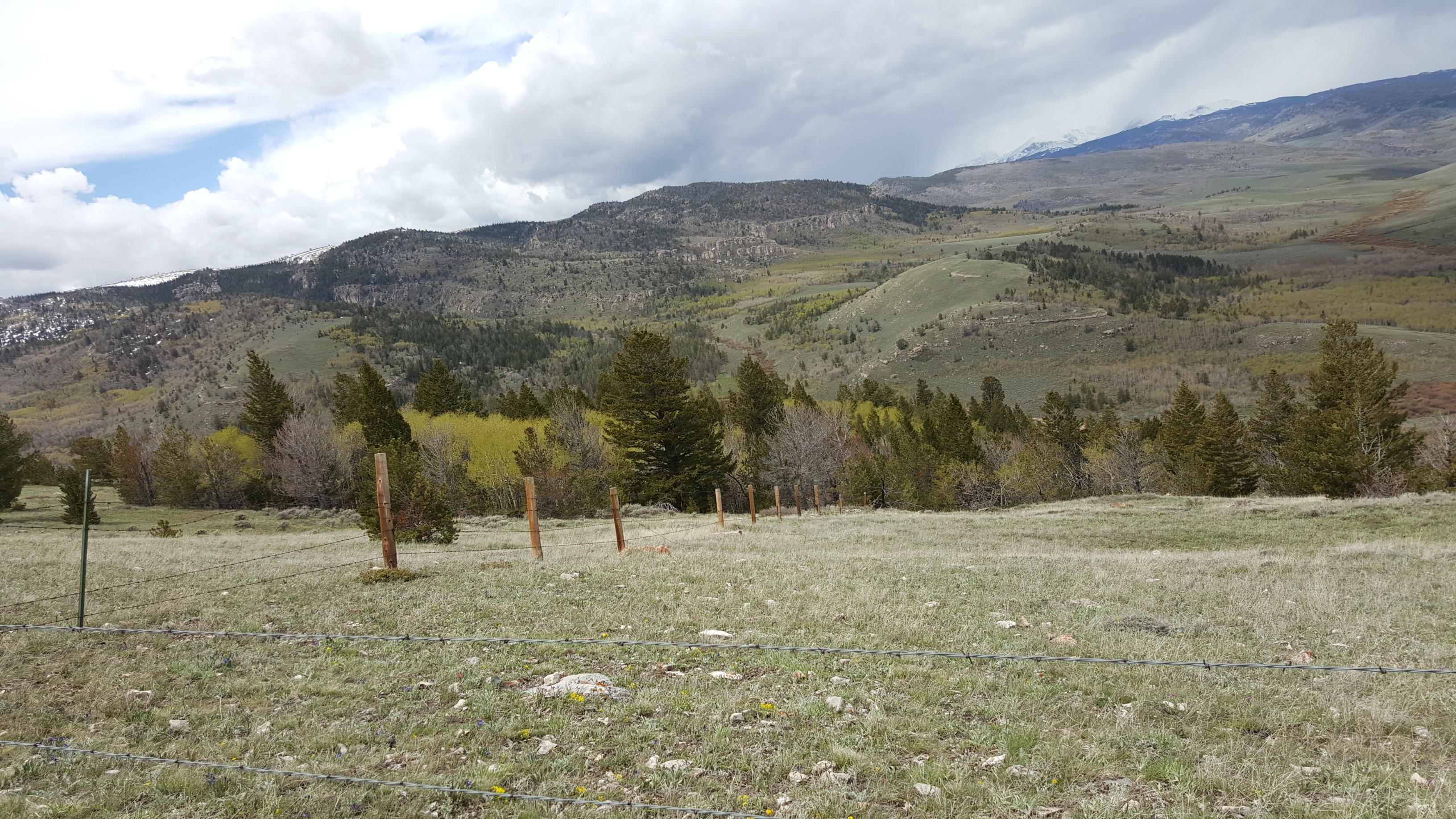
Now for Josiah’s weekly update which is full of many odd jobs and projects. To begin the week, Josiah helped around the house cleaning. He helped with the gardening by weeding and putting up a deer fence.

As the week went on, Josiah picked up around the barns and sheds, leading to seven trips of pipes, old boards and branches that were taken to the junk pile. The wind really picked up this last week at the Red Canyon Ranch resulting in Josiah cleaning up many branches that had fallen from the trees. Of course life on a ranch wouldn’t be the same without some irrigating and fencing, and of course Josiah did some of that work too.

Cattle

Josiah also gave us an update on Daisy, the mama milk cow that was introduced in the first journal. Daisy got mastitis and was sent to a professional to get better. Mastitis is when a cow has inflammation of a teat, resulting in improper lactation. There is good news, Daisy is better and in Josiah’s own words, “she is back and kicking, literally”.

Thanks for the update Josiah! Hear from you next week.

Cattle Sales Made Easier with a Click of a Button

Imagine a world where cattle were sold right from your smart phone. Wait a minute, there is no need to imagine. Currently, there is a way to sell and buy cattle from any smart phone, tablet and/or computer. A new technology has become the chatter of the agriculture community this summer and that technology is AgriClear. AgriClear is a membership based community that gives livestock producers and buyers, the opportunity to get the best deal in the cattle market.

Phone
Google Image

Reported on the AgriClear’s webpage, the new technology has many benefits and expands markets. Producers can market their cattle throughout the United States and Canada using the web. As buyers, AgriClear has options to specifically search and select cattle based on breed, weight, type, condition, location, feed programs and health certifications. Buyers can watch for their preferred suppliers through online updates.  The data that sellers place online allows for many opportunities that were never available in the sale barn. Sellers can set their own price and conditions using the AgriClear features. Photos, videos, health and other information about individual cattle can be provided. The seller gets to pick the best offer and negotiate a mutually satisfactory price. After the cattle are sold and both the producer and buyer are happy, shipping details will be specified through the online site.

AgriClear is supported by two companies called the TMX Group and NGX, both with valuable roles in the agriculture industry. TMX Group is a financial business that operates markets such as equities, fixed income and energy. NGX provides electronic trading and data services to the North American natural gas and electricity markets. The ultimate goal AgriClear would like users to understand is, “this online platform allows members of the AgriClear community to streamline the marketing process and expand opportunities to both buy and sell cattle across the U.S. and Canada—of all breeds, types, and attributes.”

Buying and selling cattle just became easier. Imagining a world where cattle producers bought and sold cattle on their phones is here! With AgriClear the solutions to expanded markets, lower transaction costs and payment assurance shouldn’t have to be imagined because it is a reality.

For more information follow the links below:

AgriClear – https://agriclear.com

NGX – http://www.ngx.com/?page_id=2

TMX Group – http://www.tmx.com/

Written by: Kadi Davis, WSGA Intern

We are back to you with Josiah’s newest update and boy, are we excited!

This past week began with Josiah making a five hour trip to Cheyenne for the Environmental Stewardship Tour at the King Ranch on July 14th. That is right; we got to meet Josiah for the first time in person and we enjoyed hearing more about the work he has been doing while on the ranch. It was so wonderful to see you there and I am glad you learned about many ways ranches can operate across the state.

Fencing

Later in the week back at the Red Canyon Ranch, Josiah explained that he finished the buck and pole fence he began last week. Irrigation maintenance has also become a daily chore due to the beaver dams that block the irrigation head gates. The beaver dams hold back water that is needed for irrigation and watering access for wildlife and livestock downstream. The weather cooperated for the Red Canyon Ranch and haying has been accomplished for this season!

Now on another note, I did hear some pretty exciting news in Josiah’s Journal and it has to do with a birthday! Josiah turned 20 this last week and what a better way to spend his birthday than eating prime rib, fishing and being with his family. We also want to wish you a Happy Birthday from the WSGA Office.

Stick around to hear more about Josiah’s learning experience on the ranch and find out if the beavers leave the irrigation ditches alone in next week’s update.

Josiah’s Weekly Update

Josiah is nearly half way through with his rangeland internship and this week he has been quite productive. He built more fences but this time up in the mountains for the next cattle rotation. He also learned how to build a buck and pole fence. Josiah stated that he, “…learned how to make the bucks and what to look for in poles, so he could build the entire fence from start to finish.” Learning new things is something we hope that Josiah does on a regular basis and from the sounds of it he is learning a lot while on the ranch.

FixingFence

Along with building fence this last week, Josiah has been enjoying the wild-life. He found seven rattle snakes, beavers and plenty of deer. Lately there has been a moose hanging around the pasture where Josiah was building fence, which he thought was pretty cool. Josiah has also been fishing the creeks and streams on his spare time, where he has caught some pretty nice brown trout.

Eat some fish for us over here at the WSGA Office and talk to you next week!

Snakes and Flies and Weeds, oh my!

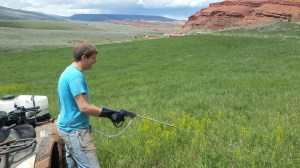
Josiah has had a busy week meeting deadlines and working on the ranch’s to-do list on the Red Canyon Ranch. Leafy spurge has spread rapidly and Josiah has had the very important job of spraying the fields. Josiah states in his journal that, “it has grown in with a vengeance, but the tedious job is pretty important”. Despite the importance of spraying weeds Josiah also had to get a fencing job completed as well as working on the ranch’s irrigation system. Josiah worked hard this week even with the abundance of flies swarming around.

Featured image

Now, it is not all work on the ranch, Josiah explained that he has had some more time to explore the ranch. “I’ll hike into some obscure canyon and find a crystal clear creek with great fishing holes,” Josiah mentioned when he was describing what amazing sights he has stumbled upon at the ranch. He even mentioned that he has stumbled upon a few rattle snakes, yikes! The fourth of July was also a wonderful time for Josiah to kick back; he went to the town parade, shot off fireworks and attended a crab boil.

Watch out for those snakes Josiah! We cannot wait to hear about this next week!

Week Five on Josiah’s Internship Adventures

Week five quickly came around the corner for the WSGA Rangeland Intern, Josiah. At the beginning of the week he got the chance to shadow John, one the working hands on the ranch. They did a wide variety of jobs like monitoring areas along the Sweet Water River, doing some plant identification and fence planning.

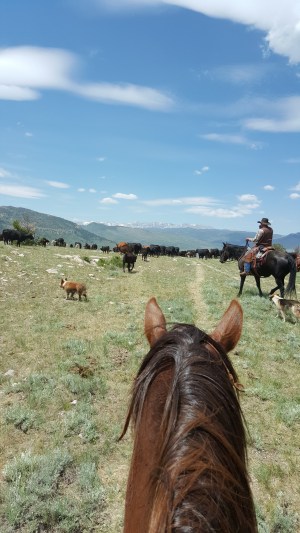
At the end of the week Josiah also got the opportunity to enjoy an old fashioned cattle drive through beautiful mountains. The drive was all on horseback which gave Josiah lots of time to learn more about riding horses and with the other riders helpful tips Josiah became a more confident rider.

Featured image

As the week wrapped up Josiah had got real excited that his family is coming to visit. Josiah explains that it, “makes him happy to see family” and that he looked forward to their visit all week.

Have a good weekend with your family Josiah, we look forward to hearing from you again next week!

The Time is here Once Again to catch up with our Rangeland Intern, Josiah!

Waking up in week three with “a million dollar view” right outside Josiah’s window reminds him daily of the wonderful opportunity to be interning at the Red Canyon Ranch. Josiah was excited to report that he finished the very long fencing project this week and what a rewarding feeling to have accomplished such a big task. Working on the ranch has given Josiah a new prospective on agriculture and he realizes that working on a ranch takes a lot of dedication. Josiah also expresses his appreciation for the ranching lifestyle by stating, “Farmers and Ranchers are to be respected above anybody for the level of dedication they show every day”. Between the large and little projects, hard work and finished tasks are the most satisfying feeling at the end of the day for Josiah.

As week three wrapped up it is a good thing Josiah finished his fencing project because in week four he went to help mentor young adults at FFA camp. Even though FFA camp is not part of his summer internship, Josiah has been attending the camp for the last six years. FFA camp “promotes agriculture and instills a passion in young adults for agriculture” he explained. Have been a counselor for the last two years, Josiah has had the opportunity to help teach leadership workshops, public speaking workshops and activities that promote ways to become an outstanding individual. FFA camp can make a major impact on those who go and he claims that FFA camp “is simply life changing and is making huge impacts on the future of agriculture”.

Way to go Josiah! We are proud of your hard work and dedication to the agriculture industry!

Keep an eye Josiah’s weekly updates, to read about his next adventure this summer.

Little Urbanization Hurts Wyoming Land Value

b5

In April of 2015 Dr. William Larson, previous Research Economist at the Bureau of Economic Analysis finished research on, “New Estimates of Value of Land of the United States”. He began describing how “land is an important and valuable natural resource, serving both as a store of wealth and as an input in production”. Dr. Larson’s research describes the estimated value of all the land in the United States with an estimated value of 1.89 billion acres worth around 23 trillion-dollars in 2009. Even more interesting, he analyzes the total value of the lower 48 states.

As Wyomingites and proud residents of this beautiful cow country, we place a high value on our land. Despite our individual thoughts, Dr. Larson’s paper explains otherwise. Of the 1.89 billion acres of U.S. land, agricultural land contributes 47 percent; federal government lands reach 24 and at the lowest developed or urbanized land are at 6 percent. Nearly half of the U.S. soil is occupied by agriculture, yet of the 23 trillion-dollar value of the U.S. land, only eight percent of the assets are contributed by agriculture.

On the other hand, developed and urbanized land totals 51 percent of the 23 trillion-dollar estimate. Six percent of the urbanized U.S. land, values at around 12 trillion-dollars. How should agriculturalist make sense of land values and its use based on this research?

Using many sources listed in his published paper, Dr. Larson’s total estimate describes that developed land is worth on average 106 thousand dollars per acre, while agriculture land is only worth on average two thousand dollars per acre. So where does Wyoming fall on the value list? Unfortunately this places Wyoming last on the list. The Cowboy State only contributes 62 million acres of land worth only 90 billion dollars, the lowest out of all the states. The reason for this calculation is that Wyoming has large amounts of agriculture land and federally owned land, which according to Dr. Larson’s paper are the two lowest valued lands of all the uses. The research argues that low development contributes to Wyoming’s placement in the research. Only one percent of Wyoming is developed, as a result Wyoming suffers for their lack of little urbanization on the scale of land value. According to Dr. Larson’s research, developed areas increase the value of the land by almost 100 thousand-dollars.

After reading the recently published research by Dr. Larson, I question the consequences, both good and bad that may follow as a result. Although the paper was not biased and was factually based, this document may create more awareness of for land values per state. If urbanized lands are considered to hold a higher value and “store more wealth as an input in production” individual states may push for urbanization throughout their borders.

Wyoming residents enjoy the wide open spaces and the culture that is provided with large agriculture production. So as agriculturalist how can we strive to increase the value of our lands? In the research certain factors determine the value of land which include; the land type, ecosystems currently existing on the land, importance of the area and urbanization. Urbanization includes transportation costs and potential development.

Well one thing is for sure, agriculturalists understand the importance of their land. Agriculture land sustains life providing food for humans and other species. With the global population rapidly growing, agriculture land use is becoming extremely important. The demand is growing for agriculture production and the land supply is limited in result the value agricultural land should only increase.

Agricultural land provides many more benefits than livestock or crop production, ag land provides a diversity of ecosystem services that are not available from developed land. Wildlife rely on agriculture land to reproduce and sustain life, including varieties of species from rodents, to birds and large elk and deer. Not only does agricultural land support animal species but it provides various habitats for plant and insect species that are vital to the production of crops and vegetation. By being good stewards of the land and becoming more sophisticated in the marketing of these ecosystem services, there is potential to increase the value of agricultural land.

There are ways for agriculturalists to increase the value of their lands including, making their lands more accessible, placing conservation easements, or otherwise marketing the conservation services that they provide. If you are interested in further information Dr. William Larson’s recent study is linked below, you might be surprised what there is to learn.

http://www.bea.gov/papers/pdf/new-estimates-of-value-of-land-of-the-united-states-larson.pdf

Written by: Kadi Davis, WSGA Summer Intern

Josiah, Rangeland Intern Working Hard from Day One

The WSGA has many opportunities for young adults to embrace agriculture, one which is through the Rangeland Internship Program.

Josiah, a University of Wyoming student has entered the internship program and is working on the Nature Conservancy Red Canyon Ranch for the summer. Hoping to gain more experience with rangeland management, natural resources and learn about stewardship, Josiah has taken the reins since day one.

The WSGA has asked Josiah to submit a weekly report of what he is learning and is accomplishing. Josiah sent his two week update and we are excited to hear what he has to say!

Week one was full of many adventures and lessons. Josiah learned how to build electric fence, kept up with some yard work and experienced the battle of long rains. After being drenched building fence, watching a bull get stuck in the culvert and irrigating the land every morning, Josiah has personally lived with the impacts of the large rains Wyoming has received.  Josiah also made a new friend on the ranch “on day 2 I met Daisy, the pregnant milk cow”. Now he might argue differently about the suborn cow but after saving her life from the creek she could not get out of, there has to be some sort of fondness between the two.

As week one ended and week two began the rains must have slowed down because the ranch did some branding, and sprayed leafy spurge. Josiah was also assigned to a very long chore of building fence. As stated in his journal “My arms hurt from the constant stretching I have to do on the wire, but I’m getting it done”. A young hard working man who is willing to get the work done, this is why the Rangeland Internship program is so wonderful. Ranchers get the help they need and students learn many life lessons, like hard work.

If you are interested in hearing more about Josiah’s summer adventure keep an eye out for the weekly updates.

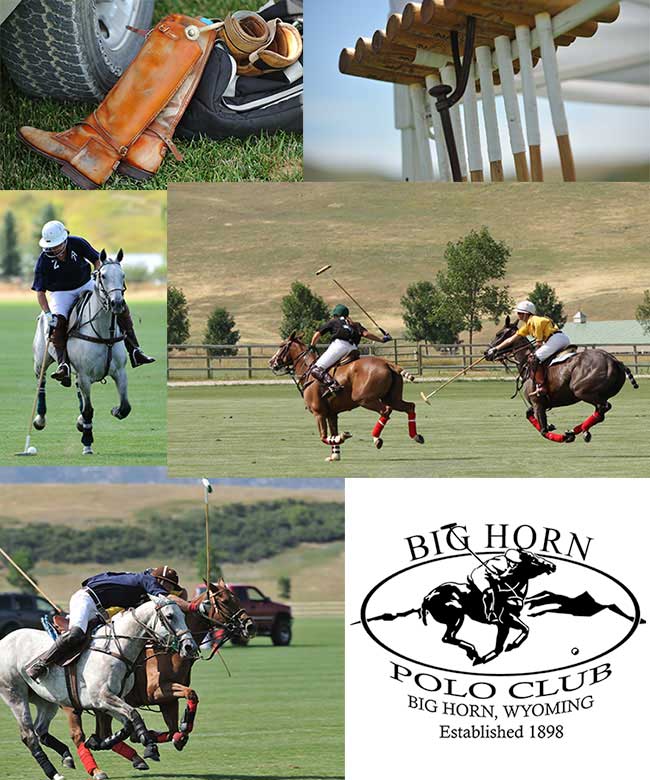
Polo for the Cattlemen – Join us in Sheridan!

As the 2015 Wyoming Cattle Industry Convention and Trade Show is sneaking around the corner, WSGA members and their families are making plans for the week. Despite the hustle and the bustle of the convention make sure to take some family time and enjoy the beautiful Big Horn area.
Prior to the convention the Big Horn Equestrian Center is having a practice polo game the afternoon of Wednesday the 3rd.
Polo became popular in the United States in the 1900’s. By 1989 there was 208 active polo clubs and 25 competitive polo colleges and universities according to the Polo Museum.

The Big Horn Polo Club offers a polo school, taught by a USPA certified instructor. Contact club President Perk Connell for information... 307-674-4928.
The Big Horn Polo Club offers a polo school, taught by a USPA certified instructor.
Contact club President Perk Connell for information…
307-674-4928.

The site where the game will be held was established in 1985 on the Burns Ranch in the Big Horn area. The Big Horn Equestrian Center is a large part of the Big Horn history and culture. The Equestrian Center was created to honor and present “everything a horse can do”.

FlyingHPoloClubIf you’re looking for an activity to pass time and would like to witness a hundred year old sport, with beautiful horses the practice game would be a great opportunity for the family.
Directions to the Big Horn Equestrian Center from Sheridan:
Go south on Coffeen (Highway 335) 6 miles toward the town of Big Horn, turn left onto Bird Farm Rd., (CR 28). Go 1.8 miles, turn right to stay on Bird Farm Rd. for 1.5 miles. BHEC is on your right at 352 Bird Farm Rd.

You can also visit their website at: http://www.thebhec.org/polo.htm

Post by: WSGA Intern, Kadi Davis

The Farm Paparazzi

Armed with an automatic setting to expose a happy life full of God's grace

Facts About Beef

Debunking myths about beef

Beef Runner

Agriculture Advocacy, Beef and Running

Wyoming Lifestyle Magzine

a virtual visit to wyoming's rural communities

Wyoming Livestock Roundup

a virtual visit to wyoming's rural communities

Bridle-Bit LLC Blog

Horse & Rider Training. Serving The Northern Front Range Since 1981

Faces of Agriculture

a virtual visit to wyoming's rural communities

The 307 Chronicles

a virtual visit to wyoming's rural communities

Wyoming Roundup

a virtual visit to wyoming's rural communities

a virtual visit to wyoming's rural communities

Double H Photography

a virtual visit to wyoming's rural communities

Ladder Ranch

Scenes, thoughts and poetry from our working ranch

Comedy Of A Cowgirl

The Comedy of Storytelling

RealRanchers.com

a virtual visit to wyoming's rural communities