Intern Andrew’s Garrett Ranch Experience

All rangeland interns were present at the Garrett Ranch Environmental Stewardship Tour. Andrew Mainini took note of many interesting facts covered throughout the course of the day on the ranch.

The Garrett Ranch is located in Casper, Wyoming and is the 2017 Environmental Stewardship Award recipient. The Garret ranch is a family owned and operated ranch that works closely with the Wyoming Game and Fish Department. Together they have taken strides to ensure the longevity of the ranch as well as the natural resources that the land provides. Some issues they have had to taken steps towards repairing or controlling are erosion control, cheat grass control and further rangeland development.

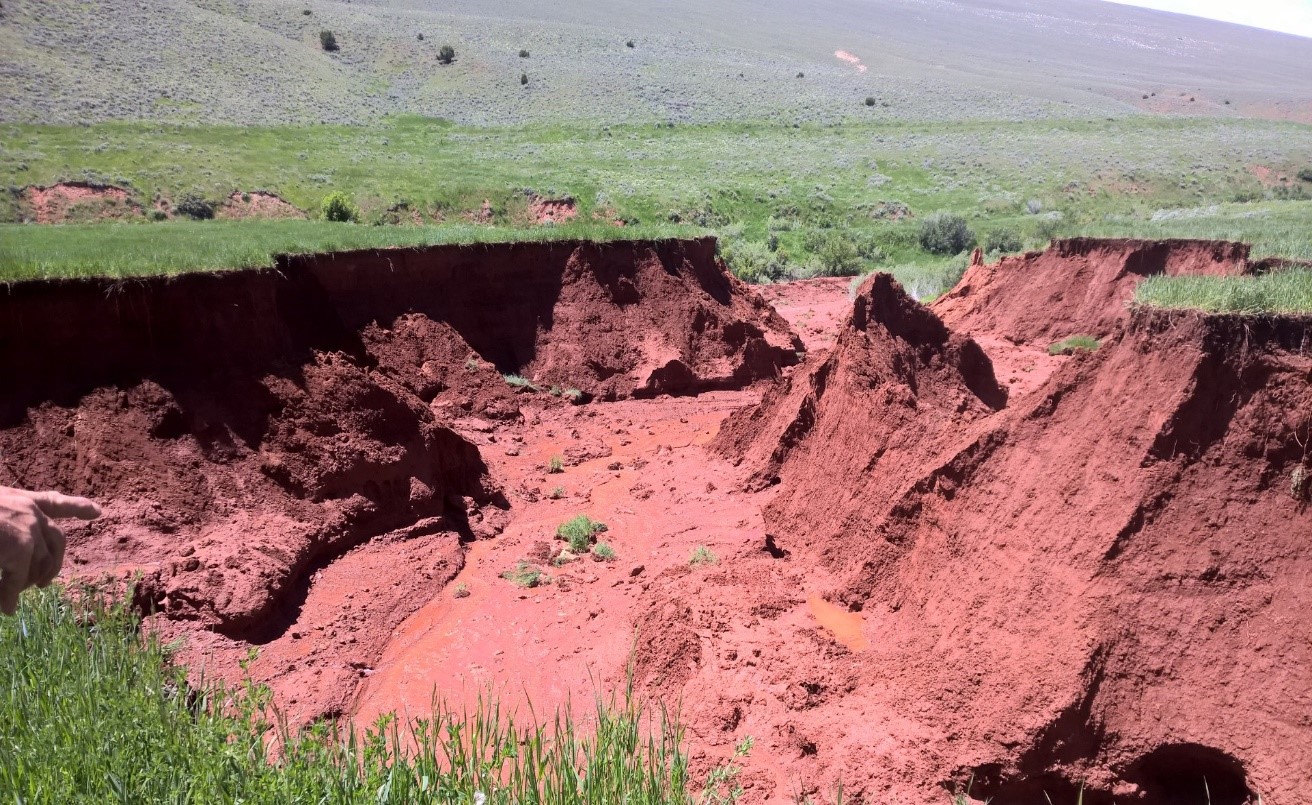
The soil type on the Garrett Ranch is extremely erodible, especially in riparian areas across the ranch.  These areas are a cause for concern because as time goes by the soil in riparian areas begins to give way and create deep cuts in the stream banks form. To overturn this, the Garret Ranch has introduced the beaver back in to their ecosystem in the hopes that the dams created by the beaver will displace enough water to slow down the effects of excess water creating these deep cuts. One major problem in this is that beaver use aspen trees to create their dams as well as it is the main component of their diets. Aspen trees are provided to the beavers via helicopter drop on the Garrett Ranch. I find this management technique very interesting and would like to see the long term affects.Andrew Week 4 Pic 1
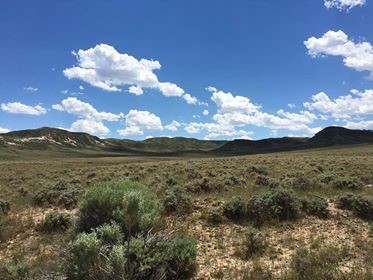
Just as many ranches in Wyoming the Garrett Ranch is in the constant fight with cheat grass (Bromus tectorum). To manage this, they aerial spray their ranch and they have made great strives against cheat grass. After visiting the ranch, it was extremely impressive to see the lack of cheat grass. I found it difficult to find any substantial populations of it.

The Garrett ranch is an area of prime sage grouse ecosystem and it holds a very high amount of birds. Being such a prime area, the ranch is very limited to the popular rangeland development techniques such as sagebrush removal and prescribed fire. To overcome this, they have started cutting swaths of sagebrush in small parcels. It is important to keep the sizes on these swaths under the rangeland disturbance size determined by the state of Wyoming. To cut these swaths, they use an implement that can be put on equipment and almost acts like a brush hog that can cut up enough sage brush to eliminate in from that area. In these swathed areas, grass production has increased and an abundance of wildlife can be found close to these areas as well.

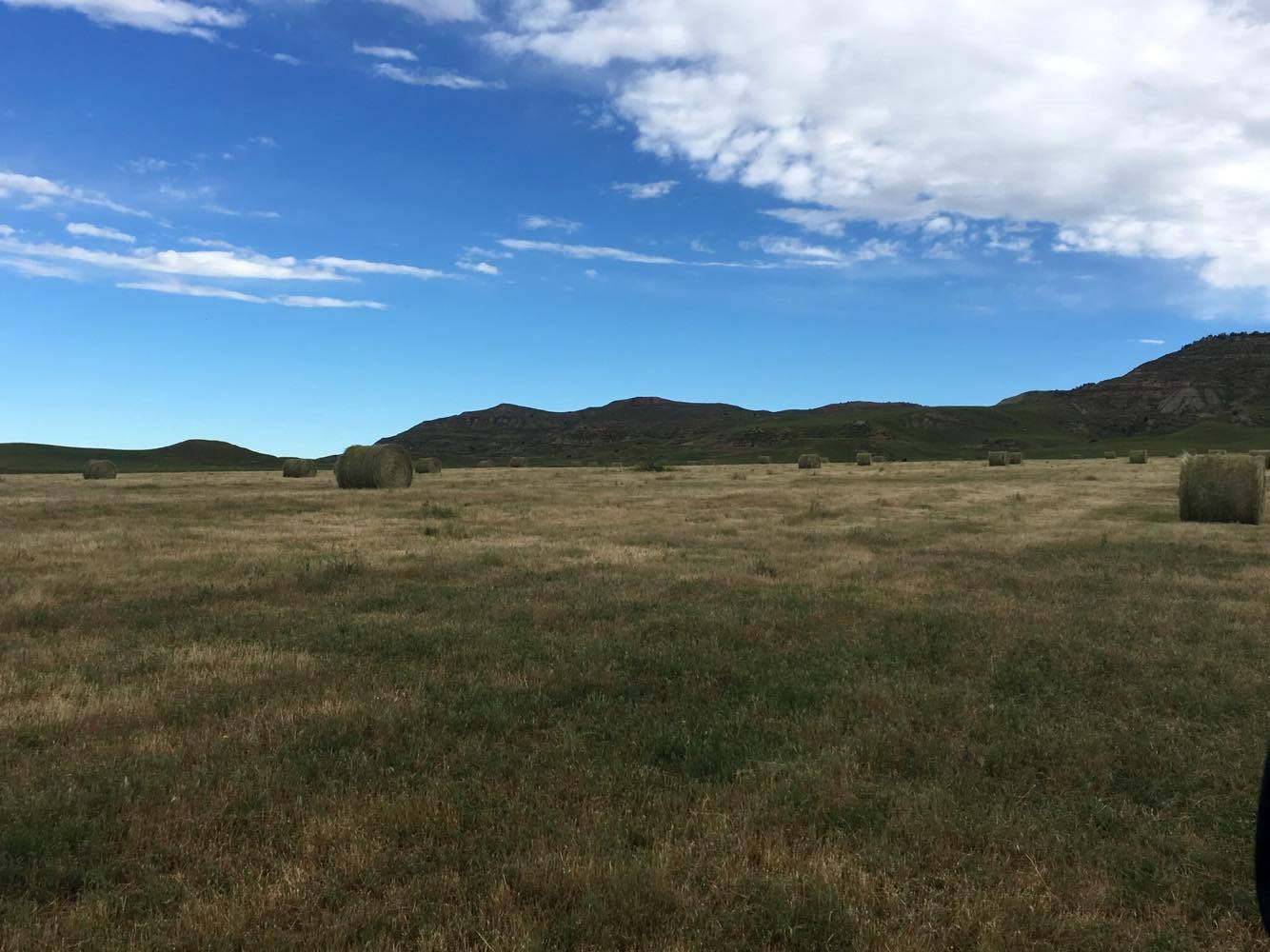
After visiting the Garrett Ranch I was extremely impressed in the quality of their rangelands. I think erosion control is a topic often over looked by operations across the country. Erosion control, especially in riparian areas can ensure quality water distribution through out ranches and can increase productivity.

Tyler’s Take on the Environmental Stewardship Tour

Tyler Flatt had a very busy week, between keeping things in line at the Ladder Ranch and traveling to Casper for the Environmental Stewardship Tour and presentation of the Leopold Conservation Award, which was awarded to the Garrett Ranch. 

This week has been a little slower week than normal. Monday I disked and leveled the rest of the new hay pasture. I am glad that I am finally done with that. Tuesday, we woke up early to move cattle up to the forest then we left to go to Casper to go to the Environmental Stewardship Tour. Before we got there we had to go drop a bull off that had been escaping for a couple of weeks. After that we came back to Casper, had dinner and went to the hotel. On Wednesday, we went to the ranch and learned about their environmental practices and then we took the tour. After the tour, we went straight home. On Thursday and Friday we had our final dockings and they weren’t too big but they were about 800 lambs each. I am happy to be done with dockings and dealing with sheep. Saturday we moved some more cows into a new pasture and then I came back and just did some yard work around the ranch. Overall a productive week, next week we have more moving and we are going to start haying.

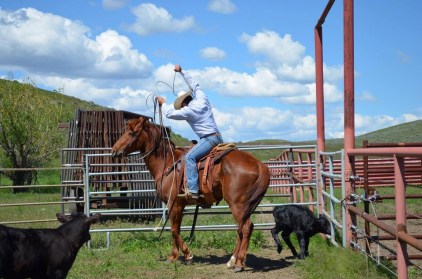
Moving cattle at the Ladder Ranch.

Tyler’s Environmental Stewardship Tour Report

It was interesting to see how many differences there are between my ranch’s landscape and the landscape of the Garrett Ranch. I thought that bringing in the tress for the beavers was a clever idea as well as the use of the Christmas trees. I think that if ranches thought more outside the box like this that they could accomplish more with respect to environmental stewardship.

The tour was interesting and I learned a lot more than when we talked about their projects. I really liked the idea of using solar wells. I have heard of these types of wells but never really understood how they worked or how effective they were. Another interesting fact that I learned was how much more expensive it was to have someone do a controlled burn than to use mechanical clearing. In Texas, you can become your own prescribed burn manager, it takes a while but you can do it yourself and it cuts down on costs. So I was thinking if Wyoming had a similar program, ranchers would be more inclined to use prescribed fire on their land if they wanted to. On the other side of that, in my area of Texas we don’t have to worry so much about invasive grasses such as cheat grass. We have mesquite tress, but they are not as bad as cheat grass so I can see where using a brush beater would be more beneficial. I also learned that by using the brush beater rather than fire it created better habitat for the sage grouse as well as produced better grazing for livestock so it was a more well-rounded practice. I feel like I could take this back to Texas to a prairie chicken refuge and show them how mechanical could possibly be better than fire in that particular area.

Overall I learned a lot of interesting and different environmental practices. It was fun to see ranching from a different angle. Where you can be a successful rancher as well as an environmental steward and how much easier it is than I thought. Also, it was amazing how much better this is for the wildlife and livestock when you work them together. I had a great experience and I am glad I got to be a part of it and learn new ideas and practices.

                  Tyler with a few fellow WSGA Interns.           Docking Lambs.

More Adventures at the Ladder Ranch for Tyler

Like the past few weeks, this week has been super busy around the ranch. On Monday a few of us went to a pasture to clean it up and brand a few cows that we missed the last time. Tuesday, we docked about 800 more sheep. We were shorthanded this day so it took quite a bit longer than usual but we were still home by 6 PM.

Wednesday, we went up and moved some cows into another pasture. My horse I was riding this day was being a little stubborn so we had to have a little lesson but then she was okay the rest of the day.  Thursday I spent all day disking a new field across the way. Sitting in a tractor all day got really boring and lonely, it’s a good thing it has a radio.

Friday I finished disking and started leveling the land. Saturday I spent all day leveling again. These were really slow days and it is surprising how tired I was even though I really didn’t do anything.  Saturday, I finished leveling in the morning and then brought up hay bales for the rest of the day. It was a pretty exciting week and I am looking forward to next week.

Tyler Pic Week 3-1


Rangeland Intern Noah Schick: Week 2 at the Red Canyon Ranch

This week John and I began surveying the pastures here at Red Canyon Ranch to see what percentage of grass the cows are grazing. The goal is to have them graze no more than 25%. We haven’t crunched the numbers yet, but it looks like Barot Slope pasture is well under this margin.

We had a couple of guests this week, including a soil science phd student from Yale. He took samples in Barots slope pasture to experiment with using a spectrometer in the field to measure soil carbon levels.

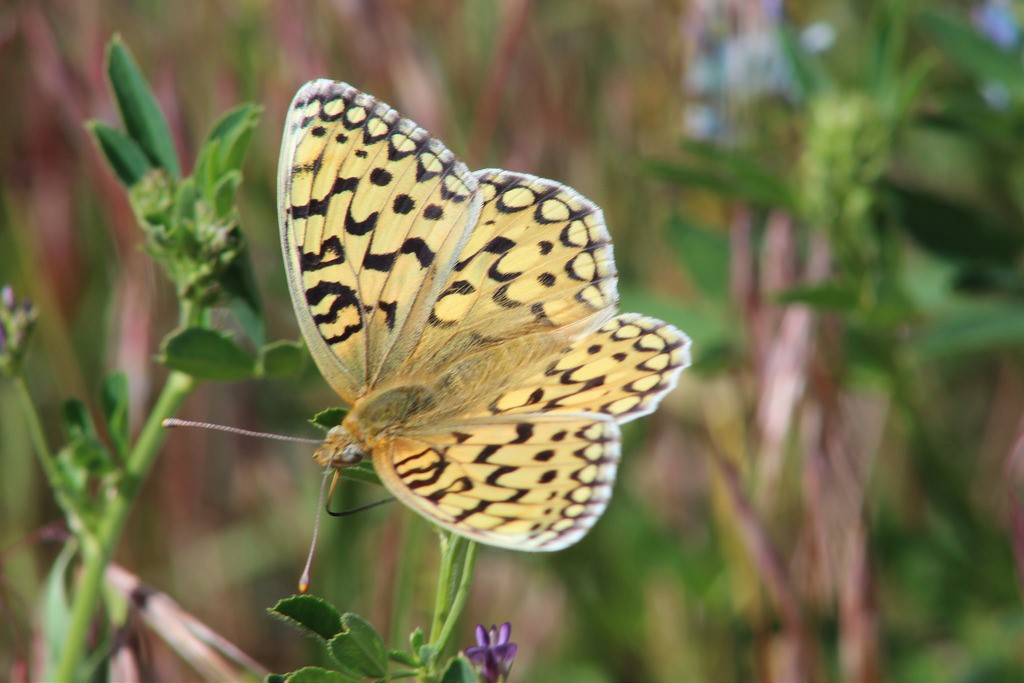
The Nature Conservancy also hosted a butterfly count on Friday. In the morning we had a group of about fifteen kids come to the ranch in order to catch and identify as many butterflies as we could. We caught about twenty different species of butterflies. We had another group come in the afternoon. We went to Sink’s Canyon for the afternoon, and again caught about 20 different species of butterflies.


Andrew: 1 Month in at the E Bar U

This past week marks the end of my first month on the E Bar U and I couldn’t be more excited about the time I’ve spent here as well as what the next couple months will bring. Hay season is in full swing as we are consistently busy cutting, raking, bailing and hauling from our fields. This is my first experience haying for a large operation and the amount of hay needed to carry operations through the winter amazes me. In just one day we hauled nearly three hundred bales and that filled a single stack yard. Where I am from in Texas three hundred bales is more then enough to get through our colder months. One important thing I leaned about haying is that the alfalfa hay must be cut before the weevil gets to it. A weevil (Hypera postica) is a beetle type insect that originated from Europe, this insect grazes primarily on alfalfa fields and can be known to destroy an entire alfalfa crop. Cutting the alfalfa hay before the weevil gets to it will ensure a quality hay crop.

Andrew Pic Week 4-2

This week we took a set of two year old first calve cows to their summer pastures. Before we trailed to pasture we sorted the steer calf pairs from the heifer calf pairs in the pasture. Once we gathered the pasture and pushed them to a corner, we then held the bunch and begun turning steer pairs back.  Having your steer pairs and heifer pairs in different pastures takes away some of the work when it’s time to ship in fall. Now, all that needs to happen when its time to shift is gather those pairs from their respected pastures and split off your big calves from your smaller ones and load them on the truck. Taking away the task or sorting heifers and steers in the corrals during shipping will lead to less stressed cattle due to that they will be worked one less step in the shipping process.

Goats, Invasive Species & Other Odd Jobs

Jedidiah Hewlett has been busy with swathing hay, preparing for a shipment of goats, and welcoming new members to the Perry Cattle Company this past week. 

This week we welcomed the Perry’s niece (and family) to the ranch. Jeff and Amie Metzger have two boys, one is 5 years old and the other 6 months. Jeff will be working full time for the Perry Ranch.

We began to prepare for the arrival of 75 head of goat nannies that we will use to control the leafy spurge epidemic that has inundated the lease pasture where we graze the cows. The goats are coming from Oklahoma at about $100/head. The Perrys are hoping to turn these goats around after fattening them for about 30-45 days, and make some profit on them. There is also the potential that the Sheridan County Weed & Pest would pay the Perry Cattle Co. for helping reduce this very invasive species of weed. This week we put up another strand of electric fence to help contain the goats in the pastures. We also put wire cattle panels inside the pipe-panel corral to hold the goats at night. Nothing like this has been done in around here, so hopefully everything goes well!

We have continued to make our way through the first cutting of hay. We hauled and stacked all the bales off one meadow, and were pleased to find that it produced 2.5 tons/acre. We finished swathing another 69-acre meadow and got some of it baled as well. Despite a few equipment breakdowns, we have kept moving forward, and are happy to see such great yields.

Other than that, we have been doing odd jobs, from machinery maintenance to cleaning out the tack room (it desperately needed organization!). Jeff also gave me a lesson on how to trim horse hooves, which I enjoyed. The little bit of irrigation has been going very well, and has very much helped by the 2.5” of rain we were blessed to have.

Tyler: The All-around Ranch Hand

Intern Tyler Flatt has his hands very full at the Ladder Ranch. He has done a variable of things just in the last week, including (but not limited to) roofing, moving bulls and cows, and spending time with plenty of sheep. 

June is one of the busiest months of the year here at the Ladder Ranch. On Monday Randy and I finally got done putting the roof on that cabin. It looks nice now that it’s done. Tuesday I helped with irrigation again. I had to move tarps in the meadows to help the flood irrigation flow. That was fun until I fell in and got wet. After this we had to go get the bulls out of the pasture and we got all but one and I had to ride around and find it which took a while.

Wednesday I got the yard cleaned up around the cabin with the new roof then went to a pasture to help put up some fence and get it ready for the cattle to be moved in. Thursday, we cleaned up the yard around the ranch house, cut grass, picked up rocks and kind of put everything back where they were supposed to go. I also had to fix a few weed eaters and chainsaws. On Friday we moved about 100 cow/calf pairs up to the forest pasture. These were first year heifers so it was kind of a struggle but we got them up there and settled.

Saturday I spent all day discing a new pasture. Even though it was easy it made for a long day. Sunday, we docked another 950 lambs. We had two tail cutters this time so we got done a lot sooner than the last docking. Overall another great week here, and next week we have many sheep docking and cattle drives to look forward to.

Rangeland Intern Noah Schick: Storms, Landslides, Wrestling & Butterflies at the Red Canyon Ranch

This week Red Canyon ranch saw the biggest thunderstorm since 2010.  Over the course of one night it received two and a half inches of rain. Much of the week was spent repairing damage from the rain storm.  Several large boulders fell off the rim of red canyon severing some pipelines to the house. Irrigation pipes were washed out of place. The most dramatic result was a land slide on one of the pastures. Roughly a quarter acre of soil, twenty feet deep washed away in a single morning. No one on the ranch had ever seen a landslide so dramatic.

There was a branding held at the Ranch on Sunday. This time instead of pushing the calves into a shoot, we wrestled the calves. We also cleared a path on the ranch for the nature conservancy to hold a butterfly catching day for kids in Lander on June 16th. We also put up fence reflectors to prevent animals from running into the fences.

Learning the Haying Ropes

Intern Jedidiah Hewlett learned the hard way how much goes into cutting and bailing hay this past week at the Perry Cattle Company. A few parts and operator errors later, he got the hang of things, and was able to finish off the week horseback with some cattle herding. 

This week we started haying. I cleaned the swather off from being in storage and got it running. However, after about 5 minutes, a pulley seized and the belt started smoking! The sealed bearing in the center was worn out. We were able to get a new pulley from the equipment dealer even though the swather is an older model. After repairing the pulley and servicing the whole machine, we took off to the field. Mr. Perry taught me how to run the swather since I had never ran a hydro-swing one before. Although they are very handy for cutting around obstacles, it is a little tricky to run one! I accidentally cut off an irrigation riser which, I was told, officially initiated me on to the Perry haying team because everyone has done it. That made me feel a little better, but I was still disappointed in myself. Anyway, we got one meadow completely cut and baled this week. Having never been around alfalfa, that was a new experience. The alfalfa needs to have a little moisture on it to bale because otherwise the leaves are too dry and turn into dust, losing a lot of the hay’s nutrition value later. I ran around the field with the bobcat and set the bales in rows of 11 so that it would be quicker to load on a trailer. From my experience, it seems like a hayhiker would be a more efficient way to pick up all those bales, but it is another piece of machinery to add to the bill.

This week I also got to do a little cowboy work on horseback. We gathered the lease pasture which was very extensive and had gorgeous landscape. We took the cows back down the highway about 2 miles to another pasture. I also had to bring in a couple of bulls and doctor them for foot injuries. Thankfully, everything went smoothly.

Andrew Attends the Wyoming Cattle Industry Convention

Intern Andrew Mainini was able to make the trek to Buffalo for the 2017 Wyoming Cattle Industry Convention & Trade Show. His biggest takeaway from last week was the changes in the beef industry and how it will start to be labeled and sold. He was also able to get in on a little bit of the haying action back at the E Bar U Ranch. 

This week I was fortunate enough to attend the Wyoming Stock Growers Association Convention in Buffalo, Wyoming. One topic of the convention that stuck out to me was that Wyoming beef would now be labeled with not only a product of the USA label, but also origin of birth and origin of slaughter. I believe this to be critical to marketing beef across the globe because it will add more value to beef by letting people know where it came from. I think this will increase the beef price for consumers here in the U.S., but I believe the public will feel better about buying beef that was produced locally, thus not having much effect on beef sales. Australia is in a major drought and that has forced the Japanese markets to transition to only selling U.S beef.  This has created a major demand for U.S. grown beef across Japan. Along with the increase in Japanese exported beef, the newest and possibly most exciting new market is China. The Chinese public is mostly made up of middle to high-class citizens; this means that most of the general public would have the means to afford American beef. One important demand that China has for importing American beef is that it must be labeled birthplace origin and slaughter origin. Now that Wyoming is transitioning to these types of labels, it is likely that a majority of Wyoming beef will be leaving the country and headed to be sold at foreign markets. The first shipment to China is predicted to be sent on July, 17th of this year.

While I was in Buffalo for the convention, hay season officially kicked off here on the E Bar U. An early and wet spring brought plenty of forage and should produce a good hay crop this year. It was vital to cut and bail the cool season grasses before they went dormant for the summer and lost all their nutritional value.

The Farm Paparazzi

Armed with an automatic setting to expose a happy life full of God's grace

Facts About Beef

Debunking myths about beef

Beef Runner

Agriculture Advocacy, Beef and Running

Wyoming Lifestyle Magzine

a virtual visit to wyoming's rural communities

Wyoming Livestock Roundup

a virtual visit to wyoming's rural communities

Bridle-Bit LLC Blog

Horse & Rider Training. Serving The Northern Front Range Since 1981

Faces of Agriculture

a virtual visit to wyoming's rural communities

The 307 Chronicles

a virtual visit to wyoming's rural communities

Wyoming Roundup

a virtual visit to wyoming's rural communities

a virtual visit to wyoming's rural communities

Double H Photography

a virtual visit to wyoming's rural communities

Ladder Ranch

Scenes, thoughts and poetry from our working ranch

Comedy Of A Cowgirl

The Comedy of Storytelling

RealRanchers.com

a virtual visit to wyoming's rural communities