Andrew’s Anticipated Week

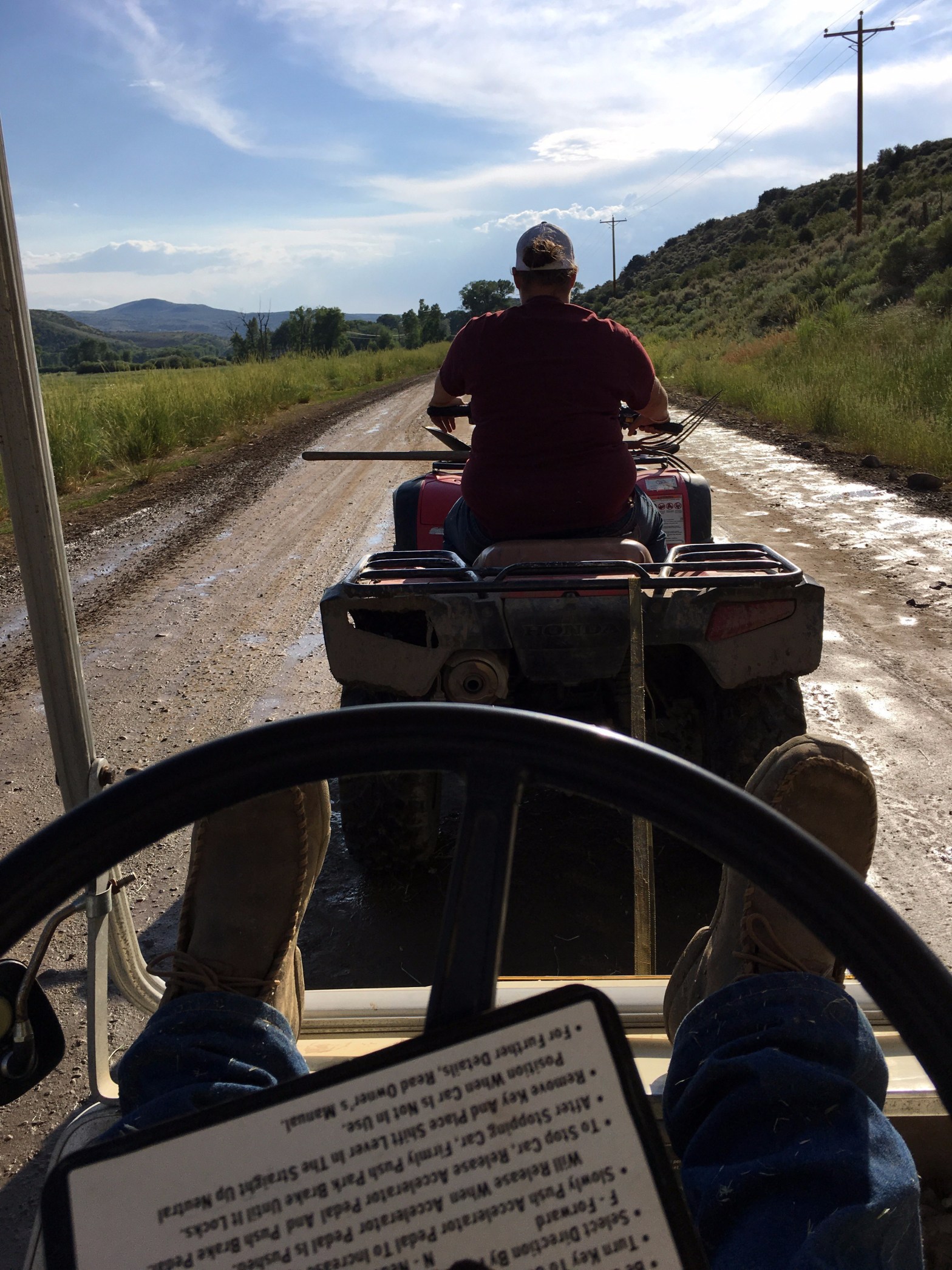
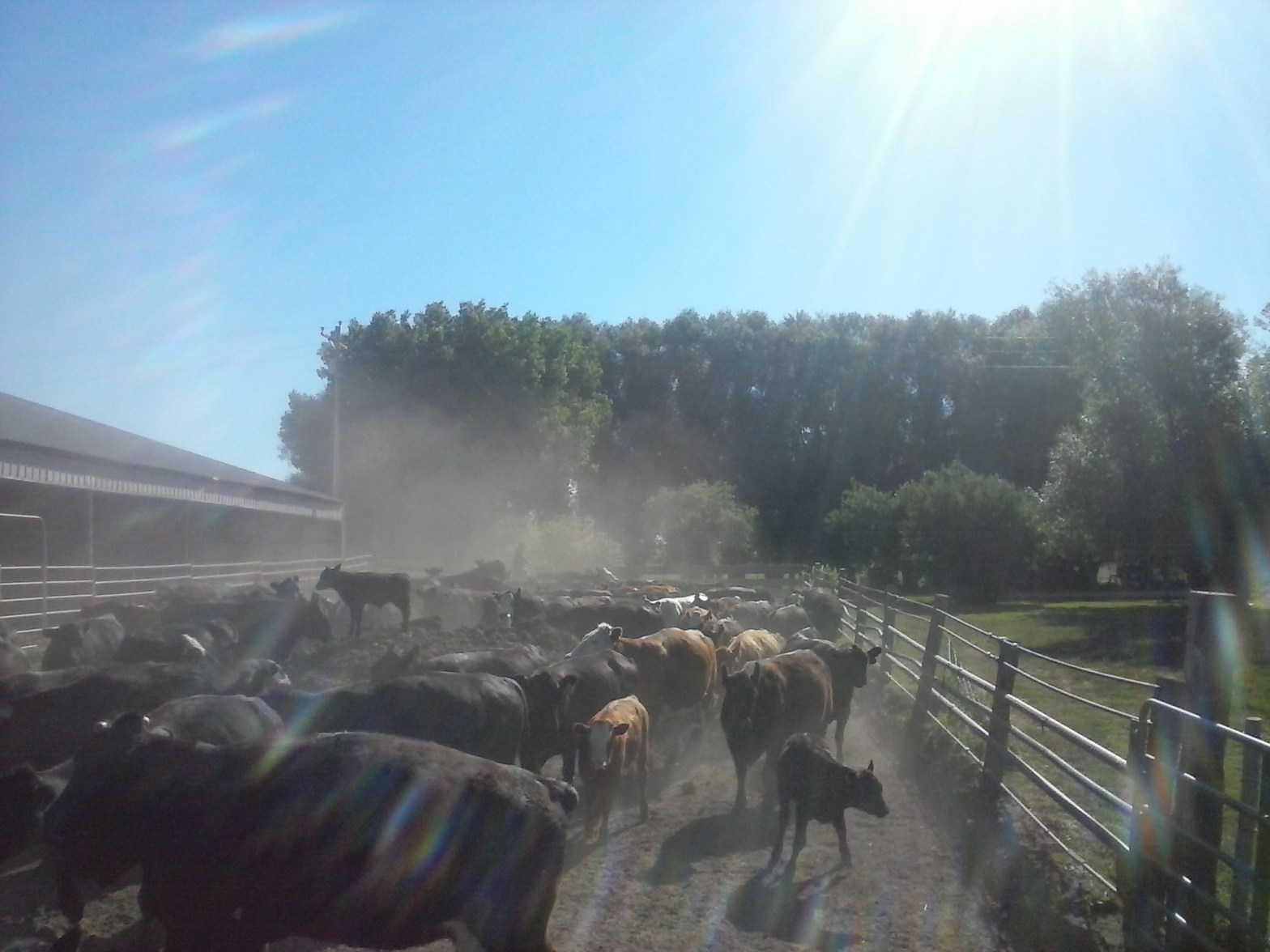
Intern Andrew Mainini got to experience a new aspect of ranching this week; moving cows and their calves to summer pastures. 

It was an exciting and much anticipated week here at the E Bar U, because it was finally time to trail cattle to the mountain. This trip took three full days of trailing and another two full days of cow work at the beginning of the week to prepare the calves for the rest of their summer. We took roughly 400 pairs into the Bighorns Mountains to spend the rest of the summer in their grazing allotments. This week has been very hot here so that meant very early mornings and slow going cattle. Riding the face of the mountain was something that was very new and exciting to me. I thoroughly enjoyed my time on the trail.Week 8 Pic 2

The most important part of taking cattle to the mountain is working with the forest service to be in compliance of the guidelines that they set for grazing permits. Guidelines set by the forest service vary from forage use, animal units, and even if the permittee can drive off road or not. If these guidelines are not met the forest service will delay your date for taking cattle to the mountain and could even cite you for non compliance. What I leaned most about this week is how to work with the forest service.

Tyler’s Entertaining Week at the Ladder Ranch

Tyler Flatt’s Fourth of July week was full of friends and fun. He had a little trouble moving some cattle, but all in all it sounded like a wonderful week. 

This week has been a pretty laid-back week. We had the 3rd and 4th off for the Fourth of July. Monday we went to Laramie to visit a friend’s ranch and we hung out, had dinner and just relaxed. The next morning, we got to sleep in and then we headed back to the ranch. Once we got there we set up a small grill next to the river and just ate and sat around all day. Then we went to the fireworks show in Dixon which was great!Week 7 Pic 2

Wednesday, it was back to work, we moved a big herd into the forest and had a pretty bad wreck. The cows were supposed to go around on the road and they dove off into the willows below. So, we got as many as we could, which was about half, and found another way to get them up. Thursday, we went back to that spot and clean up as much as we could but we saw that one of the bulls tore down a fence to get to the heifers. So, they are all mixed up now and sometime next week we are going to have to separate the heifers and push them back.

Friday, we just moved some cows back across a road in the forest to the pasture they were supposed to be in, then we went to a different heifer pasture and made sure that the heifers were all pushed up with the bulls, which they were. Saturday was spent cleaning up around the ranch then going to the rodeo at Dixon which was a blast. Then after the rodeo we went to the dance in Baggs which was even more fun and we all had a blast. Now the fun week is over and its back to work in the morning. I don’t know what’s on the schedule yet but I’m sure its full.

Intern Noah Schick Monitors Pastures & Caterpillars

This week on the Ranch I did a variety of things. The first part of the week I was mostly doing weed control. I sprayed white top in Barrett’s Slope pasture, and cut down musk thistle in various places around the ranch.

Later on in the week John Coffman and I did utilization monitoring of the Ed Young pasture. We recorded the percentage of grass that cows grazed this season in several different pastures. The percent utilization in the Ed Young pasture ranged from 0-40% in different areas.

John and I then began cheatgrass monitoring. This involved going to different GPS points and taking photos of the ground every five meters which we will look at later to see what percentage of the ground is covered in cheatgrass.

While we were doing this we found a pretty awesome looking caterpillar on John’s Camera bag. We think it’s some kind of moth caterpillar.

The last thing we did this week was to begin transplanting willows onto stream banks. We take cuttings of willows, let them soak in the stream for a couple days, then we plant them on the banks to help reduce erosion and keep the cows from going straight down to the stream on the cut banks.

Jedidiah Plays Mechanic

Jedidiah Hewlett had his hands full this week with repairs on tractors and other equipment at the Perry Cattle Company. This (almost) certified mechanic enjoyed the 4th of July with some fun and fireworks at least. 

This week was pretty slow, but we managed to find plenty to keep us busy. We have continued to irrigate with the side rolls and the pivot. One of the pipes broke on the side rolls when I was moving it and I had to take it to town to get it fixed. Putting the pipe back on was a simple matter but lining up the rest of the sprinkler was another matter altogether. It made for a very long, hot, and frustrating morning. Finally, we got it running after two days of being off. After the first cutting, Mr. Perry put in some ditches 0630170739fto flood irrigate the corners where the pivot doesn’t reach. The flood irrigating has been going slow because it has been so hot and the ground is soaking up a lot of water. We had to fix the ditcher this week because the lift cylinder broke the weld holding it to the frame. We hauled a tractor down on the flatbed to use with the ditcher in the lease. The hitch must not have been fully engaged because after we unloaded the tractor, I went to move the pickup and promptly halted because the gooseneck tore the tailgate out! It was a wreck, but we think we can maybe bend the tailgate back and re-install it.

On the 4th of July, we went to the fireworks show at the Polo courts by Bighorn, Wyoming. The show lasted about an hour and was very spectacular. In the later part of the week, I spent the day cleaning up one of the pastures, stacking up panels, and cutting Week 7 Pic 2up a tree that had tipped over on the fence. We still have a lot to do to get the ranch organized, but it comes a little at a time. The heat of the days almost makes you want to stay inside, but we are toughing it out!

Andrew Hays, Vaccinates & Controls Pests


Intern Andrew has learned much this summer in regards to all things ranching. This past week he focused broadening his knowledge of invasive species and pest control. 

Haying season has come to a close on the E bar U and its now time to take cattle to the mountain so they can spend the rest of the summer in their grazing allotments. This week we had a focus on finishing up haying season and preparing for next weeks move to the mountain. Vaccinations boosters will be given to the calves in the next couple of days and we will leave on Thursday and will be trailing cattle until Sunday. One interesting thing we did this week was collect and redistribute flea beetles. Week 7 Pic 1

The two Flea Beetle species uses to control leafy spurge are Aphthona nigriscutis and Aphthona lacertosa. Both these insects graze upon leafy spurge, which is an invasive plant that has become a major problem within the western states. The E bar U has been using this type of spurge control for a number of years and it has truly made a difference in the fight to control spurge. Draws and lowlands that were almost 100 percent covered in spurge are now almost completely free of spurge. This has allowed the grass to grow back and has increased forage production throughout the ranch. Using the flea beetles is not a quick fix. For the bugs to make a difference they must be properly collected and moved to new sites as well as given enough time to graze down the spurge.

Katherine Merck: Cowgirl Legal Intern

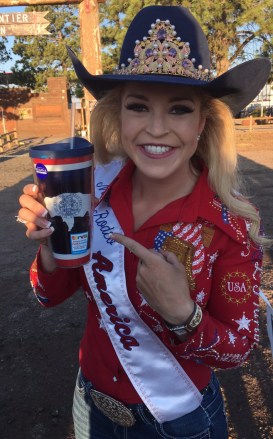
We have welcomed another intern into the WSGA office in the last week. Katherine Merck, a law student who also happened to be Miss Rodeo America one year ago at this time, has joined us as a legal intern.

Hello, everyone! My name is Katherine Merck and I am thrilled to be joining the Wyoming Stock Growers Association this summer as the legal intern. I am a native of Spokane, Washington and current law student at Gonzaga University School of Law who fell in love with Wyoming – since my first trip to Cheyenne Frontier Days in 2014 I’ve made a trip back to the Cowboy State every year and I find a reason to stay a little longer each time!

IMG_8394The sport of rodeo inspired both my love of Wyoming and my passion for agriculture. I held the titles of Miss Spokane Interstate Rodeo 2014 and Miss Rodeo Washington 2015 before becoming the first Washingtonian to wear the Miss Rodeo America crown in 2016, an opportunity that allowed me to travel all over the country to represent rodeo and advocate for our Western way of life and the agriculture industry. I continue to be actively involved in the rodeo industry and I love any reason to be outdoors, whether it is riding my horses, fly-fishing, skiing or snowboarding.

Before pursuing my law degree, I earned a double major in finance and medieval studies from the University of Notre Dame (our WSGA Executive Vice President Jim Magagna is also a Notre Dame graduate – Go Irish!). After graduating from Gonzaga this coming December, I hope to further my goal of promoting ethical justice in the areas of land use, water rights and agricultural estate planning. I plan to help famers and ranchers protect their land and way of life by assisting in the succession of land to the next generation and ensuring a viable future for our agricultural industry.

I have already learned more about these areas of law and their practical application in my first two weeks in with the Stock Growers than in two and a half years of law school! My first day on the job was spent on the Garrett Ranch outside of Casper setting up for the Environmental Stewardship Tour. The Garretts were awarded the 2017 Leopold Conservation Award for their active stewardship of their land and I enjoyed learning IMG_4185about the various projects they have implemented in conjunction with the Wyoming Game and Fish Department to combat cheat grass and prevent significant erosion into the North Platte River as well as the opportunity to meet members of our ranching community and discuss some of the legal issues that they face in their operations. I finished up the week diving headfirst into Wyoming’s statutes to analyze several brand inspection and transfer issues with Jim’s guidance before heading back to Casper this week for the Select Federal Natural Resource Management Committee and Minerals, Business and Economic Development Committee meetings.

The dedication of the Stock Growers to protecting agricultural interests in Wyoming inspires and encourages me to dedicate myself to this industry. I am looking forward to learning more about public land use and the statutory and political issues that ranchers face. I enjoy the financial and practical aspects of estate planning and I am excited to learn about the University of Wyoming’s Wyoming Agriculture & Natural Resource Mediation Program. I have a newfound passion for advocacy, administrative law, and lobbying already and I am thrilled to be able to learn from Jim’s expertise in these areas and expand my understanding of Wyoming ranching and the law. I am so grateful and excited for the opportunity to learn and work in my chosen field as the Wyoming Stock Growers Association legal intern and I am looking forward to a productive and educational summer!

IMG_8724
Katherine at the 2016 Cheyenne Frontier Days Rodeo


IMG_7775
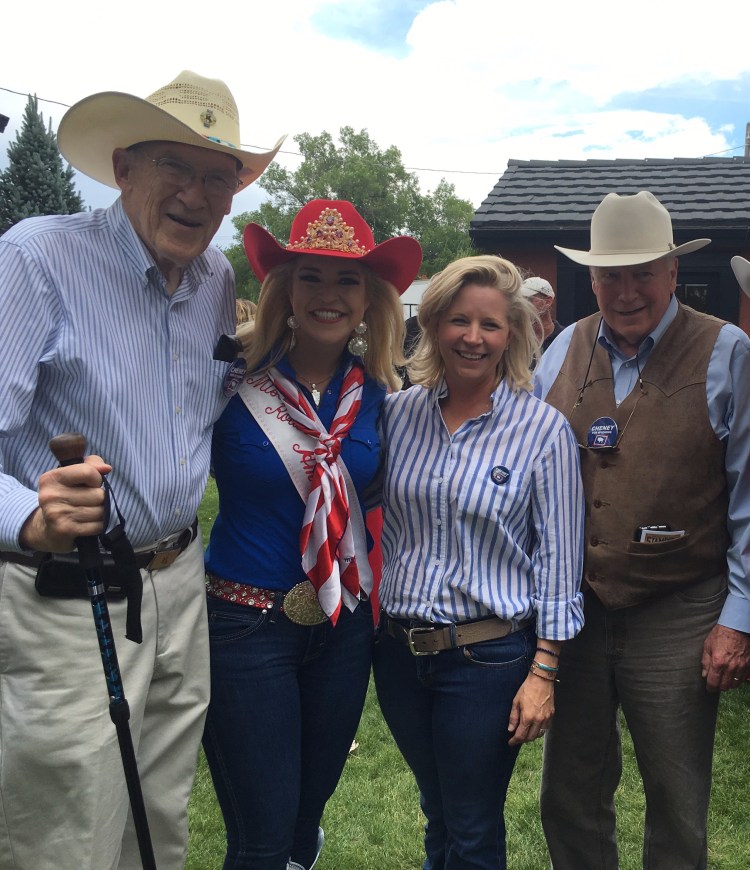
Al Simpson, Katherine, Liz Cheney, & Dick Cheney

Intern Noah Schick’s Stewardship Tour Experience

This week was pretty sleepy. We irrigated and did various repairs around the Ranch. A bird had built its nest in the irrigation pipe, so the built up pressure almost blew the pipe apart, but we cleaned it out and took care of it.

We continued repairing fences that had been blown over in the storm a couple weeks back. This ended up being more difficult than we would have liked. First we tried to move them by hand, but they were too heavy. We tried using four wheelers to drag them, but again they were too heavy. Ultimately we ended up using the Backhoe to roll and drag them.

I took one afternoon to put up fence reflectors all along Red Canyon Creek. The fence reflectors are meant to help prevent birds and other animals from running into fences and injuring themselves.

On thursday John Coffman from the nature conservancy, Austin Rempel my fellow intern and myself attended the Environmental Stewardship Tour in Casper Wyoming, where we got to learn about various projects happening at the Garrett Ranch.

This years Leopold Conservation award was given to the Garrett Ranch for Pete Garrett and his family’s voluntary conservation efforts. The Environmental Stewardship Tour gave ranchers from around Wyoming the opportunity to come and learn about these conservation efforts directly from the Garrett Family.

The tour started off with a power point presented by Pete Garrett and members of the Wyoming game and fish department. They discussed two projects. First was an effort to install imitation beaver dams to prevent erosion of stream banks. They airlifted Aspen wood to create the beaver dams. They also used Christmas trees to try to slow the sedimentation of the stream beds.

They also discussed an effort to use pesticides to eradicate cheatgrass in several large fields.

We ate lunch and then piled into school buses for the actual tour. We learned about a variety of efforts to improve the land there and help preserve wildlife diversity. I was personally most interested in the Controlled burns and artificial controlled burns. They burned thousands of acres to rejuvenate the soil by returning plant matter into the soil. They also used a method involving a rodo tiller like tool to chip brush and incorporate it into the soil. They did this in a maze of 30 yard or so sections. This pattern was important because it allowed them to comply with regulations so it would not be considered a disturbance. It also let them catch a lot of snow drift and so it improved water retention.  They also said that this pattern of intermittent grass and brush was helpful to the local deer population.

Jedidiah’s Detailed Environmental Stewardship Tour Report

The Garrett Ranch is nestled in the sage-covered hills about 30 miles out of Casper, Wyoming. This family-owned ranch has been in operation for 80 years. The ranch is home to cattle, horses, pronghorn, deer, and other wildlife. The Garrett’s land is comprised of both irrigated hay meadows and non-irrigated rangelands along the North Platte River. Their exceptional stewardship of their land earned them the 2017 Leopold Conservation Award.

One accomplishment that deserved this recognition was the reduction of sediment flowing into the North Platte River. In the Bolton Creek area, the soils are comprised of easily weathered clays. Rainstorms or spring runoff are extremely detrimental to these soils, making huge gullies where the water runs. This soil ultimately ends up in the North Platte river as sediment, altering the course of the river and reducing the quality of fish habitat. To remedy this, the Garrett family worked with the Wyoming Game and Fish Department to build dams in the creek to catch the sediment. They hauled aspen trees that had been logged on Muddy Mountain, and relocated beavers to the Bolton Creek area. In addition to the beaver’s efforts to dam the creek, the Garretts also installed manmade dams to catch sediment. The efforts were a success. Not only did the amount of sediment in the river decrease, the water level was raised so that the floodplain and the surrounding trees could utilize the water again. Additionally, the manmade dams caused the water to remain flowing and free of ice in the winter for livestock water. Although the water conservation efforts of the Garrett family somewhat expensive, they were very effective and made a positive impact on the environment.
IMG_2119

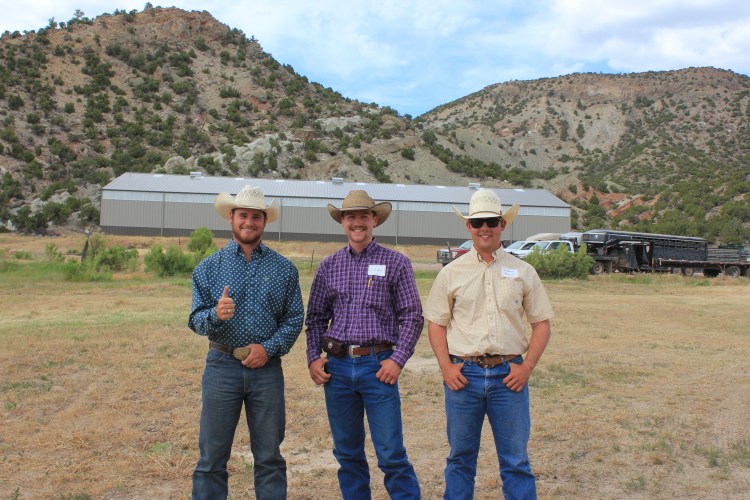
3 of our Wyoming Stock Grower 2017 Range Land Interns: Tyler Flatt, Jedidiah Hewlett, and Andrew Mainini at the Garrett Ranch.

In addition to the work done on their waterways, the Garrett family partnered with the Wyoming Game and Fish to improve their rangeland pastures and BLM allotments. They conducted several controlled burns to reduce the amount of sage brush and cedar present on the range, especially in the draws where water was more readily available. This effort did not destroy the sage grouse habitat, but improved it. Where the sagebrush canopy cover was reduced, more grass and forbs grew. These plants attracted more insects, which are of great importance to sage grouse chicks. The removal of sage brush also improved the mule deer habitat and allowed for increased cattle grazing utilization in the pasture. Due to the increased costs of conducting controlled burns on the range, the Garrett family implemented a new method of removal. Using a heavy-duty mulching head on a skid steer, they pulverized and tilled the sage brush underground in strips through heavy stands of sage. These efforts accomplished a more controlled removal of sagebrush, while reducing the cost and risk involved with controlled burns. The removal of sagebrush on rangeland and improving habitats is another reason the Garrett family was deserving of the Leopold Conservation Award.

The conservation efforts of the Garrett Ranch are truly noteworthy. Their dedication to land and water preservation makes for a bright future as younger generations take on the role of environmental stewards. Wyoming should treasure ranches like the Garrett ranch, and be thankful that ranchers like Garrett Family are established to provide a habitat for livestock, wildlife, and humans alike.

Andrew’s 5th Week at the E Bar U

Well it’s the middle of hay season and we have been very busy here at the E Bar U. While the hay is drying in the mornings we are constantly in a rush to do other chores such as check water, fill oilers, and move cattle that have wandered from their summer pastures before our hay needs to be turned and bailed. Oilers are basically mobile back rubs that are filled with a mixture of diesel fuel and a chemical called remedy, which is a type of fly control. By using these oilers, it is not uncommon to not see any flies on the cattle, even during the hottest part of the day.  This allows the cattle be more productive because they spend far more time grazing rather then fighting flies or sitting in water to keep them off. Decreasing the amount of flies will also reduce stress in the cattle. Reduced stress will lead to higher weight gains in immature cattle and promote a healthier herd.

I was also privileged enough to attend the 2017 Environmental Stewardship ranch tour at the Garrett Ranch Company near Casper, Wyoming. The Garrett ranch was a very impressive ranch that has taken a non-typical thinking approach to managing their resources.  One of those ideas was improving riparian areas by adding the beaver to the area and air dropping aspen trees in via helicopter as a food source as well as building material for their dams. The beavers were added to the ecosystem in hopes of reducing soil erosion by creeks and increasing flood plains in riparian areas to better distribute water across the creek bottoms.

Jedidiah Learns Outside of the Ranch

Weekly Work Summary- June 19-24, 2017

This week we finally licked the first cutting of hay. After swathing on three different days, we got the last meadow laid down. Although we were hindered by the fact that we blew two tires in the process. The first tire was on the swather tractor, so we swapped it out for the newer baler tractor. All went well until we needed to change the tractor’s computer from the 540 RPM for the baler to the 1000 RPM for the swather. After a call to the equipment dealer and pressing buttons MANY times to obtain the proper combination, it worked! The second tire that blew was on the swather, but luckily Mr. Perry had a new tire, so we were back in the field after we had the local tire shop put it on the old rim. This week we have had a pretty good breeze, which dried the hay quickly, but has made baling a challenge. We had to bale late at night or very early in the morning in order to get enough dew that the alfalfa wouldn’t turn to dust. After one good day of hauling, we got the previous meadow in the stack. All we have left to do is haul the bales off the last meadow and we will be done with haying for a month or so.

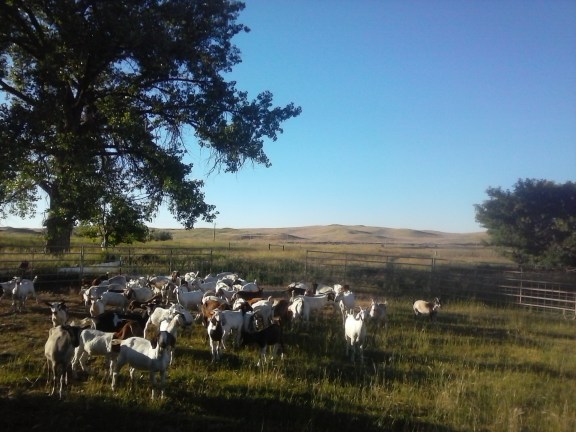
The weed control goats arrived on Monday and have been very content eating leafy spurge. We had to put a learning fence in the corral because they did not respect the boundary fence at first. It didn’t take them long to figure out that the electric fence was not their friend! We were also relieved to find that they are well trained and friendly. To bring them in at night, we just shake the bucket of grain and they come in by themselves!

The Perry’s and I attended the Wyoming Stock Grower’s Environmental Stewardship Tour on Wednesday. The tour was hosted at the Garrett Ranch outside of Casper, WY. Throughout the day, we listened to presentations about their recent projects with the Game & Fish Dept. and took a bus ride to see some of their work on the range land as well. Because of their outstanding conservation efforts on their land, the Garrett ranch received the 2017 Leopold Conservation Award.

On Saturday, I attended a grazing education field day by Dr. Blaine Horn from the Johnson County Extension office. The workshop was hosted by a ranch in Crook County on the Wyoming/South Dakota line. We for the first half of the day, we learned about range plant identification and range land soils. After lunch, we did some clipping and weighing to estimate the amount of production on the pasture, and completed an exercise to estimate the amount of forage eaten by a cow in day.

Jed Week 5 Pic 5Jed Week 5 Pic 1Jed Week 5 Pic 2

The Farm Paparazzi

Armed with an automatic setting to expose a happy life full of God's grace

Facts About Beef

Debunking myths about beef

Beef Runner

Agriculture Advocacy, Beef and Running

Wyoming Lifestyle Magzine

a virtual visit to wyoming's rural communities

Wyoming Livestock Roundup

a virtual visit to wyoming's rural communities

Bridle-Bit LLC Blog

Horse & Rider Training. Serving The Northern Front Range Since 1981

Faces of Agriculture

a virtual visit to wyoming's rural communities

The 307 Chronicles

a virtual visit to wyoming's rural communities

Wyoming Roundup

a virtual visit to wyoming's rural communities

a virtual visit to wyoming's rural communities

Double H Photography

a virtual visit to wyoming's rural communities

Ladder Ranch

Scenes, thoughts and poetry from our working ranch

Comedy Of A Cowgirl

The Comedy of Storytelling

RealRanchers.com

a virtual visit to wyoming's rural communities