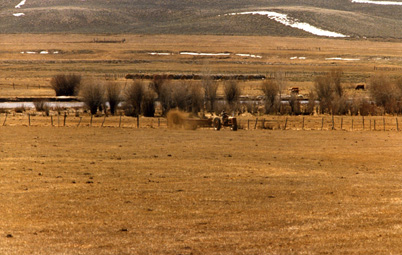
2011 Upper Green Cattle Drive

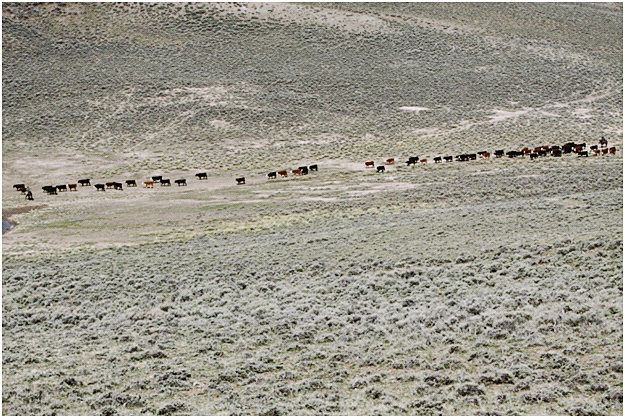
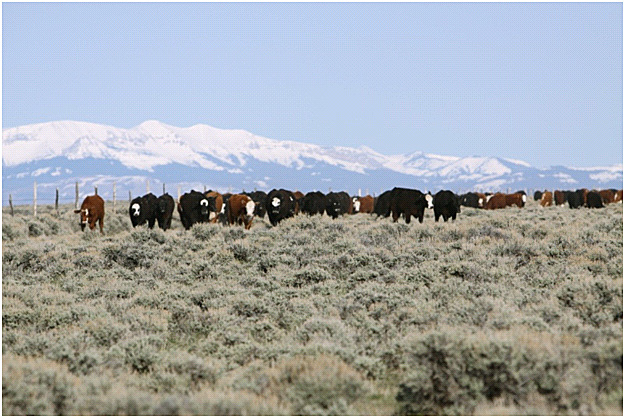
Yes, I know I’ve been lax in my duties writing about the Upper Green River Cattle Drive this year, so here is a little summary and photos to make up for it.

There was so much snow in the mountains this year and it took so long to melt off that the drive started about a week late.

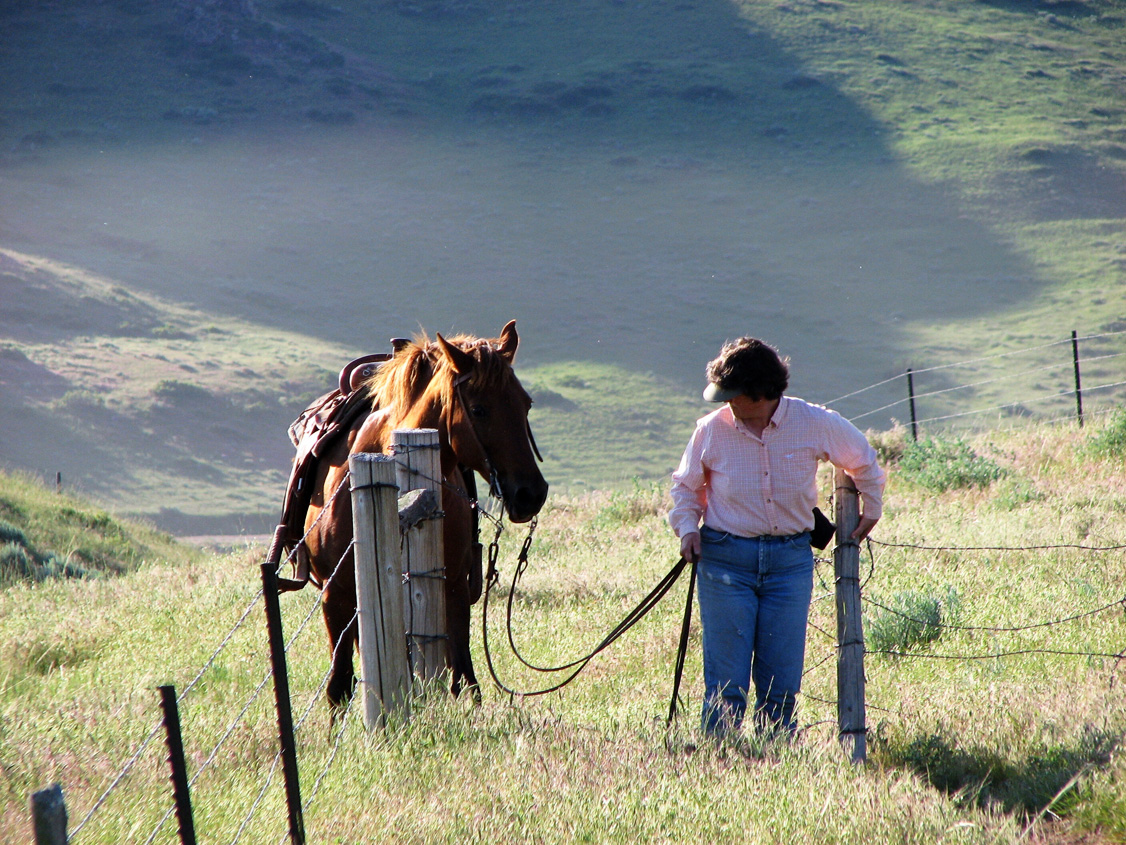
Bob Klaren and Kent Price look off the south end of the Mesa during the Upper Green River Drift (Photo by Gina Feltner)

The cattle had very good grass down on the Mesa where we started and they hated to leave it, I can’t say I blamed them since all they had to look forward to up on the mountain was shorter grass and wolves and grizzly bears, but once we got moving, the cattle trailed pretty well.
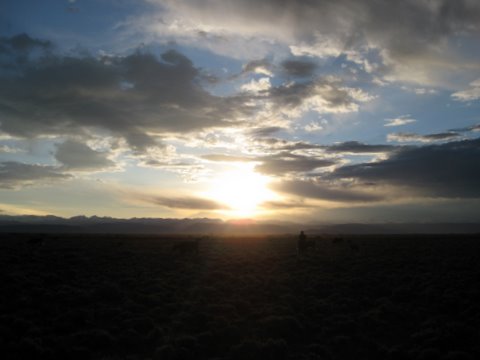
Early Morning on The Mesa (Photo by Gina Feltner)

There were a few interesting things we saw this year on the drive.  We had our first bear-killed calf on the trail this year as the cattle were moving up.  It is the furthest down we’ve ever had a kill; I guess the bears got tired of waiting for dinner and decided to come find it.

Charles Price Kent Price Search for Sick Calves Photo by Gina Feltner
Charles Price and Kent Price search for sick calves during the Upper Green River Drift (Photo by Gina Feltner)

Gina Feltner and I saw a grizzly bear on the trail one morning toward the end of the drive.  Despite all the problems the grizzly bears cause, they are still fun to see.
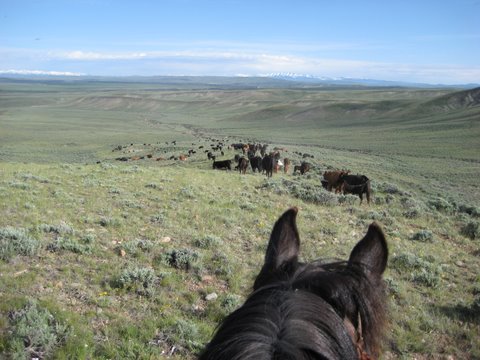
Down the Hennick Draw Photo by Gina Feltner
Going down the Hennick Draw during the Upper Green River Drift (Photo by Gina Feltner)

We also had dudes with us from Irv Lozier’s outfit again this year and I have to give a shout-out to them.  Some of them were here last year and some were new this year, but they were all very friendly and helpful.

From RealRancher Kent Price – Daniel, Wyo.

A Mother’s Grief

Two tiny babes arrived last week.  Their mother, like all mothers, immediately protective.  Nervously nuzzling first one and then the other.  Squatting to let them nurse.  Instinctively knowing what to do.

RealRancher Carla Crofts shares the sadness a mother ewe feels when she loses one of her baby lambs.

One baby is a little larger and very healthy.   He is already trying to buck and play.

The second is small and fragile.  She struggles to find the nipple when nursing, tires after suckling just a few seconds. The second day it is obvious she is not doing well.  Her mother continually nuzzles her, talks to her.  These are her first babies and she is overwhelmed.  One wants to play and explore this new world, the other is lying quietly-barely moving. If she makes it through the night she has a chance.

Day three brings renewed hope, she has been able to eat enough to fill her tummy.

Wait.  She is not feeling well – she stretches to ease the pain in her tiny stomach.  Can we give her anything to help?  It is a slim chance, but all we can do.  And then it is over.  This tiny life has ended.

The next day we leave the mother and her surviving baby in the same barn so she will figure out the second baby is gone.  That evening we put her with the other ewes and lambs.  In the morning we let them out to graze.  All day we can hear the mother calling for her babe – not the one nursing, the one that has died.  Her pain is evident in her plaintive cry.  When we let them in for the night she runs back to where she last saw her baby.  Her head hangs in grief.

I don’t think there is a way to measure a mother’s grief – no matter if we are two legged or four legged.

From RealRancher Carla Crofts – Sweetwater, Wyo.

Spring Pasture

Editors Note: It’s already July and after a slow, cold, wet start, we’re finally in the swing of summer in Wyoming.  We neglected to put this post up in a more timely manner, but couldn’t let it wait until next year to share Jonita’s wonderful account of spring pasture and some history of grazing!
 

The grass is green. The birds are back in the Green River Valley. The antelope have moved north. The cows are calving or have calved. The air is warmer and May flowers are blooming. All of these events are signs of spring and the time when cattle are turned out on the open range.  May 1 to June 1 is when ranchers in this area put their cattle from the hay meadows to the BLM sagebrush lands for spring pasture.  For days, the old cow has been watching to see if the gate to the spring range is open.  As the old cow sees the open gate to the sagebrush range, she charges through the gate heading for her favorite spot in the allotment (land individuals contract for a grazing lease through government agencies).  The calves have to hustle to stay with their mothers.  Spring has officially started.

RealRancher Jonita Sommers talks about spring time in the Sublette County area
Taking the Price-Sommers Yearlings to spring pasture on the Mesa

When the Green River Valley was settled in the 1800s and early 1900s, an individual would file on land through a homestead entry of 160 acres or a desert land entry of 320 acres.  This was not enough land to run a herd of cattle large enough to make a living.  Depending on the amount of moisture, it takes 3-33 acres per animal unit per month (AUM) to provide enough forage to feed one cow in the basin and foothills.  In the foothills and mountains, it takes 1-6 acres per month to take care of one cow.

The history of grazing on private and federal land in Wyoming
Yearlings trailing down Soaphole Draw on the Mesa.

Before the Equalizer Winter of 1889-90, the ranchers ran their cattle on federal land year round without feeding hay.  After that winter killed nearly 90% of the cattle, the ranchers started growing hay crops during the summer to feed in the winter.  The cattle were still run on federal land from spring through fall.  At this time, the federal government did not control or monitor the cattle grazing on federal land.  In 1906, the Forest Service issued the first grazing permits on federal land.  The land that is now under the Bureau of Land Management (BLM) didn’t see any control over the use of cattle until 1937 when the Taylor Grazing Act of 1934 brought about grazing permits being issued on the rest of the federal land.

Rancher talks about grazing on private, state and federal lands with their cattle
Price-Sommers Yearlings on top of Mesa

The Grazing Service, and later the BLM, starting in 1946, brought about management plans, water development and grazing allotments as the years progressed.  Reservoirs were built and wells were drilled for windmills and later propane engines to pump water.  The water development not only benefited the cattle, allowing grazing on land previously not accessible because of lack of water, it also helped the wildlife immensely by giving animals such as antelope and sage grouse watering holes.  The grazing allotments made it possible for cattle to be managed in a manner that would not hurt the vegetation.  Since the 1990s, ranchers have done range monitoring with the BLM range conservationist, who had been doing range monitoring for years.

Some ranchers have private allotments in the foothills and haul or drive their cattle to and from the private pasture.  This is for another story.

From RealRancher Jonita Sommers – Pinedale, Wyo.

Ag Dad Brags

Father’s Day is this Sunday and we at www.realranchers.com wish to salute the men who give their all to the land they steward and to the families they raise on this land. Whether it’s a farmer, a rancher, or a small-town patriarch; we say thanks to these great Dads!

Happy Father’s Day!

Rural dads love the land like they love their families
Photo by Stephanie Russell - http://www.cowgirlgraphics.net

Our Facebook followers (those who like us, who really like us!) posted these “brags” about their dads. Only edited slightly for formatting reasons.

  • My dad taught me Honesty and Integrity; that is all you get out of life! – Larry Dobbs
  • My dad is a cattleman through and through – ALWAYS made his living either milking cows as a kid or raising beef for over 60 years. He’s probably fed literally millions of people in his lifetime. On our ranch, nothing was more important than the cows, taking care of them and doing everything it takes to make things work. He also taught me that real ranchers can dress up and that real men should clean up well. I also realize how lucky I am to be a grandmother of 6 and still have my dad (and mom). I’ll never be as tough as they are… – Francine Acord-Brown
  • My father was, and always will be, a farmer. He was a dairy farmer for 47 years and my younger brother still carries on the dairy farm as Pedley Holsteins. My father is 82 and still works every day he can. – Kevin Pedley
  • My dad was an engineer for the phone company. When I became a rancher, he became the proud father of his ranching daughter. He finished off the barn and put up a workshop. Built loafing sheds, fencing and anything else I needed. He passed last July, but spent his last two years here at the ranch. He loved watching the sheep, cows and horse’s mostly from the kitchen window. My dad could do anything. He was kind and gentle. I miss him and think of him often and dearly. – Trish Hampton
  • My rural dad gets up before the sun each morning to feed livestock, change water/break water (depending on the time of year) and then drives over an hour to work on the farm. 10+ hours later he commutes back to feed again and rushes to do any necessary “home” projects before crawling into bed. Then he gets up and does it again the next day. Thanks, Dad, for working so hard to support your family! – Liz LeSatz-Lauck

Does everyone know what time it is?

TOOL TIME! Ok, not quite, but I had to give a shout-out to that lovable and mishap-plagued Tim Allen.

In Wyoming, we don't usually get enough precipiation to irrigate row crops like dry beans, corn, sugar beets, soybeans, etc. So we use gated pipe, tubes and pivots to bring on the green.

It’s irrigation time in Wyoming. We don’t usually get enough precipiation to irrigate row crops, so we use flood and pivot irrigation to bring on the green. My husband raises malt barley, corn, sugarbeets and pinto beans – just for you (and the other 155+ people the average farmer feeds each year!).

From RealFarmWife Liz Lauck – Wheatland, Wyo.

Shearing Bliss

The average American spends $21 on a haircut. The average sheep spends $0 on a haircut.

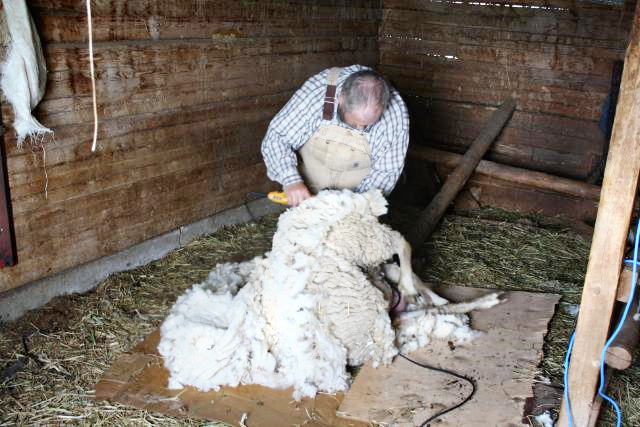
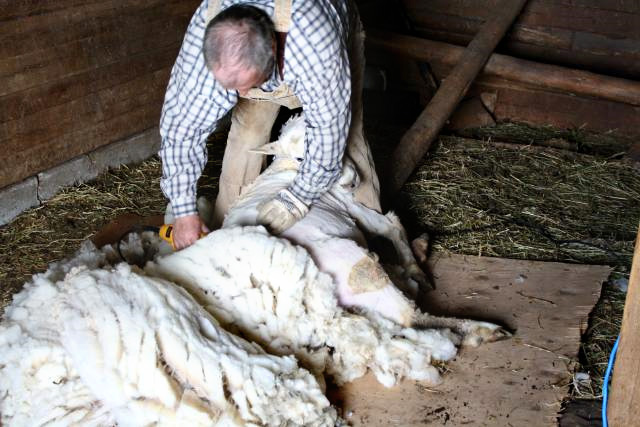
Sheep shearing
Photo by Crystal Lawrence

Mostly because they don’t have hair; they have wool. And they don’t have money. Or the ability to say what style they’d like. Or a ride to the salon. There are a lot of obstacles in the way.

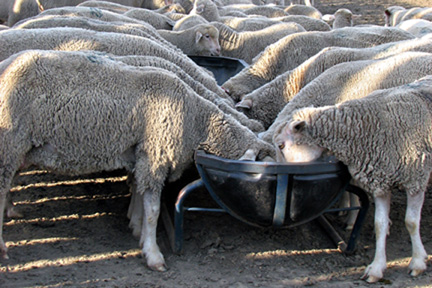
So, it’s up to the rancher to step up and get the job done. Yes, rancher’s raise sheep, too (shhh…don’t tell anyone). And when they raise sheep, they not only raise them for meat, but for wool. This is where the haircut…er, woolcut…comes in. But, we call it shearing.

Shearing (shaving the wool off a sheep) is harmless, just like getting a haircut. You do need someone skilled and efficient, so as not to cut or injure the animal.

Just like RealRancher Jody Bagley is demonstrating, some sheep are sheared with electric shears. Most sheep are sheared with shearing machines, which help shear larger flocks faster. The farmer or rancher may shear their own sheep or hire professional sheep shearers. A skilled shearer can shear a sheep in minutes and can remove the fleece in one piece.

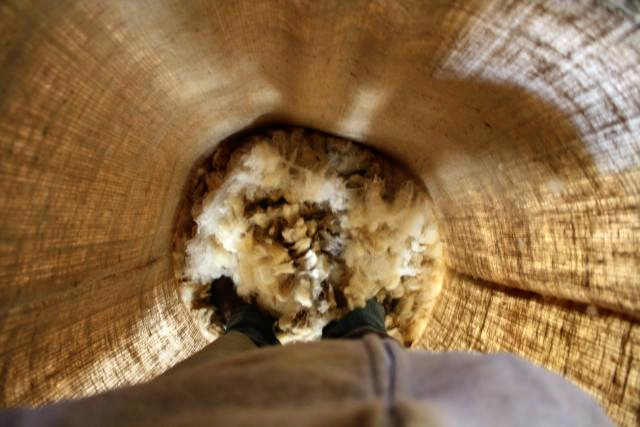
Sheep are usually sheared once a year, in the spring, before hot weather sets in. Many choose to shear before lambing starts because it creates a cleaner environment for the lambs and also keeps the fleeces cleaner. In earlier days the  wool is placed in large bags for transporting to the buyer.  As 8 foot-long bags would hang from a stand, “wool trompers” would jump into the bag after every few fleeces to pack the wool tightly.  Today most wool is packed in large bales using a wool press.

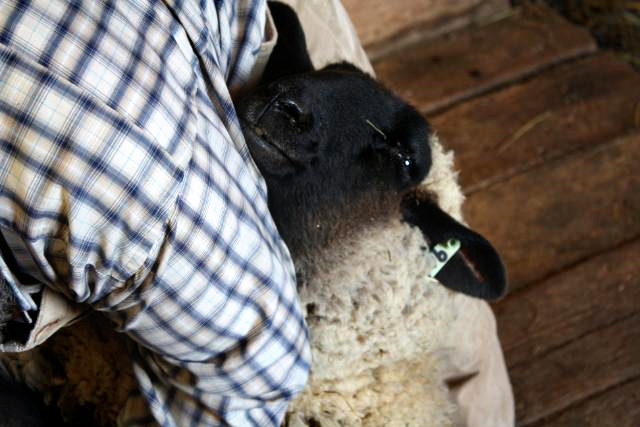
Just like your hair, wool never stops growing. Shearing keeps sheep less stressed and more comfortable. Just behold this look of relaxation…

Photos from RealRanchers Jody and Suellen Bagley – Auburn, Wyo.

Post by RealPartner Liz Lauck – Wyoming Stock Growers Association using information from www.sheep101.info and RealRancher Jim Magagna – Rock Springs, Wyo.

May 13

Today is May 13. Today the sun shone and the snow melted!

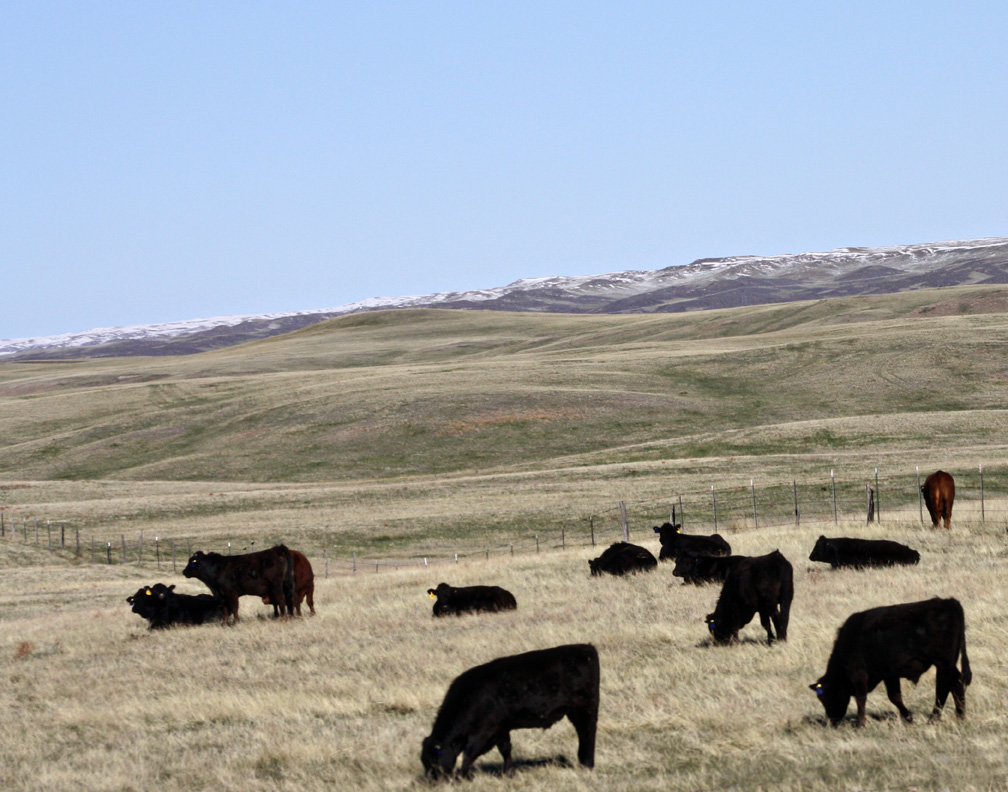
The sun shone after a spring snow storm and melted the Wyoming snow away revealing green grass for Angus cattle to graze

Who says Friday the 13th is unlucky?

Posted by RealPartner Liz Lauck – Wyoming Stock Growers Association

May 12

Today is May 12. Today is the 54th day of Spring. Today it snowed. A lot.
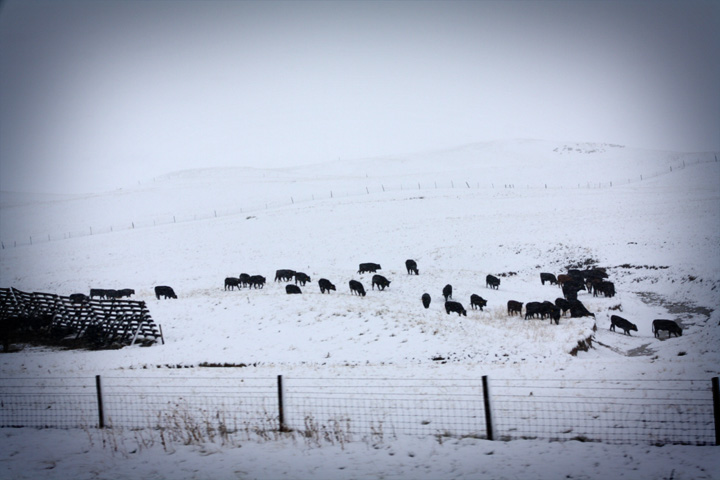
It snowed several inches on May 11-12 2011 in rural Wyoming

Send airplane tickets to Florida immediately. And a hand to take care of the operation while we’re gone.

Posted by RealPartner Liz Lauck – Wyoming Stock Growers Association

A Salute to Rural Moms

Moms are special! Here at RealRanchers.com we share and celebrate rural Wyoming living and, in honor of Mother’s Day, we’d like to recognize Rural Mother’s everywhere.

Our Facebook followers (those who like us, who really like us!) came up with this list of “You Might Be A Rural Mom If…” Only edited slightly for formatting reasons.
Happy Mother's Day!

  • You’ve helped run a ranch your entire life, raised 5 kids, and still maintained your sanity. Thanks Mom! (P.S. Our Kaycee, WY ranch has been in the family for 108 years!) – Frank NeVille
  • You give your kids (and yourself) a spit bath, so a freezing baby calf could warm up in the bathtub. – Echo Fisher Renner
  • You wouldn’t let your kids go barefoot in the Spring until it was 70 degrees, so they watch the thermometer ritually. (Eastern SD doesn’t have snakes or sand burrs so bare toes in the grass was pure joy). – Donita Hill Graves
  • You cook supper, do laundry, and bottle feed calves all at one time… and not burn a thing! – Brady Gray
  • You’ve mothered and nursemaided about every species including your own. – Britt Whitt
  • You’ve had to admit bad news like, “We’re selling the cattle and the farm because we can’t keep working for nothing anymore and I’m scared!” – Charlotte VanGenechten
  • You look at your living room floor on a very cold snowy day in February and have several newborns on the floor in front of the wood stove. I think there were puppies, lambs, calves and maybe a goat or two. That was when we quit calving in February! – Cathy Andreen
  • You ask for a new rifle for Mother’s Day, really meaning it, and then are so excited when you get the one you where wanting! Guess what I asked for, and got, for Mother’s Day this year? – Tales of a Ranchers Wife
  • You’ve had a sick bottle lamb living in the house for the past week, wearing a pair of diapers. And the one night when he was really feeling bad, he got to sleep on the bed besides me. All babies need comforted when sick. – Bonnie Whitt
  • You’ve told a story like this, “I had a huge tom turkey attack me when I was feeding pigs one day. He jumped on my back and knocked me down so I did what any other ranch woman would do; I rung his neck and killed him…I thought. I threw him in the back of the van and headed down the highway to have my dad-in-law help with cleaning him…when the turkey came back to life and attacked me in the moving car going 70 mph down the highway! I WILL NEVER RAISE TURKEYS AGAIN!” – Shelly Neff
  • Or like this, “So today started at 3:14 a.m. when the phone rang and it was Park County Sheriff’s Office. Dispatch: ‘There are MANY cows out.’ Me: ‘So what color are they?’ Dispatch: ‘MANY colors.’ I spent 3-5 a.m. chasing cattle. It was so much fun watching a City Cop try to herd cows in the dark! I love my life… even if I have to rise and shine before the sun.” – Shelly Neff
  • You’ve had your 2-year-old do this, “When I was two my mom gave me the task of carrying two chicken eggs back from the chicken coop to the house. I was SO excited that I clapped my hands together with joy…only to have the eggs crack with yolk running down my arms and tears running down my cheeks. My mom wiped the mess off me and wiped my tears away, gave me a hug, and made me smile when she let me help her “check under another chicken” for more eggs! Happy Mother’s Day to all the rural moms out there! -Malorie Bankhead

Spring Cleaning, Part II

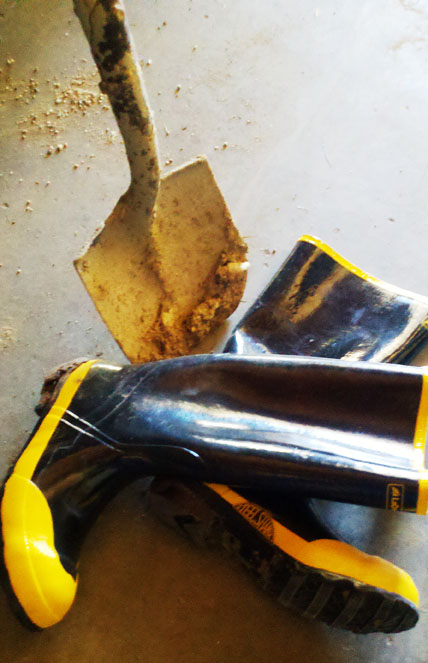
Last week we published a love story. Rancher meets manure; rancher gathers manure; rancher spreads manure. It gets me all choked up inside!

Ok, so maybe it’s not quite a love story. Nonetheless, the photos I found online to illustrate the manure saga, didn’t quite do justice to this part of ranch life. So last week’s post author, Jonita Sommers, sent me some images straight from their ranch in Sublette County, Wyo.

Sublette County Rancher Albert Sommers cleans manure from his corrals on his Pinedale, Wyo. ranch.

Animals are housed in corrals for various reasons and for varying lengths of time. So inevitably when you have animals, you have poop. These are just the facts, ma’am (name that TV show).

When this manure builds up, it must be removed, as Jonita’s brother, Albert, is so skillfully displaying in the above photo. It’s all about manure management, folks!

Now the sweet-smelling stuff needs to be disposed of. That’s where a manure spreader comes in.

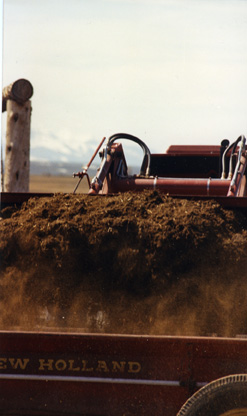
Ranchers practice manure management on their Pinedale, Wyo. cattle operation. Here Albert Sommers loads the manure spreader.Albert loads the manure spreader with his tractor’s loader bucket. We use such complicated terms. Try to keep up.

Ranchers practice manure management on their Pinedale, Wyo. cattle operation. Here Albert Sommers loads the manure spreader.Once the manure spreader is brimming with its aromatic load, it’s time to spread the manure. Hence the term, manure spreader. Are you still with me?

The Sommers Ranch spreads manure from their corrals on their pasture and hay land to fertilize their grasses.Commence firing! If you look closely, you can see a nice plume of dry poop being evacuated behind Albert’s tractor.

Pinedale ranchers spread manure on their land as a natural fertilizerThe manure is a natural fertilizer. You can just hear the pasture grasses jumping for joy as the nutrients get spread about.

Manure spreaders are used to distribute manure as a fertilizer on pasture and hay land in Sublette County, Wyo. There is a mechanism in the bed of the spreader that moves the manure to the back. Then the beaters on the rear of the spreader turn and distribute the load into the field.

Now let’s talk drags (just don’t be a drag). Dragging occurs at different times of the year depending on the ranch, but the purpose is always the same: to break up cow pies! These are not the kind of pies you eat al a mode. Or at all. Just don’t go there.

A drag is pulled across pastures to break of manure and make its nutrients more accessible to plantsThe manure is broken up as the drag is pulled across the ground by a tractor. This makes the organic matter (a.k.a. manure) more easily broken down and utilized by plant life.

Draging pastures in Wyoming. This breaks up manure to be more available for plant life.Now the corrals are clean, the manure piles are distributed and the fields are fertilized. The only thing left to do is shower. Trust me, that manure dust gets in places we will never blog about.

From RealPartner Liz Lauck – Wyoming Stock Growers Association

Photos from RealRancher Jonita Sommers – Pinedale, Wyo.

The Farm Paparazzi

Armed with an automatic setting to expose a happy life full of God's grace

Facts About Beef

Debunking myths about beef

Beef Runner

Agriculture Advocacy, Beef and Running

Wyoming Lifestyle Magzine

a virtual visit to wyoming's rural communities

Wyoming Livestock Roundup

a virtual visit to wyoming's rural communities

Bridle-Bit LLC Blog

Horse & Rider Training. Serving The Northern Front Range Since 1981

Faces of Agriculture

a virtual visit to wyoming's rural communities

The 307 Chronicles

a virtual visit to wyoming's rural communities

Wyoming Roundup

a virtual visit to wyoming's rural communities

a virtual visit to wyoming's rural communities

Double H Photography

a virtual visit to wyoming's rural communities

Ladder Ranch

Scenes, thoughts and poetry from our working ranch

Comedy Of A Cowgirl

The Comedy of Storytelling

RealRanchers.com

a virtual visit to wyoming's rural communities