EPA Proposed Interim Decisions (PIDs) Request for Comment
Milwaukee, WI Since 1971, the Rozol® brand registered by Liphatech® has been helping farm communities to control field rodents. Today, Rozol is labeled for use on ground squirrels, black-tailed prairie dogs, pocket gophers, rats, mice and voles. Now Rozol and all other anticoagulant rodenticides and acute rodenticides (including zinc phosphide) are under scrutiny for additional use limitations.
The U.S. EPA has released for public comment Proposed Interim Decisions (PIDs) that will significantly impact your access to and usage of rodenticides. The most substantial of the proposed changes are the following:
The reclassification of ALL rodenticides to Restricted Use Pesticides (RUP): There will be no more General Use Rozol Pocket Gopher Bait, for example. ALL users must now be licensed, certified applicators.
Cancellation of spot/scatter and broadcast applications in rangeland, pasture, fallow land, and in cropped areas including orchards, groves, vineyards, and alfalfa. Above ground applications: Cannot be made directly to food or feed crops; Can only be made during the non-growth (dormant) period of the crop; May only be made using tamper-resistant bait stations in these use sites; Require one year harvest interval for applications made to non-bearing crops.
New PPE requirements, applicator must wear: An APF10 half-face elastomeric respirator for loose bait formulations (e.g. grain baits or pellets); 14 mil or thicker chemical-resistant gloves.
Please go to: https://www.responsiblerodenticides.org and comment on how these changes will affect you. We need your personal involvement to stop this decision. Liphatech is a member of the Rodenticide Task Force.
“Enjoying a good rain, the first song from a Meadowlark, sunrises, and sunset, watching new life in the Spring, neighbors helping neighbors; these are just some of the pure joys from growing up on a ranch.
Community involvement and ranching hold a special place in the hearts of the folks at Chase Brothers, LLC. Galen Chase is often seen at many WSGA events whether he is representing their business at their trade show booth, helping on the Auction Committee, or engaging in conversations with friends.
Galen is an active member as both an Associate member and representative of Chase Brothers, LLC, but also as a producer member of the WSGA. A valued membership that has been a part of his family for many years.
John and Galen Chase, Chase Brothers, LLC
HISTORY Galen’s father, Jack Chase, and grandfather started their ranch back in 1957. Jack took over management in 1961. He and his wife Gini were married in 1963 and she then became an active part of the ranch.
The ranch started out as a commercial cow-calf operation with Herefords and later started to crossbreed with black angus bulls.
Later, Gini wanted to try raising Red Angus, so they started a small herd of registered purebred Red Angus in 1972, which grew, and the commercial herd gradually faded out as the ranch became solely focused on developing and selling some of the best seedstock Red Angus genetics in the world. Not only were they selling live seedstock, but they also sold embryos and semen world-wide.
Jack was president of the Red Angus Association and Gini served as Vice President. Jack also served as president of the Beef Improvement Federation (BIF). In 2005, they won the Pioneer Breeder Award from BIF. They were founding members of the Wyoming Beef Cattle Improvement Association (WBCIA) and Jack was the president. They were both extremely active in trying to improve the beef industry through their ranch and their involvement in the industry.
In the late 90s, Galen and his brother John both left the ranch to manage other large ranches. Galen managed the Switchback Ranch in Roscoe, MT, and John managed Paintrock Canyon Enterprises in Hyattville, WY. Both returned to the ranch in 2001 where we were involved again with management.
When asked what some of the most rewarding aspects were growing up on a ranch in Wyoming, Galen said, “Enjoying a good rain, the first song from a Meadowlark, sunrises, and sunset, watching new life in the Spring, neighbors helping neighbors; these are just some of the pure joys from growing up on a ranch. We got to experience a close relationship with the land that most people will only dream about. We got to experience the good and the bad and learned real life lessons early.”
TODAY Established in 2010, Galen, and his brother John, own and operate Chase Brothers, LLC. Their passion for ranching, livestock, and the people and land that support it all has contributed to years of experience selling ranches. Today, their business includes six other licensed sales agents and they have expanded their territory from Wyoming and Montana into South Dakota and soon Nebraska. Chase Brothers specializes in all types of land and ranch properties.
In discussing how their experience growing up on a ranch helps with their business, Galen said, “When we list a ranch for sale, we try to bring out the very best in that ranch with our marketing since our experience can help us understand by seeing and listening to what’s important. We take great pride in our beautiful photography to capture what’s important to buyers. We attempt to operate ethically in all aspects of our business and do the right thing even when no one is looking, because it’s the right thing to do; another practice learned from our parents.”
Outside of the business, Galen and his wife Jill stay involved in the cattle business by running a small cow-calf and yearling operation. “Just having a small herd keeps us connected with a lifestyle and business that we love and have so much appreciation for. But, like a lot of producers over the course of the last year, we have drastically scaled back our herd because of the drought. Let’s pray for the rains to return and that our lands will once again be productive.”
WSGA INVOLVEMENT As a ranch, the Chase family was a longtime member of Wyoming Stock Growers Association. Galen & John started attending WSGA events and meetings in the 90s. John served on several committees, including the Natural Resource Committee, and Galen is currently serving on the Auction Committee.
They are actively involved with WSGA as Associate and Producer members at the convention trade shows and meetings. They are also active with Wyoming Farm Bureau, Ranching for Profit seminars, and supporting the local youth 4-H and FFA sales. They are both involved in their community and volunteer on many boards and organizations.
“Being involved in the community is important provided it’s not just self-serving and that it’s for the right reason. The most rewarding kind of service usually involves some degree of sacrifice,” said Galen. “If we are going to maintain our God given liberties and freedoms in this country that so many before us have tirelessly worked, fought, bled, and literally given lives for then we have no choice, we must.
“Like with our ranch and Buffalo Creek Red Angus, our real estate business serves as a place and means for us to help and serve others. Whether it’s in our church; youth activities like 4-H and FFA; or just volunteering; we cannot help but to share all that which God has so graciously blessed us.
On October 17, WSGA joined Governor Mark Gordon and Secretary of Agriculture Tom Vilsack in Washington DC for the signing of the Wyoming Wildlife Habitat Memorandum of Understanding. This MOU, the first of its kind, represents commitment to invest “technical capacity and resources in the conservation, restoration, and management, and long-term stewardship of both public and private lands that support migratory big game. Participation in the pilot project by private landowners is strictly voluntary. Both current practices that support migratory wildlife and new initiatives will be eligible for participation in these funding opportunities.
In his comments on the MOU, Governor Gordon noted the role of stock growers and other landowners in providing habitat for migrating wildlife. Secretary Vilsack emphasized the importance of collaborative, locally-driven initiatives. He expressed his hope that success with the Wyoming initiative will lead to similar programs in other states.
In conversation with the Governor and Secretary, WSGA’s Executive Vice President Jim Magagna urged that federal agencies within USDA be given broader flexibility to work with landowners to accomplish the objectives of the MOU. He added that these initiatives can only be successful if all parties recognize the unique knowledge and understanding of wildlife movements possessed by ranchers and farmer who are on the land every day. WSGA was involved in the development of this MOU and will continue to carefully monitor its implementation.
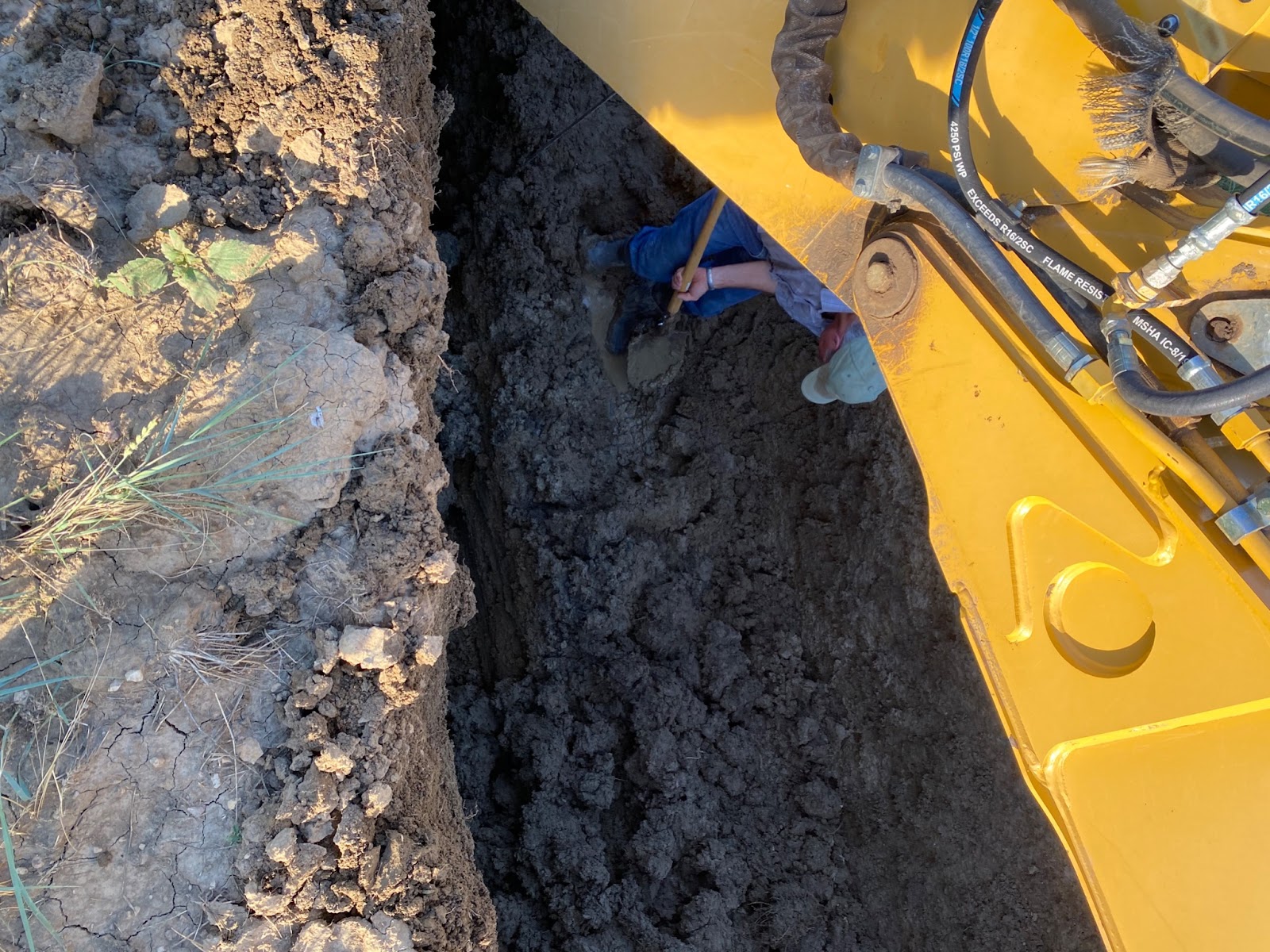
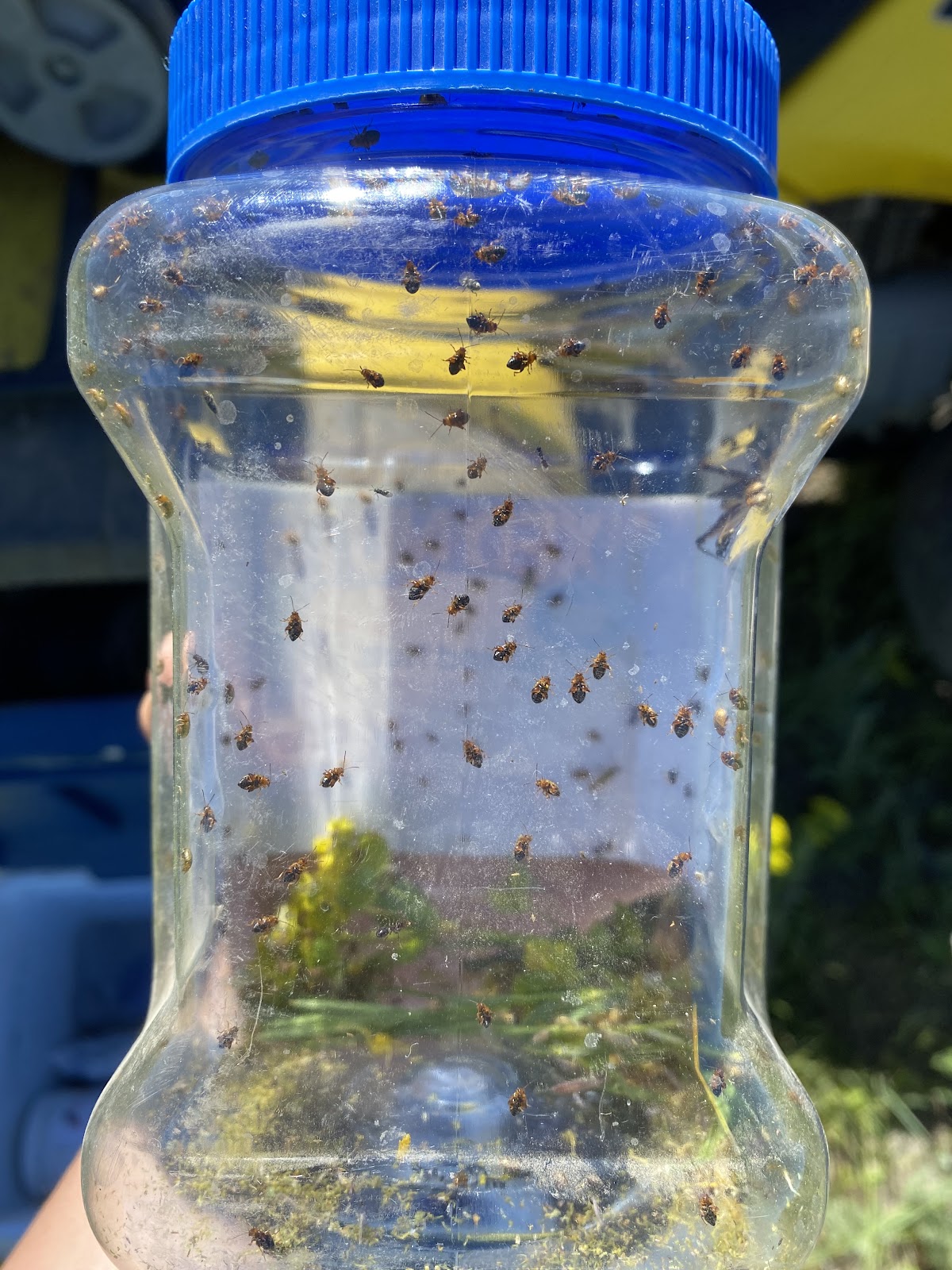
I also wanted to share about our mountain trip that we had a couple of weeks ago. The week was a little busy as we started to prepare for the trip up the mountain. That week I did a lot of different tasks such as sewing a few more oiler flaps together. I then took one of the face flaps that I had just fixed to the dry cow pasture and swapped it with the face flap that was on that oiler. I also checked to see if the flea beetles were out because they are pretty temperamental when it comes to the weather. It was kind of windy, and very cloudy that week, both of which the bugs don’t like. I was surprised to find some beetles were out. Terri had received a notification from the water storage tank that the water level was dropping at a rapid pace. The Kane’s have this really cool monitor in their storage tanks they use to track the levels of water throughout the ranch. Therefore, I was sent on a mission to find where the leak was coming from. Of course, the last place I checked was where the leak was. The collar that connected the heavy duty plastic (HDP) and PVC pipe together had broken, and this happened to be buried more than 5 feet underground. Once David and Terri got back, we went out to the leak and fixed it, this time with a coupler instead of a collar.
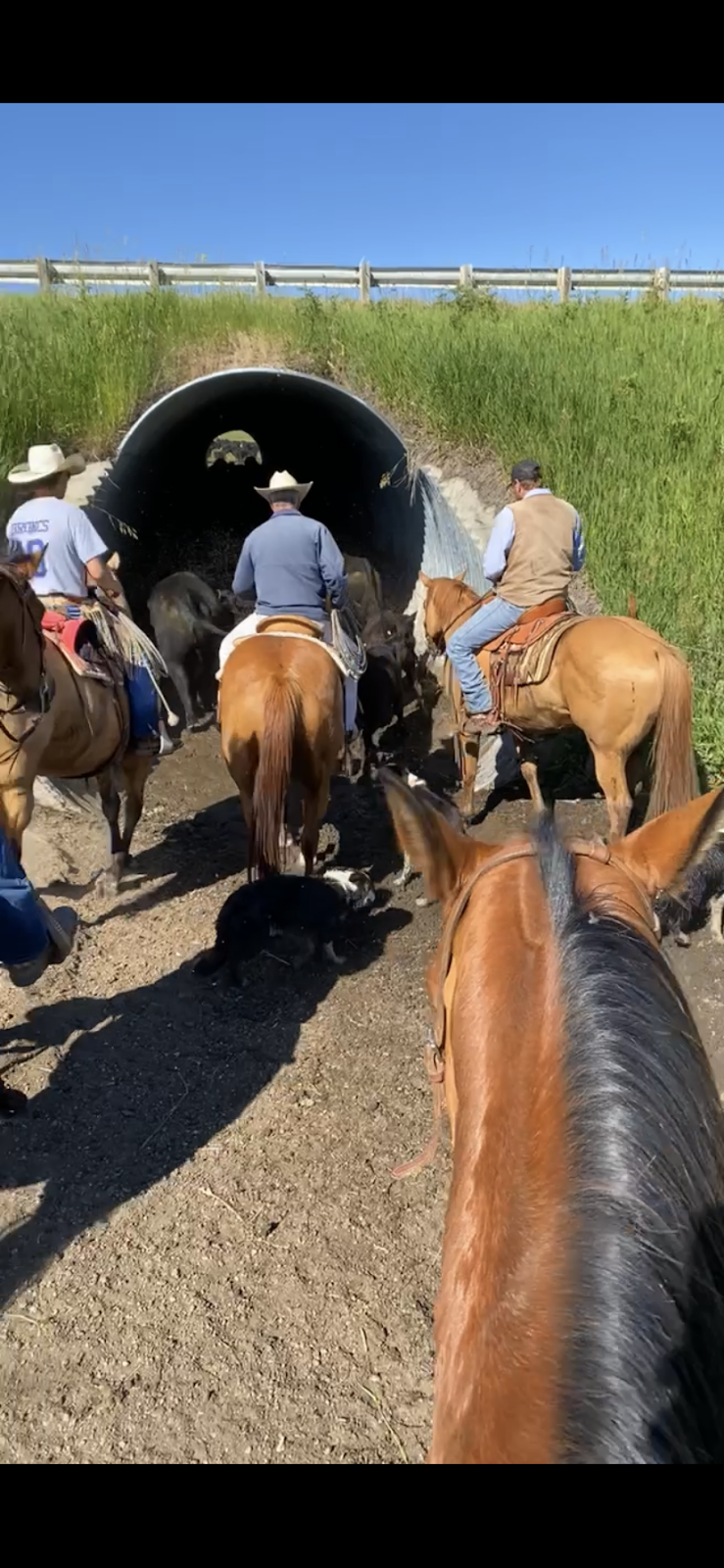
The rest of that week we gathered the cows that were going to head up the mountain and gave them Ivermectin. While gathering them, we pushed them through what we call the gun barrel, which is this giant culvert that you can ride a horse through and it goes under the interstate. After spraying the flies off, we sorted the calves off and vaccinated the calves. While the rest of the team went up the mountain to summer the cows, I collected and released flea beetles and checked the water tanks. Overall, the prep and mountain trip was a success and we will move the cows back down in October!
David, Jake, and Nate are about to enter the gun barrel.
It has been a while since my last post, but I wanted to jump back and touch on the Environmental Stewardship Day that was held in Elk Mountain at the Johnson Ranch. I really enjoyed touring the Johnson Ranch, and getting a little insight into how they operate their ranch. In my last post, I talked about the Leafy Spurge Beetles I collect and distribute in order to control the invasive species, so to learn of other ranches stewardship practices was intriguing.
One phrase I heard a lot at convention was “We need to tell our stories.” I think it is important to hear the stories of fellow ranchers. Every family has a unique story as to how they got started in the agriculture industry. Environmental Stewardship Day is a great way to share that story and express the large efforts ranchers put towards conservation and stewardship of our resources to the public. Every ranch operates differently. Each ranch adopts their own practices to preserve and improve the land. Farmers and ranchers have to be very cognizant of how they are managing their land. Such as soil health, grazing rotations, grazing intensity, and water utilization are very important to farming and ranching operations. Not paying attention to these aspects can negatively impact the production of a farm or ranch. Nutrient levels in the soil are important to pay attention to allow your crops and native vegetation to thrive. Over grazed pastures aren’t nearly as productive in future years. Installing pipelines and water tanks on the tops of ridges around pastures can improve the grazing utilization of that pasture as the water will draw cows up to places they wouldn’t normally graze. This is something the Kane’s have done, and it has worked quite well for them, allowing them to better utilize their land. I have really enjoyed learning about David’s usage of pipelines to draw his cows to different parts of his pastures. Having the opportunity to learn and compare within this tour was a great educational experience and honored a key factor ranchers put lots of effort into. I want to urge anyone that knows of an applicant for this award to nominate them!
This past week seemed kind of laid back which was a nice change of pace. Monday was kind of stormy so we unloaded the backhoe to use the trailer it was on to get the loaner tractor. We then gathered the cows in the Fred Cook pasture and moved them down to the end of the county road. One of our tractors is in the shop, so we ran to town to get the loaner tractor from C&K Equipment that afternoon. David, Terri, Jake, and I all ran to town in the afternoon. Terri had to return some unused vaccines to the vet, get the semi so we could haul cows out to Nate’s the next day, and pick up the truck that was in the shop. Terri and I then drove the pickup that was in the shop out to Nate’s. Tuesday, we got our horses and a couple of trailers and headed up to the end of the county road where we left the cows the day before, we then sorted and loaded them. While David, Jake, and Patrick hauled the cows and calves to Nate’s, I weed ate around the pastures.
I started my day off Wednesday by spraying curly dock in the horse pasture. Once I was done with that, I helped connect the bailer to the tractor. That afternoon, I learned how to collect leafy spurge flea beetles, which the Kane’s use to control their leafy spurge. Once my flea beetle collection training was done, I went and collected flea beetles and started releasing the beetles in patches of spurge that didn’t have any bugs in them.
Thursday, we put the retriever’s arm on the retriever. After we were done with that, I went and collected more flea beetles and continued to release them up the creek. That night, we fixed a water tank in the O-A pasture.
Friday morning, I went up to check that water tank we fixed the night before. When I got to the water tank, I found the float had been broken off at the cement at the bottom of the tank. We ended up having to chip some of the cement out to fix the float. Once that was fixed, we took the bailer off the tractor and put it on the Agco tractor. In the afternoon, I went and checked our cement patch, which luckily held. Then I swept the shop floor. Finally, Saturday I sewed the rips on some of the face flaps that hang from the oilers and that was my week!
This week was a long busy week. We started the week off by gathering all the bulls in the bull pasture and trailing them to the main house. We put them in one section of the corrals and the other half in the alleyway to eventually run them all through the chute to give them a booster vaccine and spray them with an insecticide to keep the flies off. Once they were run through, we sorted them up into two different pens depending on what pasture David wanted them in. From there, we loaded the bulls into trailers and drove them to the pastures. We then scattered them a little by trailing a few of them to different areas where cows were. We also got the 13 bulls out of the heifers and put them back in the bull pasture. It never fails, also had to fix a section of fence in that pasture. While putting those bulls in I checked on the two bulls we had put in the bull pasture earlier, and moved them into a different pasture. One bull that we had put out the day before was lame, so a replacement bull was put in. Tuesday was a bit of a long day. We gathered 78 pairs and four bulls that were in the Zimmerman and trailed them up to the end of the road. Patrick and I held the cows there while Nate, Jake, David, John, and Aiden went and gathered the School Section. Once all the cows were gathered, we held them at the end of the road to pair up while we ate lunch. After lunch, we trailed them to the Doyle Horse Pasture where they will graze for the next few weeks. Wednesday and Thursday were spent fixing the fence. The pasture we were fixing fence in was once part of a sheep ranch. The bottom portion of the fence is rusted sheep wire that was kind of a pain to fix. Friday I spent the day spraying Whitetop again. I was able to finish spraying along the creek and whatever David hadn’t sprayed while Jake and I were fencing the days prior. Saturday was spent doing some shop work in preparation for haying. David and I moved the two bail feeder and pasture drag trailers. We then pulled the retriever out and took the feeder off of it. Overall, it was a busy week of work.
Monday was a rainy day, so we did a lot of work in the shop. The oil needed to be changed in one of the tractors, so I got to learn how to do it. While we were waiting for the oil to drain, we took the fenders off the steer axle as well. We tried to beat the rain because there were a few things that had to get done outside, like bringing a cow-calf pair in. The cow needed her feet to be trimmed due to an abscess that blew out and her toes began to cross from overgrowth. Of course, it didn’t start pouring until we got out to the pair. After we got her feet trimmed, we took the tractor to the water house to wash it. When we got back, I was tasked with cleaning the windows, both inside and out. Tuesday was also kind of rainy in the morning. When I got to the main house, Terri showed Jake, the ranch hand, and me how to use AgriWebb. AgriWebb is software the Kane’s use for ranch management. Then David took Jake and me around the two pastures that we were going to fence. When we got back to the house, I changed the oil in one of the pickups and learned how to change the power take-off (PTO) shaft from 1000 to 540 on the tractor. The rest of the week we fenced and worked around E-U and overall has been a great week of learning.
It’s been a busy couple of weeks after attending the Stock Growers 150th Summer Convention in Cheyenne where I had a lot of fun meeting members and sitting in on meetings. On Monday, I learned how to use a tire machine because the 4-wheeler needed new tires, so we mounted the new ones on the rims before mounting them on the vehicle. It was pretty rainy on Monday, so we stayed inside and accomplished tasks such as changing tires.
On Tuesday, we gathered and branded the new bulls and the last group of calves that needed to be done. We then moved that group of cows and calves to the place on Wolf Creek at the E-U Ranch. Thursday through Saturday I sprayed Whitetop, which is an invasive weed. As we drove around the E-U earlier in the week, David pointed out most of the patches that we could see from the road so I had a general idea of where to spray. I found a lot more than we initially thought there was. Some of the patches I found hadn’t bloomed out yet, so I was happy to spray that before they could bloom and potentially seed out. I am still not done spraying so I will hopefully get that finished up at the end of the week.
Due to these cool temperatures, the Whitetop has stayed in bloom for longer than it did last year, and we do not want that for the pastures and cattle. It is very satisfying to drive past patches I sprayed on and see the plants wilting and starting to die. It was nice to spray for a few days and to find a new weed I love to hate. It changed from leafy spurge after learning about the control success David has had with the flea beetles. Overall it has been a productive week of learning and removing invasive species!
Last week was my first week at the ranch. It was a pretty busy week, but overall a great week of work. I worked about 60 hours last week, but it sure didn’t seem like it. Time flies when you’re having fun! We did a little bit of everything; hauled and moved some cattle, branded, cleaned stalls, fixed fence, placed irrigation systems, and fixed a few valves covers for the water tanks. Besides a few things, everything was a first for me to do and I enjoyed learning how, especially being a part of my first rope and drag branding.
I’ve already learned a lot in my first week. Such as why you don’t haul cows and calves together. If you do, the cows will trample and kill the calves. I also learned how to mug calve, properly administer a vaccine, and not coil your lead rope up.
My favorite part of the week was branding! Although I would say fencing wasn’t as bad. The only part that made the day-long was the heat. I had never used a fence stretcher and it made the job a lot easier, especially with T-posts. I think we all have had the struggle of hammering a staple into a wood post and its splitting.
So far, this internship has been everything I expected and more! I’ve already learned a lot, and I can’t wait to learn more. This has already been an awesome start and I can’t wait to see what the rest of the summer has in store for me.






 RealRanchers.com