Cleaning out the Vault = Giveaways!

It’s a New Year and time for new beginnings! And for this organization freak, that means cleaning out the vault.

RealRanchers.com is giving away lots of goodies in celebration of the New Year

I’ve uncovered lots of goodies so we’re doing a giveaway in celebration of 2013! Prizes include: digital cameras, an Eat Beef bumper sticker, one WSGA Supporting Membership, a Crying Wolf DVD, throw blankets, calendars, CDs, water bottles, and more.

To enter, tell us what you hope the New Year brings in the comments section below. One entry per person and open to anyone in the United States.

Winners will be selected randomly and prizes will vary. Winners will be announced on the blog and our Facebook page on Jan. 7th. Ready, set, go!

From RealPartner Liz Lauck – Wyoming Stock Growers Association

2012 in Review

The WordPress.com stats helper monkeys prepared a 2012 annual report for this blog.

Here’s an excerpt:

4,329 films were submitted to the 2012 Cannes Film Festival. This blog had 21,000 views in 2012. If each view were a film, this blog would power 5 Film Festivals

Click here to see the complete report.

Thanks to all our faithful followers! Happy New Year!

Traveling Back in Time

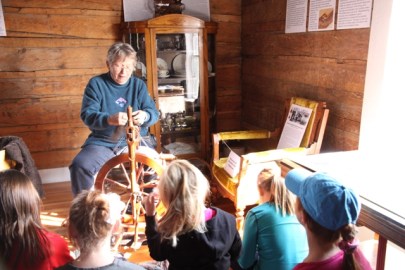
The Big Piney 4th Grade visits the Historic Sommers Ranch Homestead in Pinedale, Wyoming where they experienced life as a homesteader, including spinning wool into yarn.

The Big Piney 4th Grade class visited the Sommers Ranch Homestead Museum and Living History Center in September. It was a great experience for the students with them learning Wyoming history this year.

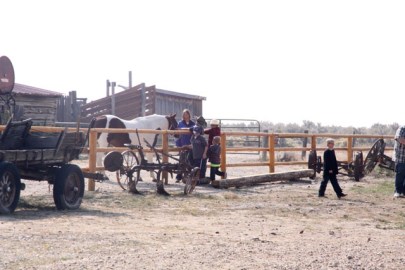
The Big Piney 4th Grade visits the Historic Sommers Ranch Homestead in Pinedale, Wyoming where they interacted with livestock
The Big Piney 4th Graders pet Nibbles the horse

Clint Gilchrist talked about Indian archaeology on the place. Angie Boroff taught roping and let the kids pet Nibbles, the horse.

The Big Piney 4th Grade visits the Historic Sommers Ranch Homestead in Pinedale, Wyoming where they experienced life as a homesteader, including learning to use a rope to rope livestock

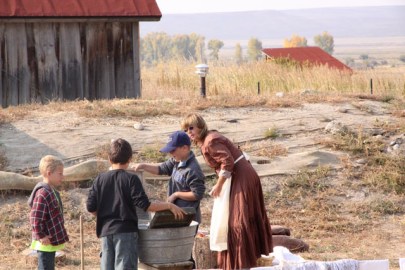
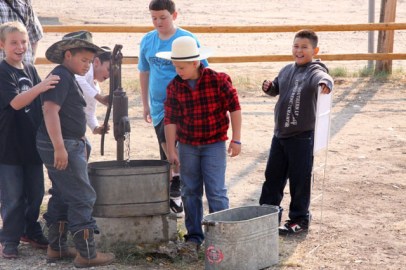
Dawn Ballou orchestrated making dolls from clothes pins, washing clothes with wash tubs and scrub boards, and hand pumping the water. Dawn also explained how the root cellar was used.

The Big Piney 4th Grade visits the Historic Sommers Ranch Homestead in Pinedale, Wyoming where they experienced life as a homesteader, including washing clothes by hand in a wash tub with scrub boards
Learning how homesteaders washed clothes before the advent of washing machines.
The Big Piney 4th Grade visits the Historic Sommers Ranch Homestead in Pinedale, Wyoming where they experienced life as a homesteader, including pumping and hauling water by hand
Learning how to pump and haul water, before there was running water in homes.

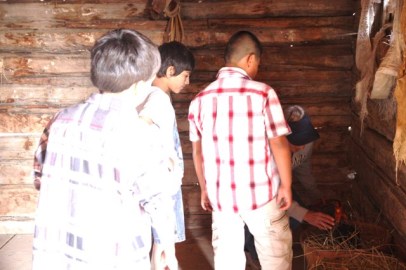
Jonita Sommers and MaryAnne Almquist supervised the students gathering eggs and cleaning them.

The Big Piney 4th Grade visits the Historic Sommers Ranch Homestead in Pinedale, Wyoming where they experienced life as a homesteader, including raising chickens and gathering eggs
Learning how to gather eggs from the hen house…
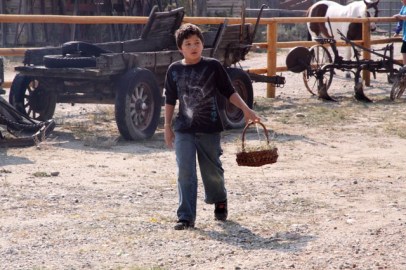
The Big Piney 4th Grade visits the Historic Sommers Ranch Homestead in Pinedale, Wyoming where they experienced life as a homesteader, including raising chickens and gathering eggs
…and bring them back to the Homestead to be cleaned.
Student placing eggs in an ice box for storage.

Jonita showed them how to iron clothes by heating the iron on the cook stove. She also showed them how the cook stove worked.

The Big Piney 4th Grade visits the Historic Sommers Ranch Homestead in Pinedale, Wyoming where they experienced life as a homesteader, including heating irons on the stove for ironing clothes

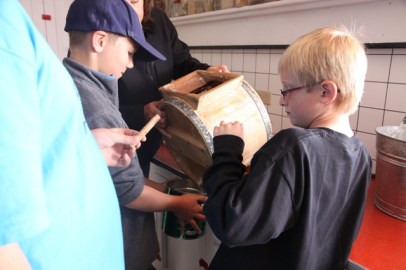
Jamie Brewer taught them how to churn butter after Jonita explained how the milk separator worked. Jamie brought bread so when the butter was churned everyone could have a piece of bread with the churned butter and gooseberry jelly Jonita had made.

The Big Piney 4th Grade visits the Historic Sommers Ranch Homestead in Pinedale, Wyoming where they experienced life as a homesteader, including seperating milk and churning butter
Learning about separating milk and churning butter.

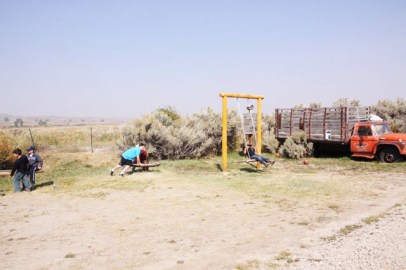
The teachers were able to supervise the students playing with the toys in the children’s room upstairs and playing on the ranch-built playground equipment outside. They also toured the shop and outhouse that are renovated.

The Big Piney 4th Grade visits the Historic Sommers Ranch Homestead in Pinedale, Wyoming where they experienced life as a homesteader.
Playing on the homestead’s playground

The Big Piney 4th Grade visits the Historic Sommers Ranch Homestead in Pinedale, Wyoming where they experienced life as a homesteader.

The tour was particularly special for two of the students, Cassidy Espenscheid and Heidi Sharp. The ranch was homesteaded by their great, great grandparents.

The Big Piney 4th Grade visits the Historic Sommers Ranch Homestead in Pinedale, Wyoming where they experienced life as a homesteader.
Cassidy Espenscheid rings the dinner bell
The Big Piney 4th Grade visits the Historic Sommers Ranch Homestead in Pinedale, Wyoming where they experienced life as a homesteader, including how to clean freshly gathered eggs.
Heidi Sharp cleans freshly gathered eggs

From RealRancher Jonita Sommers – Pinedale, Wyo.

Clean Beans Make A Happy Meal

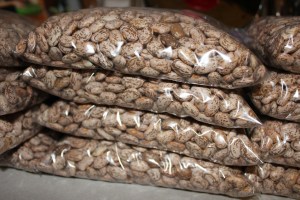
Bags of BeansLast year for Christmas gifts I gave away little bags of pinto beans that we raised on our farm. I included a packet of Chugwater Chili seasoning and sewed cloth bags to put them in. I felt very crafty and accomplished. This did not happen this year. I was way behind. But that’s another story.
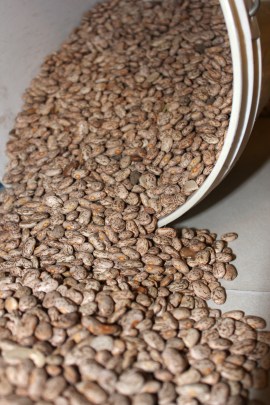
Beans Spilling Out of Bucket

However, my farmer husband and I did give away buckets full of dry pinto beans to family and friends this year. One co-worker nearly demanded it…she’s a big fan! We literally drove out to the trucks that were parked on the end of the bean field and loaded up 5-gallon buckets full of them. Then I divided them up into coffee cans (are they still called cans if they’re plastic?) and sent them on their merry way.

When you receive a bucket full of beans straight out of the field, there is some work to be done before you dig in. Boy, I really hope I adequately stressed this point to the folks I handed beans too…
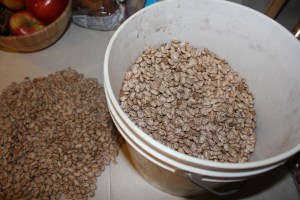
Bucket of BeansWhen you get beans straight out of the field, it’s not just beans you’ve received. There’s a mish-mash of dirt, little rocks, twigs, leaves and a grasshopper or two. So don’t just soak them and cook them…please clean them first…unless you like eating grasshoppers…then dig in. But, if you’re like me and you just want the beans, you’ll need to sort through them.

I’m certain this is not the only way or even the best way to clean dry beans, but it worked for me. First I dumped some of the beans on my kitchen counter.
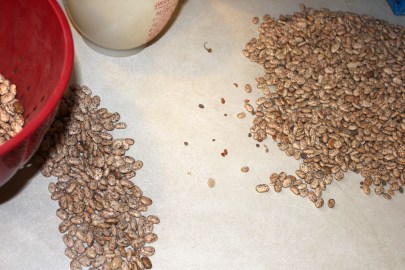
Clean Beans v Dirty Beans

Then I used my fingers to flick/push them into a “clean pile”, while pushing the rocks, dirt clods, leaves and shriveled beans off to the side. Sorting Beans from Rocks
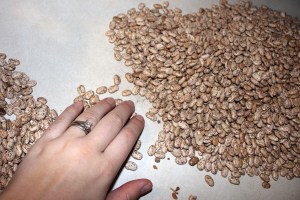
Then I poured batches of the “clean pile” into a colander and rinsed off the dust. Since I wasn’t going to cook the beans, I then laid them out on paper towels patted them dry and let them air dry before packaging them into plastic storage bags.
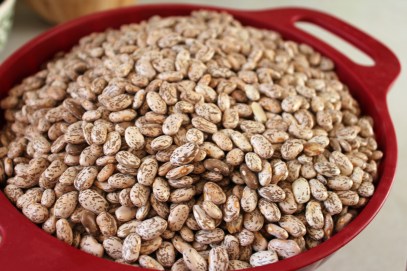
Clean Beans

If you clean your beans and then want to cook them right away, you can follow these directions:

  1. Rinse in a colander under running water for a minute or so.
  2. Beans expand at least double when cooked with liquid so place in a pan that will fit the expansion. Cover with at least 3 inches of water above the beans.
  3. Bring to a boil. Reduce heat, cover with lid and simmer for 10-15 minutes. Turn off the heat and let sit for 1 hour with the lid on. The beans will be plump and ready to cook. OR you can soak overnight and then cook the next morning.
  4. Pour out the water and fill with clean tap water, covering at least 1 inch above the beans. Bring to boil. Reduce heat and simmer with lid on for about 4 hours. Check every hour to make sure beans have plenty of water. You can also cook in a slow cooker for 8 hours or so. Beans are done when tender.
  5. NOTE: Season after they are done cooking. Adding salt before cooking will make the beans less tender.

It’s fun to share part of the product of your toil. The corn is feed for cattle, the barley goes to Coors for beer, the sugar beets go to the plant for, well, sugar; but the beans are a product that can be consumed almost exactly the way it comes out of the field. It gives a farmer and his wife a clearer perspective of how agriculture really does feed the world.

Happy eating!

From RealFarmWife Liz Lauck – Wheatland, Wyo.

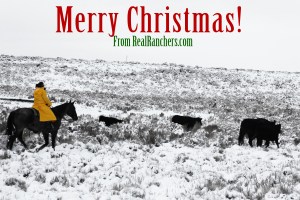
Merry Christmas!

Merry Christmas!

It started snowing last night and we woke up blanketed in a winter wonderland in southeast Wyoming. What a wonderful Christmas present! The snow provides vital moisture for our mountain snow pack (irrigation water) and our rangeland (forage for livestock).

We’re so grateful for all our loyal followers and contributors. We hope your Christmas is wonderful and joyous!


Solar Panels at the Harshbarger Ranch

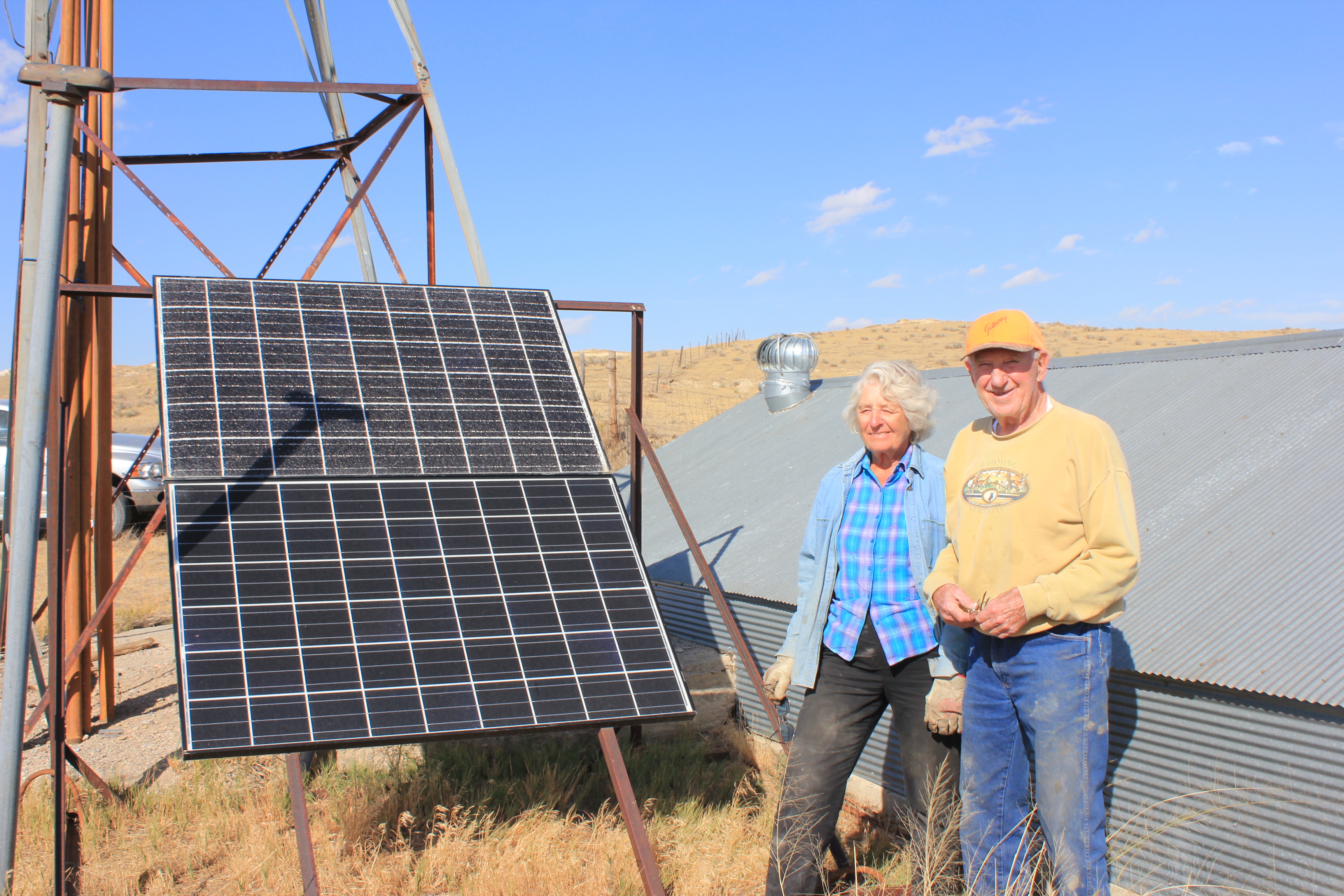
Bob and Jean Harshbarger live outside of Newcastle, Wyo. on Jean’s family ranch.

Jean & Bob Harshbarger stand beside one of the solar panels that is on the ranch
Jean & Bob Harshbarger stand beside the solar panel connected to their house well.

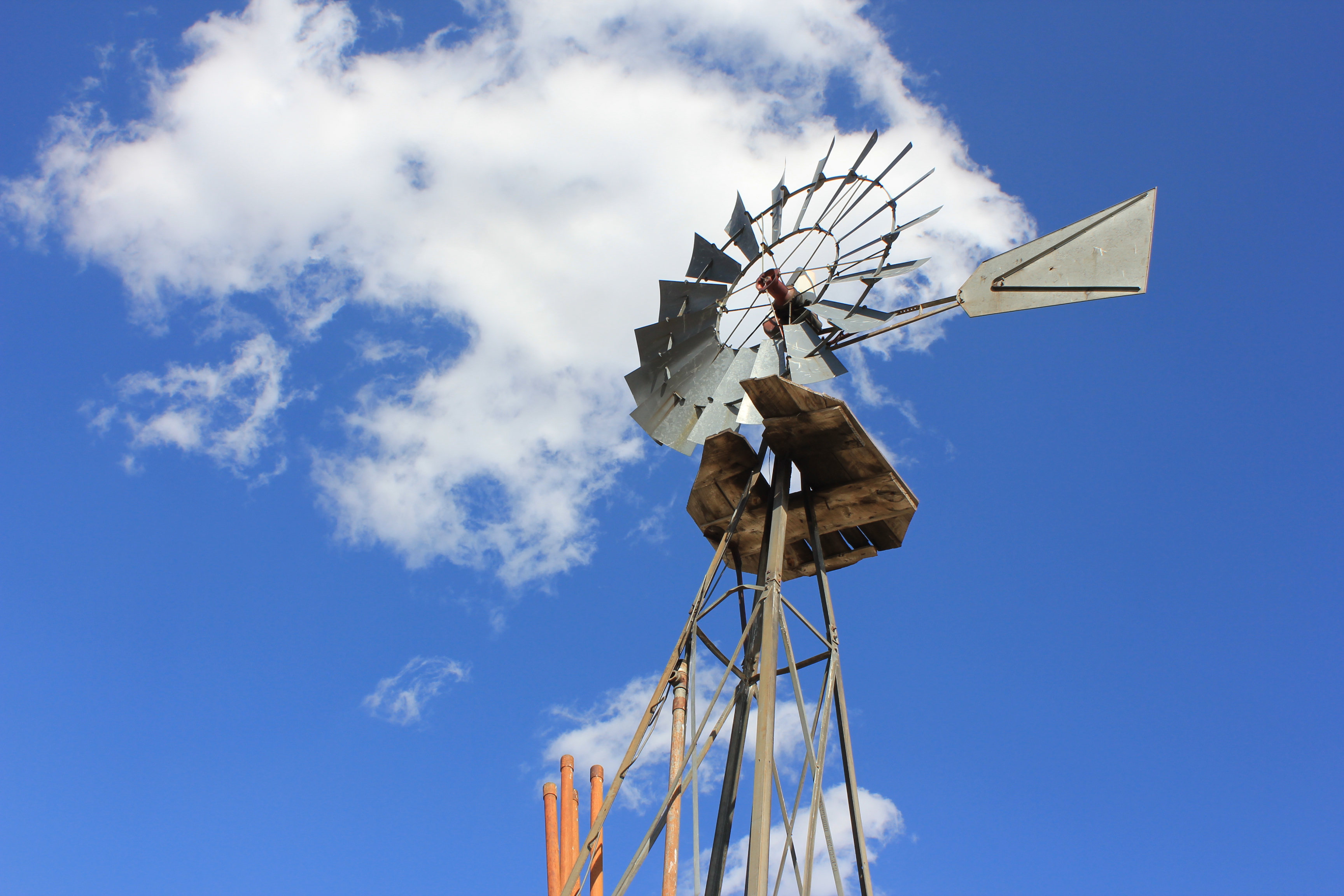
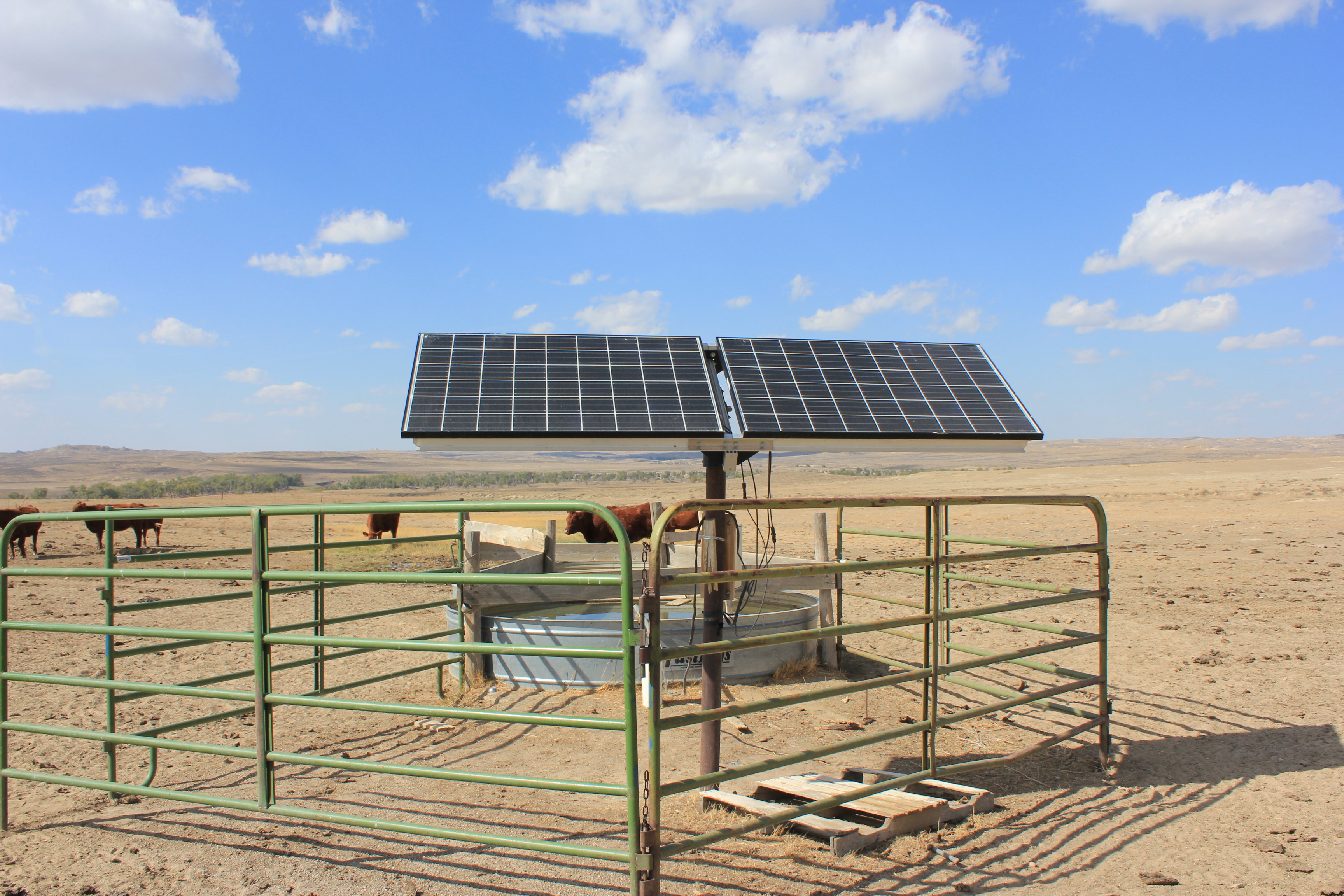
There is no electricity on the vast prairies of their ranch, so they use solar panels to pump water for their cattle. Through the years Bob and Jean have tried other methods to pump water but none have worked as well as using solar panels. Windmills were originally used on the ranch but they are hard to service and aren’t as efficient.

An old windmill that is on the Harshbarger ranch
An old windmill that was once used on the Harshbarger Ranch.

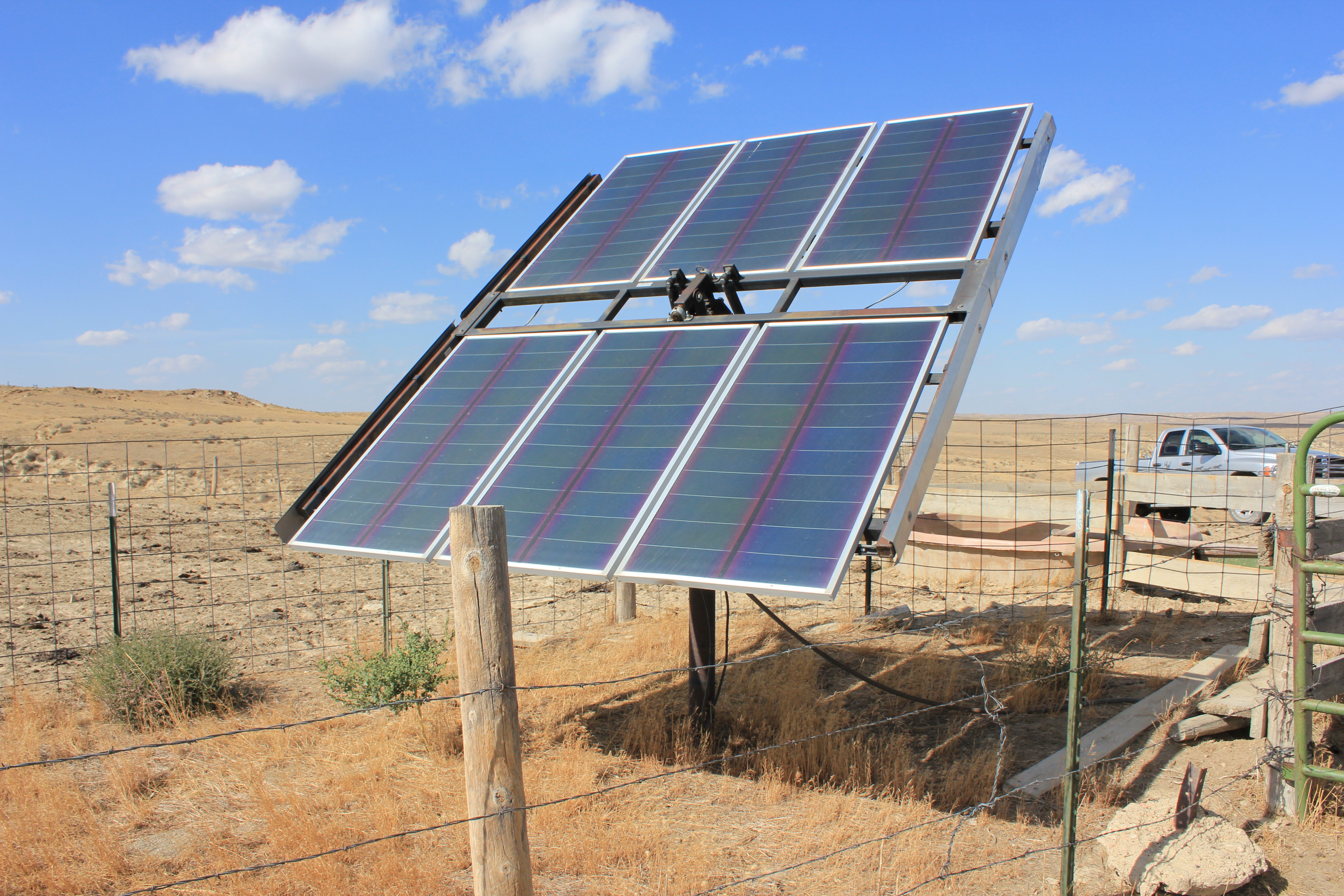
When the Harshbargers started researching alternative ways to pump water for their livestock, they were interested in moving to propane generators or solar panels. The propane generators were less expensive at the time, so they installed the generators. After time, the solar panels went down in price and Bob and Jean decided they would be a better fit for their operation. So, the ranch incorporated the solar panels on 14 of their 28 stock water wells.

Solar panels that are used on the ranch
Solar panels are used to pump water for the cattle on Bob and Jean Harshbarger’s ranch.

According to Bob and Jean, the solar panels are more efficient and last longer than anything else on the market. The oldest solar panels on the ranch are 24 years old and are still in great condition!

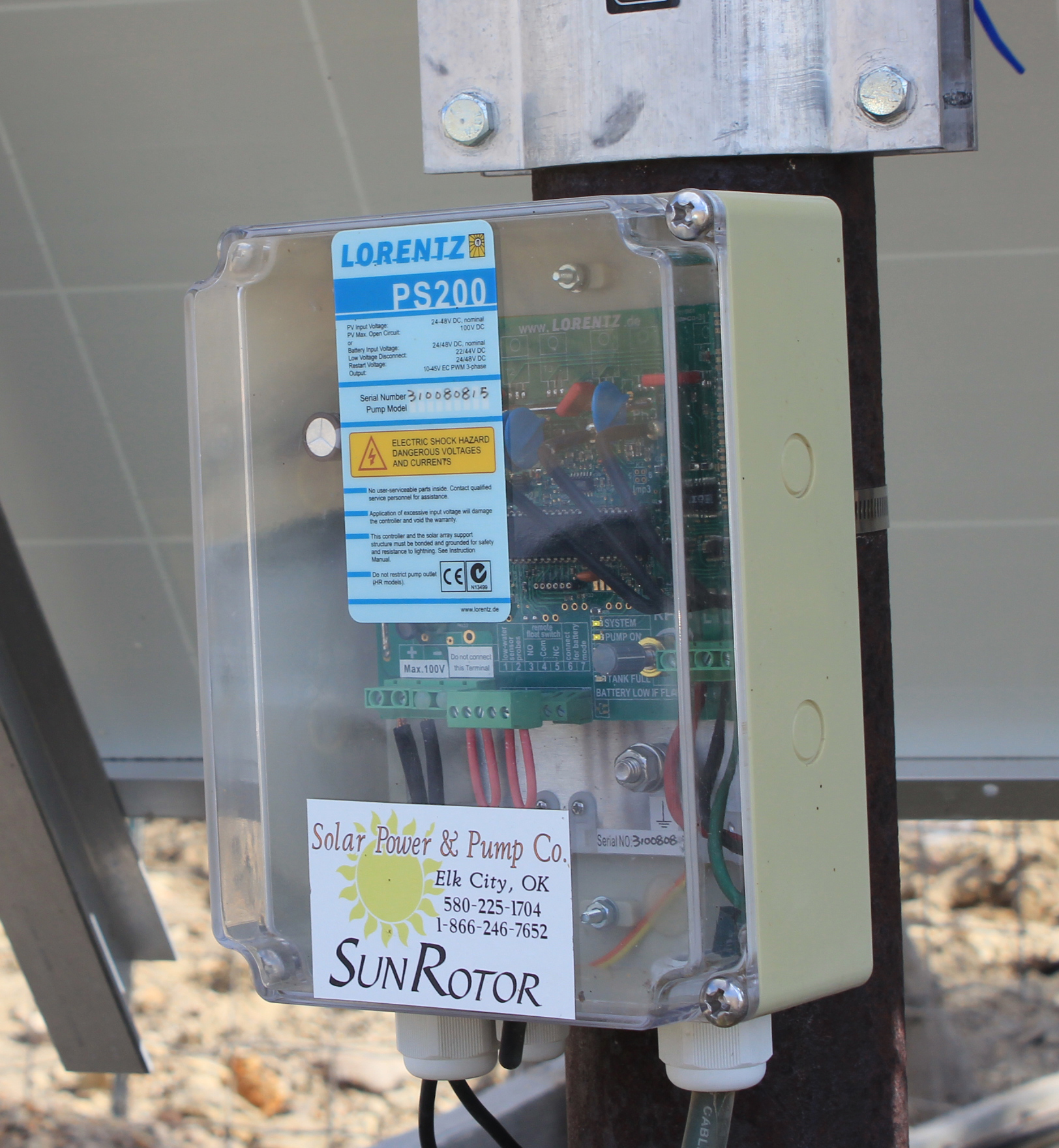
A Lorentz Solar Panel control box
This solar panel control box keeps the solar panels working and the well pumping.

The solar panels will pump water as long as the sun is shining on the panels. The Harshbarger’s even have a solar panel that rotates to follow the sun, which keeps it pumping water longer. There is also a control panel on each well that alerts the rancher as to what level the well is pumping.

Tilting Solar Panel that moves with the sun
This solar panel tilts toward the sun.

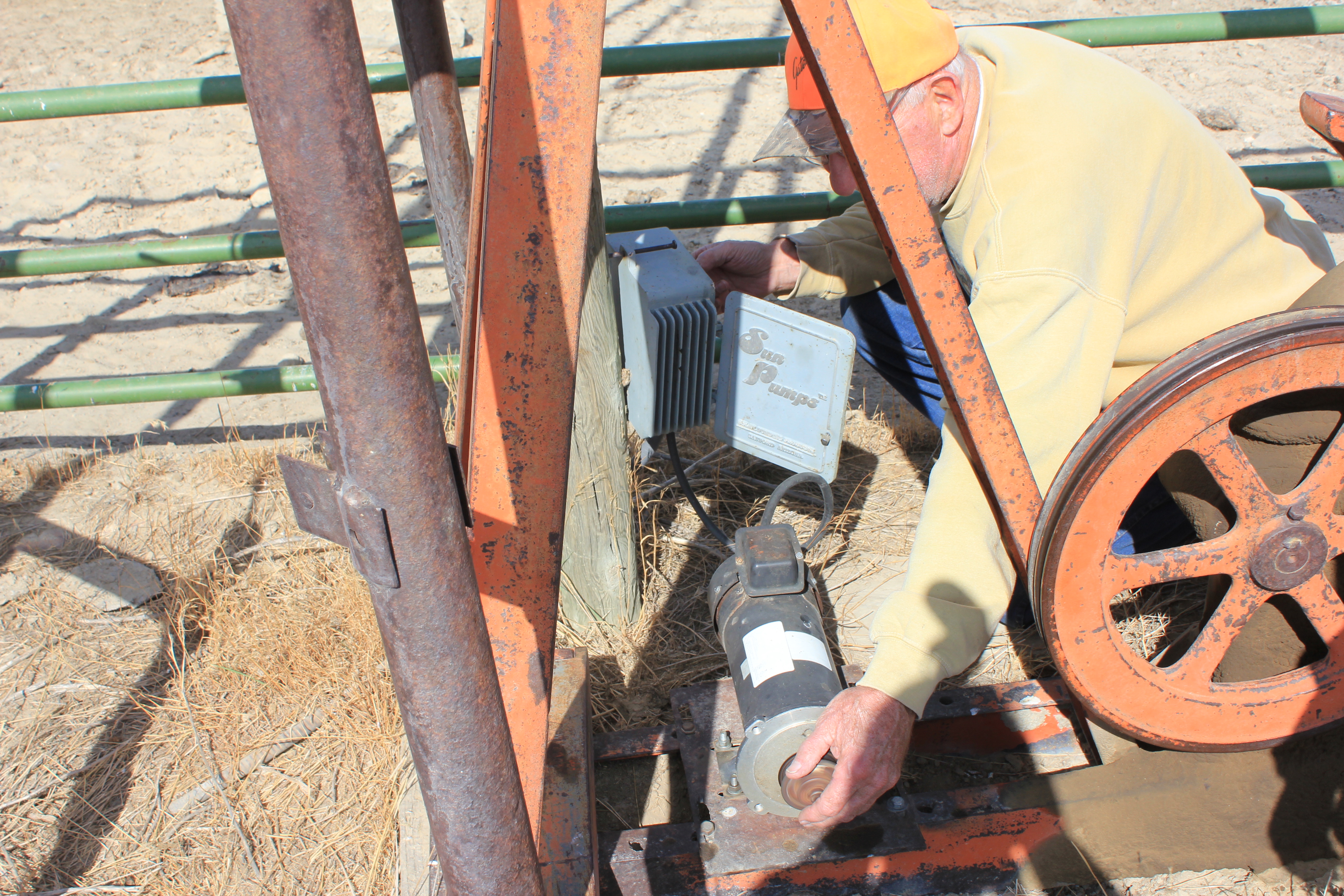
Bob and Jean check the wells daily to make sure they are pumping and to make repairs. There is always a little repair work needing to be done, and Bob can usually fix it.

Bob Harshbarger makes repairs to one of the pumps
Bob makes repairs to one of the pumps on his daily route of checking the wells

Story told by WSGA Intern Brittany Schaneman following a visit with RealRanchers Bob and Jean Harshbarger – Newcastle, Wyo.

Biddy Biddy Gone!

We’re having a live fundraising auction as part of our convention this week. It’s in Wyoming. But you can bid, too! Even if you’re in Boston or Chicago or Los Angeles or Kalamazoo. (Rhyme intended).

Commemorating the 100th Wyoming State Fair, this 40"x15" limited-edition poster is framed in glass with a black, metal frame. The image is set at the 1947 Wyoming State Fair Rodeo in Douglas and includes many Wyoming legends. Donated by Chuck and Mary Engebretsen and the Wyoming Pioneer Association.
1947 Wyoming State Fair framed poster. Commemorating the 100th Wyoming State Fair. Donated by Chuck and Mary Engebretsen and the Wyoming Pioneer Association.

Thanks to the wondrous power of the Internet, you can bid on the amazing things up for auction, including some coveted Wyoming Whiskey. Bidders can preview auction items and make early bids at www.proxibid.com/wynaturalresource.

Historic guest cabin and enjoy two days of world-class trout fishing in beautiful Johnson County, Wyoming.
Historic guest cabin and two days of world-class trout fishing in beautiful Johnson County, Wyoming.

The auction is at 7 p.m., Wednesday, Dec. 12 during the Wyoming Natural Resources Rendezvous in Casper at the Parkway Plaza. You can join us in Casper or bid online from the comfort of your own home. Online bids will be taken during the live auction. Make sure you register with Proxibid to bid online!

Win a chance to have your name as a character in a book written by award-winning author CJ Box
Win a chance to have your name as a character in a book written by award-winning author CJ Box. Donated by Randy Teeuwen & Chuck Box.

Featured in the auction are 12 limited-edition bottles of Wyoming Whiskey. The special-edition bottles recognize the 140th Anniversary of the Wyoming Stock Growers Association. They are numbered 1-12 and are signed by Wyoming Whiskey’s Brad Mead and Master Distiller Steve Nally.

12 limited-edition bottles from the first batch of Wyoming Whiskey recognizing the 140th Anniversary of the Wyoming Stock Growers Association. They are numbered 1-12 and are signed by Wyoming Whiskey’s Brad Mead and Master Distiller Steve Nally.
12 limited-edition bottles of Wyoming Whiskey recognizing the 140th Anniversary of the Wyoming Stock Growers Association, numbered 1-12 and signed by Wyoming Whiskey’s Brad Mead and Master Distiller Steve Nally.

The long-awaited first batch of Wyoming Whiskey sold out in a matter of minutes after it was released earlier this month. Wyoming Whiskey is made in small batches and aged at least three years. The traditional bourbon is made in a non-traditional place – Kirby, Wyo. – and is only sold in the Cowboy State. The wheat and barley is raised in the Kirby area and the water comes from the Madison Formation in the Big Horn Basin.

This stunning Silpada brand necklace is a chic hammered, sterling silver. Donated by Anna Helm.
Silpada brand sterling silver necklace. Donated by PH Livestock

The live auction also includes notable items such as: your name as a character in a CJ Box book, a stay in a historic cabin tied to the Johnson County War with fishing in blue-ribbon trout streams, a guided pheasant hunt, University of Wyoming stadium seats, horses, artwork, home décor, jewelry, tack, beef and much more.

Nikon binoculars with 8-24x25 zoom. Black. Comes with protective case. Donated by Dennis Sun.
Nikon binoculars with 8-24×25 zoom. Black. Comes with protective case. Donated by Dennis Sun.

Not only will you have the chance to get some great items, you’ll also support great Wyoming agriculture and natural resources groups! Proceeds benefit the Wyoming Stock Growers Association, the Wyoming Natural Resource Foundation, the Society for Range Management, the Wyoming CattleWomen and the Wyoming Wool Growers Auxiliary.

We’d love your support!

From RealPartner Liz Lauck – Wyoming Stock Growers Association

Dry Season

RealRanchers Pat and Sharon O'Toole talk about the drought on their Wyoming sheep ranch

The days unfold–one warm dry sunny day after the next.  The neighbors gather and talk of only one subject–when will it snow?  We all have tales to tell.  Only two years ago, we were lamenting because we had to start feeding hay two weeks before Thanksgiving.  This year, some of us still have some rough feed we can use for the cows and horses–the tall dry grasses left under the trees that couldn’t be reached by the mower during haying season.

RealRanchers Pat and Sharon O'Toole talk about the drought on their Wyoming sheep ranch


Read the rest of the story at RealRanchers Pat & Sharon O’Toole’s blog Ladder Ranch


Handle With Care

Safe, humane livestock handling practices


RealRancher Jim Hellyer explains safe and humane livestock handling practices on his ranch near Lander, Wyo.

“Like most ranchers we take pride in how we treat our animals and we try to treat them as humanely and safely as possible,” Jim said.

From RealRancher Jim Hellyer – Lander, Wyo.


Public Sends Plethora of Proposed Initiatives to Governor for Energy Strategy

Oil and gas, coal, natural gas, wyoming energy

EDITOR’S NOTE: This is a press release from the Wyoming Governor’s Office about the Wyoming Energy Strategy.

Governor Matt Mead asked the public for involvement in developing a Wyoming Energy Strategy and a wide spectrum of Wyoming people have jumped in. Over 70 suggested initiatives have been proposed. These cover the range of tangible projects, proposed policies and agency actions. The goal is to use these initiatives as the basis for a model strategy that promotes energy, open spaces, working agricultural operations and economic growth.

“The people of Wyoming have produced some very innovative ideas and I believe that together we can create a strategy that will ensure Wyoming continues to be a leader in energy development, economic growth and in conservation,” Governor Mead said. Wyoming is the leading exporter of energy to the rest of the country. It is also a leader in regulation and conservation, including hydraulic fracturing regulation and sage-grouse management.

The public is invited to participate in the energy strategy process next week by attending public events. Webinars will be held Thursday and Friday (December 6 and 7) to review the proposed initiatives. A list of the initiatives is available on the Governor’s website. (http://governor.wy.gov/Pages/energystrategy.aspx)

“This energy strategy is about charting a course for Wyoming and I ask that people make time to provide us with feedback and ideas,” Governor Mead said.

There will be five webinars/public meetings. The first will be an overview of the energy strategy and the next four will focus on the themes of the energy strategy. The themes are: economic competitiveness, expansion and diversification; efficient, effective regulation; reclamation and mitigation; and education, innovation and new technologies.

More information about the webinars is available online.

Governor Mead believes the energy strategy will establish Wyoming as the standard bearer in recognizing that energy, the environment and the economy are inseparable and compatible and in leading the nation in energy development, regulation, innovation and stewardship.

From Renny MacKay, Communications Director, Office of Governor Matt Mead

The Farm Paparazzi

Armed with an automatic setting to expose a happy life full of God's grace

Facts About Beef

Debunking myths about beef

Beef Runner

Agriculture Advocacy, Beef and Running

Wyoming Lifestyle Magzine

a virtual visit to wyoming's rural communities

Wyoming Livestock Roundup

a virtual visit to wyoming's rural communities

Bridle-Bit LLC Blog

Horse & Rider Training. Serving The Northern Front Range Since 1981

Faces of Agriculture

a virtual visit to wyoming's rural communities

The 307 Chronicles

a virtual visit to wyoming's rural communities

Wyoming Roundup

a virtual visit to wyoming's rural communities

a virtual visit to wyoming's rural communities

Double H Photography

a virtual visit to wyoming's rural communities

Ladder Ranch

Scenes, thoughts and poetry from our working ranch

Comedy Of A Cowgirl

The Comedy of Storytelling

RealRanchers.com

a virtual visit to wyoming's rural communities