Docking

By: Taylor Dilts

Another summer, and another successful docking in the books. For those who don’t know what docking is, let me explain. Docking is the process of removing the tail from an animal- in this case, lambs. But where I grew up, docking meant much more than just cutting off a wooly tail. Docking is an annual summer event that encompasses the entire process of ear-tagging, vaccinating, castrating or ear-marking, cutting the tail, and branding of every lamb on the ranch- a daunting task when there are thousands of them out in the pasture. However, I have learned to thoroughly love this laborious operation. It has a way of bringing people back year after year to enjoy the hard work and good company.

To begin, docking at our ranch is a three day ordeal that requires a crew of at least 12 people for everything to run smoothly. Family, friends, and those brave enough to accept the invitation arrive to the ranch the evening before and catch up over food and drinks, setting the tone for the good-natured hard work that we will all be doing over the next few days. Though it is hard work, I cannot emphasize enough that docking is also a social event- one of the rare times on the ranch where people other than those who live and work there every day get to experience the “simple” life (ha!).

At this juncture I must divulge the nature of the aspect of docking that causes many to cringe- castrating. We castrate our lambs the good ol’ fashioned way- biting. Yes, with our teeth. While this method has drawn a lot of criticism, the fact remains that it is not only the fastest and easiest way to do it, it is also the most humane and economical as well. Even Dirty Jobs star Mike Rowe can attest to this fact. With biting, lambs are subjected to the least amount of pain and can be moved rapidly through the process, causing the least amount of stress on the animal, and expediting the work for the docking crew laboring in the hot sun. In contrast to the generally accepted “humane” method of using rubber bands, lambs that have been bitten cease bleeding after a few minutes, and do not have to endure the stress that having a tight rubber band cutting off the circulation to their scrotum and tail induces. Instead, these lambs are able to walk, run, and frolic moments after being docked, as opposed to suffering for days until the testicles and tail fall off.

With that said, I will now go through the entire docking process step-by-step. Please keep in mind that this is only the process we follow at our ranch, and may not be the same as other ranchers.

Once the crew has arrived at the corrals where the sheep have been gathered, everyone begins setting up the docking pen- unloading portable steel panels from a trailer and hooking them together to form a smaller corral that we can load groups of sheep into from the larger herd. The “docking board” is a specially designed panel that has a flat surface roughly 4 inches wide on the top for the people holding the lambs are able to rest them on during the procedure. This panel is arranged at the center, and every lamb in the bunch will pass over it by the end. After the docking pen is set up, we load a small group of ewes and lambs into it from the larger group in the corrals. The sheep are closed in, and the docking begins!

There are 5 main jobs at docking: Tagger, Vaccinator, Cutter, Brander, and Holder. Each job is pretty self explanatory; the Holders go through the pens of sheep picking up the lambs and taking them through the docking line, which begins with the Tagger. The Tagger(s) put the appropriate tag in the lamb’s ear depending on whether it is male or female. Next in line is the Vaccinator, who uses a small tool to scratch the inside of the lamb’s ear and then brush on the vaccine to prevent Sore Mouth Infection. The lamb is then moved down the line to one of the two Cutters. It is the Cutters job to either castrate (if the lamb is male), or ear-mark (if the lamb is female) and then cut the tail off of the lamb. Finally, the lamb is brought to the Brander, who stamps the appropriate brand in sheep paint on the lamb’s back before it is set free on the other side of the pen.

The testicles are spit into a bucket to be cleaned and eaten later, and the tails are tossed into piles behind the Cutters so they can be counted when all is said and done. After all of the lambs in the docking pen have been put over the board, the ewes are counted as they are turned out to re-join their offspring. The pen is then loaded again and the process is repeated until the entire group of sheep has been turned out of the corrals. The groups range in number usually from about 300-500 head of ewes. Once a group is finished, the tails are counted and divided by the number of ewes counted in order to calculate the lamb-crop percentage for that particular group. The docking pen is disassembled and loaded on to the trailer to be transported to the corrals where the next group of sheep has been gathered.

As I said before, docking is also a social event. There is something about spending all day together in the hot sun, getting blood in your face, dirt in your eyes, and sweat down your back that brings people together like nothing else, and at the end of the day everyone is glad to sit down and enjoy a well-earned meal and a cold beer and revel in each other’s company. So Cheers! To hard work, good people, and lamb balls.
IMG_7803

What’s Crack-alyn Jackalyn?

Here is an update from Jackalyn on her last week!

This past week for the 9th- 13th I fed and watered the pigs and steers and a cow that won’t get up after giving birth almost 2 weeks ago. On Monday, we separated some of the cows/calves and I taught a helper who is 13 how to move cows. Together we moved the pregnant cows from the barn to the corral almost 5 miles away. We picked up an old fence, and put boards in the canal to divert the water faster (I was soaked). j3

On Tuesday, we did some yard work on my boss’s mother Audrey’s yard, we mowed and pulled weeds. We also did more yard work on Friday. We then cleaned up around my boss’s house, filled in holes and mowed.
j4
All day Wednesday, we put up an electric fence in the AI patch so the cows and calves won’t try and cross this area of trees/beaver ponds to get out when AI-ing takes place in a few weeks.

On Thursday, we did some more work around Audrey’s house and cut down some Aspens and attempted to pull out a sewer tank that no longer works. We also moved some hay from the show barn to another barn and fixed fences for the rest of the afternoon. This concludes my week.

Sincerely,
Jackalyn Kandle

Educating Our Future Generations

Contributed By:
Rachel Purdy- Wyoming Beef Ambassador

Over the last week, I have been presenting a lesson to students in local schools about beef. There is so much great news to share about the beef community-it makes it challenging to find just one focus area for a lesson. I taught a lesson to two classes of third graders, one second grade class, and one after school program.

I started out my lesson by discussing the role beef plays in our local communities. As students entered the classroom, I gave four of them hats to100_2908 wear that represented the various jobs connected to the beef community. The children really enjoyed this portion of the lesson and got a kick out of all of the hats, especially the chef hat. At the beginning of all of my lessons, the students could identify one or two ways the beef industry affects the community. After the lesson, the students understood how crucial beef is to the economies of rural Wyoming communities. Beef production is more than just a rancher producing beef; beef production impacts the local vet, gas station, restaurants, and many other businesses. I continued the lesson by talking about what cattle eat, why cattle can consume grass and forages and humans cannot, and finally what nutrients we can gain from consuming beef. My goal was to make the lesson as hands on as possible for the students. The students were able to work in teams and work together to play a matching game to determine what cattle eat. One student came up to me before this activity and told me that he already knew what cattle eat so he did not think he should participate. I had him participate anyway, and he even learned something new! I think it shocked many of the students how many different things cattle can eat (even salt!). After all of that talk about beef, I gave all of the students a beef jerky snack and a beef recipe from BeefItsWhatsForDinner.Com to take home. 100_2922

A couple of things really surprised me about my experience in the classroom. First, even our rural children are becoming more out of touch and removed from agriculture. This motivates me to continue promoting the beef community to consumers of all ages in a variety of locations. I was also surprised how receptive the students were of the positive beef message I presented. The students really enjoyed their snack at the end of the lesson.

Update From Jackalyn

Here is an update from Jackalyn on her past week.

This past week I fenced for a few days in different areas,j1 unloaded hay, checked cows, and helped my boss’s mother with her yard work. Another day I picked up sticks in an area called the Hamptons, Spring Creek, and around my boss’s mothers house, as well has his own. I also had to help put a cow who had lost her calf with a calf who’s mother could not get up since his birth. I attempted to milk her at this time, which is harder than it looks. I cleaned out irrigation ditches and culverts and moved some cows to a different area. Each day, I did morning chores of feeding and watering the steers and pigs. This concluded my week.

j2

Sincerely,
Jackalyn Kandle

Brittany’s First Week

Howdy! The WSGA staff was busy last week with the 2014 Cattle Industry Convention and Trade Show, so we were not able to post any updates from our Rangeland Interns. Without any further delay, here is an update from Brittany on her first week at the Ladder Ranch!

Hi There!
I’m Brittany Heseltine from Big Piney, interning on the Ladder Ranch which runs sheep and cattle in Savery along the Colorado border. Wow, what an amazing first week! My first seven days at the Ladder Ranch has flown by so fast with so many new experiences! I arrived Sunday, May 25th and metbrit1 Sharon and Pat O’Toole, the owners of the Ladder Ranch. Between dinner that night and breakfast the next morning, I met their daughter Megan Lally and her four kids, their son Eamon, his wife Meghan and their two sons and the two Peruvian hands, Tim and Edgar. Tim and Edgar speak very little English but all the O’Tooles are very fluent in Spanish and, thanks to two years of Spanish in high school, I am able to communicate a bit. I also met and worked with the Australian visitors, Ali and Will, who are on a working vacation learning how other parts of the world do agriculture.

brit2I helped move yearling ewes up into a chute and onto what they call a ‘Plant’ for shearing on Monday and Tuesday which was a completely new experience for me as I have never worked sheep before. Monday, we had to wait two hours to shear because it had rained the night before and the sheep were still wet. The Plant is a mobile building made from plywood on a flat-bed trailer with doors and a chute for the sheep to wait for shearing and small panel corrals outside each door where the shorn sheep are counted out periodically. There is room for up to six shearers to simultaneously shear inside the plant and out of the weather. The wool is then sorted by the wool handlers and baled accordingly. Wednesday, I fixed fence with Ali and Will that was the border between the ranch’s private property and the forest allotment with a wonderful view of the mountains directly around the ranch.

Thursday, I helped gather some escaped cow/calf pairs with Eamon and Colton, the cowboy, and move them to the correct pasture. The country is a lot more brushy than I am used to so when gathering I have to look more intently for the cows and calves. It lightly rained all day, so by the time we got back to the barn we were all soaked through and happy to be back. Friday and Saturday, we gathered and branded calves. Once the pairs were in the corrals, we sorted the cows from the calves. Both days Eamon and Colton heeled the calves to the fire. On Friday we used nord-forks which Ibrit3 had never seen used before and the Ranch’s second time ever using them, but found them to be very useful when there is only a small crew for branding. Saturday there was enough people to have about three wrestling teams instead of using nord-forks. We found we were able to get more calves branded, earmarked, vaccinated and castrated faster which was a plus since there were more calves than the day before.
I hope you all are looking forward to the coming weeks as much as I am here on the Ladder Ranch!
Brittany

Introducing Brittany!

It is once again my pleasure to introduce another one of our wonderful summer Rangeland Interns- Brittany Heseltine!

scr-BrittanyHeseltine_3398
Brittany

Brittany has her Associate’s Degree of Science in Animal Science, and will also soon be graduating from Northwest College with a degree in Agribusiness. Ranching has become a major part of her life, and ultimately her goal for the future is to run a sustainable cow/calf operation of her own. Brittany has a passion for agriculture and is looking forward to gaining more hands-on ranch experience in her internship. She will be spending her summer at the Ladder Ranch in Savery, Wyoming.

Check back for updates from Brittany, Kylee, and Jackalyn as they send RealRanchers details as to what they have been doing at their internships.

Jackalyn’s First Week

Here is Jackalyn’s update on her first week at Brokaw Ranch!

Sunday the 18th I settled into the Brokaw Ranch and ate a wonderful meal with Ralph Brokaw, his kids Lindy and Shade, as well as a few family friends. Each day during the week started and finished with feeding the two steers that they have and giving them water as well as checking for any sick calves and any heifers that may need help with birthing their babies. Monday the 19th I met another part time ranch helper Dawn who showed me around the ranch. I was able to drive a huge John Deer Tractor and Dawn and I picked up branches from a previous storm where they received 30 inches of snow.

0519141540
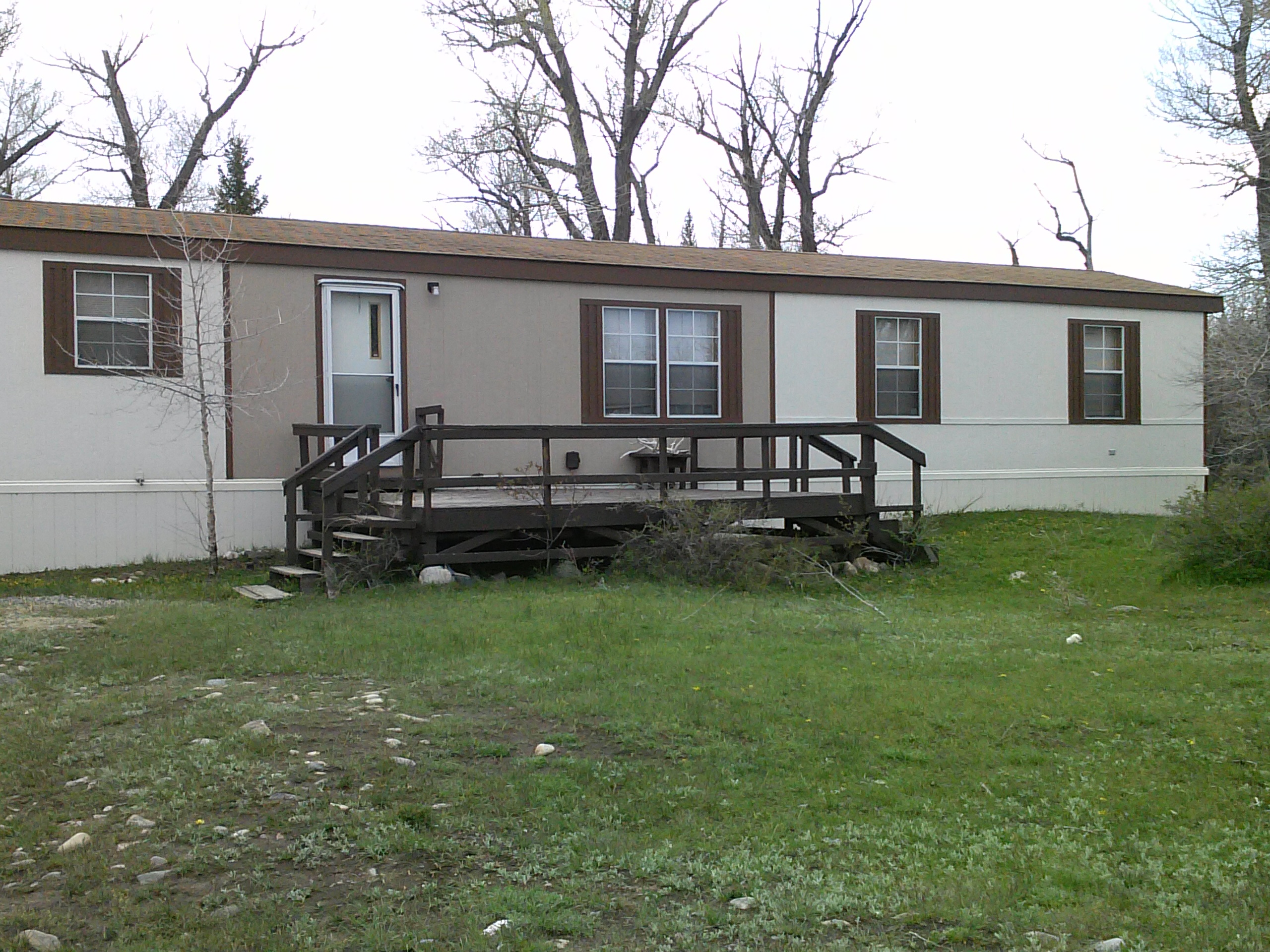
The house Jackalyn is Staying in

0519141539
The Ranger used to get around the ranch

Tuesday the 20th a group of 6 people went to Saratoga to brand 130 calves for Mr. Heizer (my boss’s boss). This is something I had never done before. We set up a shoot, and had one person push the calves through to the table. Once in the table I had to push them by the tail so their head went into the hole at the end. Another person worked the levers and squeezed their head into the shoot and flipped the table horizontal. From there I was able to put the rope on the calves left foot and tighten it so they were not able to kick. We had a few people give shots/disinfect/dehorn while another person castrated and branded. This was a long day and we came back to do this on Thursday the 22nd where I was able to push calves into the shoot and round them up instead.

Wednesday the 21st I helped fix one of the tractors that wouldn’t start, built a pig pen, put up an electric fence, and fed some horses.

Friday the 23rd I woke up early to meet a biologist that came out to do an experiment with birds. His name was Mr. Frost, him and I went out to a site near a pond where we listened to what birds we could hear and which ones we saw fly over the area. We did this for about 50 minutes and documented the names and whether it was because they were migrating or mating. After getting back I went out to drag parts of the pasture with a tractor followed by pipes attached with chains. This breaks up the cow poop and fertilizes the ground at the same time. Later in the afternoon it started to rain. We noticed a heifer having trouble giving birth and pushed her into the barn to help. Her calve was stuck and we hooked chains up to its front legs and tried pulling it out. This took about 20 min. (half way out) his lower part was stuck and he couldn’t breathe. By the time we got him out, my boss Ralph tried to do mouth to mouth with no luck and we lost him. This ended my week.

0519141543a
One of the steers Jackalyn feeds

2014 Summer Rangeland Interns

It is my great pleasure to introduce two of the Wyoming Stock Growers Association’s Rangeland Interns for this summer: Kylee Gibson and Jackalyn Kandle!

Kylee
Kylee

Kylee is currently a student at Northwest College and is majoring in Animal Science. She hopes to finish a graduate degree in this field and eventually to become a livestock veterinarian, or at least work with livestock in some way in her career. She is a livestock judge for her school, and has been actively involved with both 4H and FFA for most of her life. Kylee will be spending her summer internship at the Heart Mountain Ranch and Nature Conservancy north of Cody.

Jackalyn
Jackalyn

Jackalyn is a student at the University of Wyoming majoring in Rangeland Ecology and Watershed Management, along with a minor in Land Reclamation. With so many opportunities in Wyoming for these two fields, Jackalyn is looking forward to beginning the restoration of lands previously used for coal, oil, and gas mining. In the future she hopes to use her experience in finding better ways to manage disturbed forest lands. Jackalyn’s internship is at the Brokaw Ranch in Carbon County.

RealRanchers will be posting both Jackalyn’s and Kylee’s weekly updates and photos on what they have been doing at their internships. WSGA is proud to have such great interns and we look forward to hearing all about their experiences over the summer. Next week we will also be introducing another rangeland intern- Brittany Heseltine.

“Land Grab”

By: Taylor Dilts

In the wake of the recent standoff between the Bureau of Land Management and rancher Cliven Bundy of Nevada, President Obama has set aside 500,000 acres of New Mexico land and declared it a national monument. While the move is meant to work towards preserving the Organ Mountain Desert Peaks area, many are opposed to the designation calling it a “land grab” that will help to foster drug smuggling by Mexican cartels by interfering with the ability of border patrol agents and local law enforcement to access the area, and impede on the grazing rights of local ranchers. As we have seen recently in Nevada, federal intervention on local grazing lands can ignite conflict rapidly. The question remains: will this move by President Obama escalate to the same levels as the Bundy Standoff?

This latest development has been the largest designation to date by President Obama, his last use of the Antiquities Act- the act that gives the President the power to designate national monuments- was to add 1,600 acres to the California Coastal National Monument, which spans the entire coast of California. And it would seem there is even more to come. At the ceremony on Wednesday Mr. Obama was quoted saying, “I’m not finished,” hinting that he is gearing up to set aside even more land to be declared as national monuments.

But what does this mean for Wyoming ranchers? Fortunately, the state of Wyoming is exempt from the Antiquities Act. When Grand Teton National Park and Jackson Hole National Monument were combined, the act was amended to require Congressional consent for any future designations in Wyoming. Even though we are safe from the act, Wyoming representatives still oppose such designations by the federal government. After e-mailing our state delegation in Washington, realranchers.com received these statements from Congressman Cynthia Lummis and Senator John Barrasso:

Lummis: “The President has disregarded public input and public problems by single-handedly taking over management of this portion of New Mexico.  This will hurt local economic opportunities and even worse limit the abilities of border patrol agents in an area with known drug and human trafficking problems.  The federal government cannot effectively manage the acreage they already have.  It is absurd for the President to take on even more land.”


Barrasso: “Once again, the President has gone around Congress and disregarded the concerns of local communities and leaders by taking over almost 500,000 acres of land in New Mexico. This latest Washington ‘land grab’ is just another attempt by this Administration to regulate public lands under the guise of conservation. It’s a very real threat to the multiple-use of federal lands—including grazing permits that are so vital to Wyoming’s ranching communities.

“Washington needs to get out of the way and let the Americans who live and work in these communities and know what works best, be in charge of managing the land and its resources. Even though Wyoming is exempt from the Antiquities Act, we know the Administration has used executive orders before to try to grab land and limit state and local input. The entire Wyoming delegation will remain vigilant and ready to step in and stop any attempt by Washington to take over Wyoming’s resources.”


Though Wyomingites appear to be safe from “land grabs” such as these, it is important to keep in mind that these actions still pose a threat to ranchers and landowners across the nation.


 For more information visit http://www.beefusa.org/newsreleases1.aspx?NewsID=4223

E-mail Congressman Lummis here- https://lummis.house.gov/contact/contactform.htm?zip5=82001&zip4=

E-mail Senator Barrasso here- http://www.barrasso.senate.gov/public/index.cfm?FuseAction=ContactUs.ContactFormImage

Fresh Meat

Hello!
My name is Taylor Dilts and I am a Senior Communication Student at the University of Wyoming. I just began my summer internship at the Wyoming Stock Growers Association and I could not be more excited to be a part of this wonderful organization.
I grew up splitting time in Douglas, Wy with my mother, and on a cattle and sheep ranch with my father north of Douglas. Throughout my life I have worked on the ranch, and for the last few years I have devoted my time at UW to studying Communication.
Agriculture has always been a central part of my life, and my college experience has also taught me a lot about the field of Communication. I am looking forward to applying these two great aspects of my life into my time here at the WSGA, and working to help the agricultural community in Wyoming.
1002410_10151533504123576_970658254_n

The Farm Paparazzi

Armed with an automatic setting to expose a happy life full of God's grace

Facts About Beef

Debunking myths about beef

Beef Runner

Agriculture Advocacy, Beef and Running

Wyoming Lifestyle Magzine

a virtual visit to wyoming's rural communities

Wyoming Livestock Roundup

a virtual visit to wyoming's rural communities

Bridle-Bit LLC Blog

Horse & Rider Training. Serving The Northern Front Range Since 1981

Faces of Agriculture

a virtual visit to wyoming's rural communities

The 307 Chronicles

a virtual visit to wyoming's rural communities

Wyoming Roundup

a virtual visit to wyoming's rural communities

a virtual visit to wyoming's rural communities

Double H Photography

a virtual visit to wyoming's rural communities

Ladder Ranch

Scenes, thoughts and poetry from our working ranch

Comedy Of A Cowgirl

The Comedy of Storytelling

RealRanchers.com

a virtual visit to wyoming's rural communities